Monday, 4 January 2016

Lindblad acquiring expedition ship for Galapagos cruises

Lindblad acquiring expedition ship for Galapagos cruises


Lindblad Expeditions Holdings has agreed to spend $18 million to acquire the Via Australis, an expedition ship that Lindblad will use for Galapagos Islands cruises, replacing the National Geographic Endeavour.
The company expects to take possession of the ship in the second quarter of 2016 and deploy the ship in the third quarter following a $10 million refurbishment. The ship will bear the National Geographic name.
“The Via Australis will be the ideal platform for our Galapagos expeditions far into the future. Opportunities to acquire high-quality expedition ships on attractive terms are infrequent so we seized this one,” said Sven Lindblad, CEO of Lindblad Expeditions. “The Via Australis will provide us with increased profitability on the same route through more operating days, revenue enhancement opportunities, operating efficiencies and cost savings compared to the National Geographic Endeavour. Additionally, it will require significantly lower capital expenditures for the foreseeable future.”
The Via Australis is one of two ships that currently sails for Australis, a Chile-based expedition line specializing in Patagonia cruises. According to Australis' website, the ship was built in 2005 and can accommodate up to 136 passengers in 64 cabins.
After the refurbishment, the ship will have 50 cabins (46 doubles and four singles) for a maximum capacity of 96 guests, Lindblad Expeditions said.
Lindblad said the ship is a great fit for Galapagos cruising because it is "quiet and maneuverable, a great asset when approaching marine life." Also, the ship offers "great viewing from all public spaces," he said.
The ship will be equipped with Zodiacs and sea kayaks. The Zodiac platform can deploy two landing crafts at the same time, Lindblad Expeditions said.
The expedition ship will also have a fitness room and a wellness spa.

With its yacht product, Crystal goes for small-ship intimacy

With its yacht product, Crystal goes for small-ship intimacy

The 31 suites on the refurbished Esprit are smaller but more intimate than one might expect on a traditional Crystal vessel.

ABOARD THE CRYSTAL ESPRIT — The latest ship in Crystal Cruises’ fleet lies anchored in a protective cluster of tropical islands in the Seychelles, the Indian Ocean archipelago. In one direction, the ship’s two-person submarine is taking enthralled passengers on a 30-minute tour of an undersea coral garden. In another, Zodiacs zip guests to a sandy beach prowled by giant tortoises.
One thing is clear: This isn’t your grandfather’s Crystal Cruises.
The debut of the Esprit after a Dec. 20 christening ceremony marks the operational start of a new era at Crystal under its Malaysian owners Genting Hong Kong, which acquired the line in March for $550 million from Japan’s NYK, which had owned it for 25 years.
Crystal has built up a dedicated cadre of loyalists, and its officials, led by CEO Edie Rodriguez, are confident that the new Crystal will maintain its traditional passenger base, while the extensions of its core cruise product will attract new blood.
So what is the Crystal Esprit like?
A dozen top travel agents on a preview cruise remarked first that the Crystal standard of service has been successfully imported, despite ocean swells that cut a week-long training cruise to a day and a half.
“They’re very friendly and warm,” said Ralph Iantosca, owner of Dallas-based GoGirl.Travel, commenting on staff and crew.

The ship’s Sunset Bar is outside but covered by a canopy.
Another strong impression was about the size of the ship. With just 31 suites, the ship has none of the scale of Crystal’s two 1,000-passenger vessels; instead, it boasts the intimacy of small-ship cruising.
Guests on the Crystal Esprit will get the chance to know each other well. Making a play on the name, Rodriguez said they will develop an “esprit de corps.” They will also make friends with the largely Filipino staff.
At 280 square feet, cabins are not huge by luxury standards, but nevertheless Ian tosca said they exceeded his expectations.
The Esprit is not out-of-the-box new. It was built in 1991 and was transferred to Crystal from Genting’s Star Cruises, where it was a charter-only vessel for the company’s high-end customers.
Crystal spent three months redoing the vessel’s interior and giving it new decorations, cabinetry, carpeting and fixtures, said COO Thomas Mazloum.
Its five decks include a small plate/buffet restaurant, a slightly more formal dinner venue, a lounge and an expansive aft Sunset Bar, which is outdoors but covered by a white canopy.
There is a small pool and gym and a postage stamp of a casino.
A good part of the Esprit’s revenue is expected to be from charter business. After the ship was named, Genting Hong Kong chairman K.T. Lim stood in the Sunset Bar and gestured to a nearby yacht that was every bit as long as the 280-foot Esprit.
That yacht, Lim said, would likely charter for as much as $1 million a week, but it has far fewer staff and only a half-dozen bedrooms. By comparison, “this is an incredible value,” Lim said of the Esprit.
“I do a lot of yacht charters,” said Iantosca, “and for a client who doesn’t want to spend [big], this is a good alternative.”
Another feature that distinguishes the Esprit is a toy cabinet with all manner of water sports equipment, including a stylish 12-passenger Wider speedboat and a two-person U-Boat Worx submersible submarine that is one of only four in the world.

The Crystal Esprit made its debut last month in the Seychelles.
On a demo, we were startled to run across a half dozen scuba divers, who were probably equally startled to see the submarine with its 3.9-inch-thick acrylic bubble suspended between two pontoons.
The sub, which will take passengers on 30-minute excursions for $599 a person, is like scuba diving in a high-tech lounge chair.
Food on the Esprit is cooked nearly on demand, and an open kitchen enlivens the Yacht Club dinner venue.
There is a butler assigned to every stateroom, which didn’t match the vibe in the laid-back Seychelles, where the Esprit will sail this winter. In the spring it moves to the Adriatic where it will cruise the coast between Venice and Dubrovnik, Croatia.
Pressed for downsides, Iantosca said the small size of the ship cuts both ways.
“I think you need to be aware of motion” that rocks the ship depending on the vigor of the seas. But all things considered, Iantosca was pretty impressed.

Carnival Corp to build four new ships as part of 'growth strategy'

Carnival Corp to build four new ships as part of 'growth strategy'


Carnival Corporation has announced it will build four new cruise ships for its Costa Asia, P&O Cruises and Princess Cruises lines.

Two of the four new ships will be built for Costa Asia for deployment in China, and one will be built each for P&O Cruises Australia and Princess Cruises.

This takes the company’s total number of new ships scheduled to be delivered by 2020, to 17.

The four new ships will be built by Fincantieri at the company's shipyards in Monfalcone and Marghera, Italy, with deliveries expected in 2019 and 2020.

The two new 135,500-ton ships for Costa Asia and one new ship for P&O Cruises Australia will carry 4,200 passengers.

Princess Cruises' new 143,700-ton ship will carry 3,560 passengers and will be its fourth "Royal Princess" class vessel, featuring the same design platform used on Royal Princess, Regal Princess and Majestic Princess.


Chief executive of Carnival Corporation, Arnold Donald, said: “These ships will be great additions to our fleet that support our goal to exceed guest expectations and create great vacation memories for each guest onboard our ships.

“These strategic investments in new ships that wow our guests are an important part of our measured growth strategy, which includes replacing less efficient ships with newer, larger and more efficient vessels over a very specific period of time."

The company said specific features and amenities for the ships, along with deployment details, will be revealed in the coming months.

Saturday, 2 January 2016

Royal Caribbean reveals ad campaign and strap line

Royal Caribbean reveals ad campaign and strap line


Royal Caribbean International has unveiled a new brand positioning as part of its multi-million pound wave campaign.

The line today announced its new ad campaign, including a new TV ad which will first air on Boxing Day during Surprise Surprise.

Royal Caribbean has not had a strapline in recent years but following extensive market research and customer feedback, has introduced ‘Where Extraordinary Happens’.

The ad campaign will run on ITV, Channel 4, Channel 5 and various Sky channels. The new messaging will also feature on radio, print, digital, social and trade advertising.

 Royals Latest Advert

Tamara Strauss, director of marketing and PR for Royal Caribbean, said four slogans were created but existing and potential customers reacted best to the one chosen.

“For most of the year people are working hard so for the couple of weeks they get for holiday it’s important they get to experience things and have fun,” Strauss said, explaining the new brand positioning.

“You get to blow the doors off being sensible when you’re on holiday and we wanted to bring that to life because extraordinary things happen on our ships. It’s all about the experiences you can have onboard and off our ship while travelling with us.”

“We want people to see this creative and think differently about what it means to have a Royal Caribbean holiday,” she added.

To support the new positioning, agents are being sent new collateral such as new point of sale displays. The line’s portal Cruising Power has also been updated to reflect the new strapline and the call centre team in Guatemala has also been trained to have a “new tone of voice to reflect the new position”.

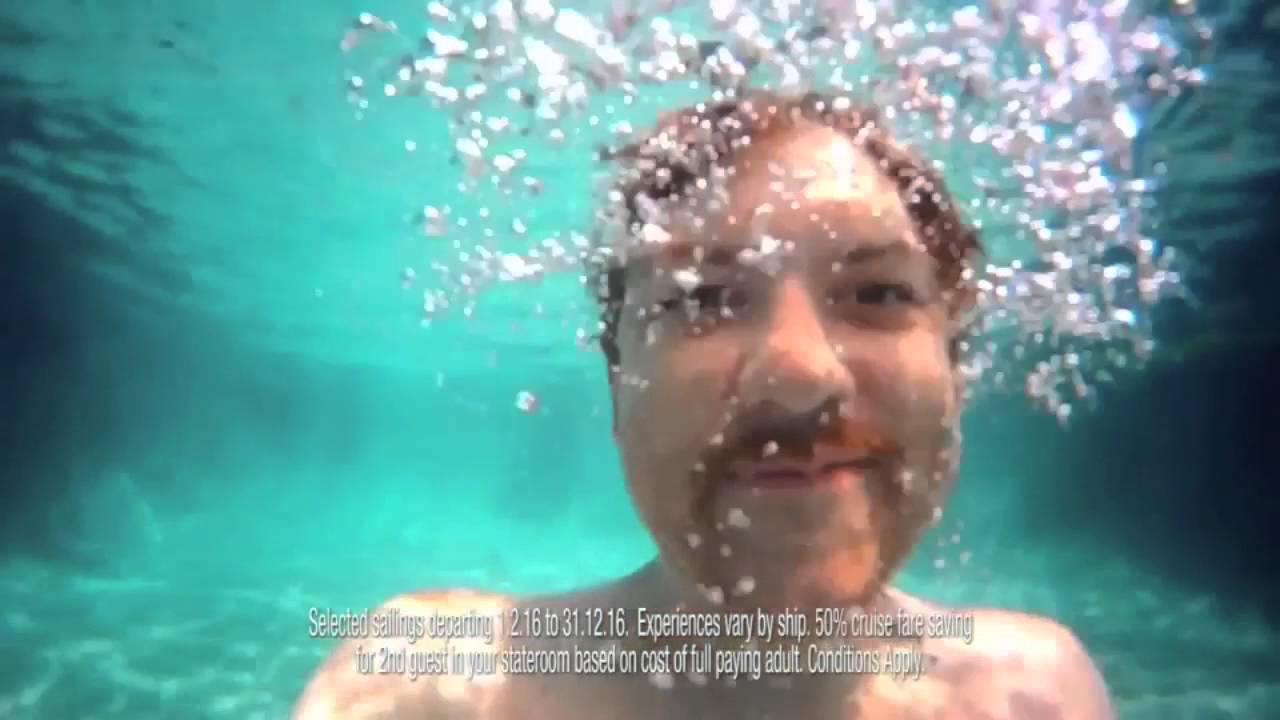
Royal has also revealed its wave offers which will encourage customers to 'Go All In'. The line has a buy one get one half price promotion, meaning there's a 50% saving on a second guest; third and fourth guests get 25% savings; all inclusive drinks packages for the first and second guest; and a reduced deposit of £50 on bookings made within at least 57 days of the sailing.

The promotion is applicable on bookings made before February 29 on selected six-nights or more cruises departing between February 1 and December 31, 2016.

Princess, Costa Asia and P&O Australia getting new ships

Princess, Costa Asia and P&O Australia getting new ships


Princess Cruises is getting a fourth Royal-class ship.

Carnival Corp. signed a memo of agreement with Italian shipbuilder Fincantieri for another Royal-class vessel for its Princess Cruises brand and two Costa Asia ships to operate in China.
A fourth ship was ordered to sail for P&O Cruises Australia. Deliveries of the ships are expected in 2019 and 2020.
"Each of the four new ships will be specifically designed and developed for the brand and guests it will serve," Carnival Corp. said.
The Royal-class ship will be 143,700 gross tons and carry 3,560 passengers. It will be the fourth in the series; the third, the Majestic Princess, is to be delivered in 2017. Carnival Corp. said that in addition to brand hallmarks like a "soaring" atrium and multiple dining and entertainment venues, the new ship would include "brand-new innovations to enhance the guest experience even further."
The Costa Asia ships will be 135,500 gross tons and carry 4,200 passengers.
The P&O Cruises Australia ship will also be 135,500 gross tons with 4,200 berths, and it will be that line's largest vessel. "Australia is one of the top performing cruise markets in the world, with an average annual passenger growth rate of 20% over the past decade," Carnival Corp. said.
 The orders are part of an agreement Carnival Corp. announced in March to build nine ships, five at Fincantieri and four at Meyer Werft, for delivery between 2019 and 2022. 
In June, Carnival Corp. said the vessels developed at the Meyer Werft yard in Germany would be powered by liquefied natural gas; two will sail for Aida Cruises, but Carnival Corp. has not assigned the other two.

Wednesday, 30 December 2015

Empress of the Seas to sail short cruises from Miami

Empress of the Seas to sail short cruises from Miami


Royal Caribbean International said the Empress of the Seas will offer short cruises out of Miami, beginning in March.
The 1,600-passenger ship, built in 1990 as the Nordic Empress, is returning to Royal Caribbean from Pullmantur as part of a fleet reduction of the Spanish cruise line. Pullmantur and Royal Caribbean are sister lines.
Royal Caribbean said the Empress will offer four- and five-night cruises to Nassau, Bahamas; Cozumel and Costa Maya, Mexico; Grand Cayman; and Key West, Fla.
The ship will stay late in the evening at many destinations, and will overnight in Cozumel on select cruises.
Royal Caribbean currently offers short cruises to the Bahamas from Miami on the Majesty of the Seas.

Frank Del Rio, CEO, Norwegian Cruise Line Holdings

Frank Del Rio, CEO, Norwegian Cruise Line Holdings

I think 2016 will be very, very good for the travel business and the cruise industry in particular.
Overall, the world economic picture is improving. The Fed raising interest rates for the first time in eight years is about as bullish a signal as you could have that the economy is strong and not likely to fall back on recessionary conditions. The travel industry in particular wants that because travel is a discretionary expense; you travel when you have money in your pocket. If the government confirms what we’re seeing in our everyday business, that will help boost consumer confidence, which will lead to more business for everyone. So I’m bullish on what we’re seeing in America.
In some parts of the world, what’s hurting our industry is foreign exchange. The Canadian dollar is very weak. The euro is very weak. The pound, miraculously, has stayed very level-headed, and our business in the U.K. is growing double digits across all three brands.
In Asia, currency is not an issue. It’s all about the emerging Asian market, dominated by China, and we believe that that will continue. A survey by UBS came out that confirmed the Chinese consumer is now more engaged than ever in the cruise space as a vacation alternative. They’re learning more about what differentiates the brands. That’s very, very good news for us.
Mexico is a little weaker than it has been in the past. But as far as markets go, perhaps the biggest weakness, from a pure economic structural perspective, is South America. Brazil is the big engine there, and they’re going through their recession now. Although different operators do have some capacity there, South America is not a dominant source market for the cruise industry, so I don’t see that as a huge headwind.
We’re now a global industry in every sense of the word. We source globally, our ships travel globally, so it’s impossible to pitch a perfect game. Somewhere in the world, where we source or we travel, will have problems. Sometimes they’re economic, sometimes they’re geopolitical, sometimes they’re both, but barring a proliferation of what we saw in Paris, what we saw in San Bernardino — that’s always the elephant in the room.
We used to say that the Europeans would bounce back faster than the Americans [from terrorism] because Europeans were perhaps better prepared to deal with these shocks. But Americans, perhaps not at the same level, do realize that terrorism is a fact of life these days, and it could happen in New York City, it could happen in Paris. The shock comes, and I think it fades more quickly than it would’ve faded pre-9/11.
The cruise industry as a whole is gaining vs. other vacation alternatives. The whole world is engaged in cruising, and that’s good for everyone, good for the economies of the places that we visit, good for the shipbuilding industry, good for the major cruise lines.
The Escape cost nearly $1 billion. You can enjoy it for under $150 a day. You can’t stay at the Dew Drop Inn in Pahokee for $150 a day.
And I think the good news is that the major cruise lines are all publicly traded and in the hands of professional managers. There is a board of directors, and there are shareholders to answer to. You have to run the business professionally, and I think that if you speak to my colleagues, they will tell you that what we all want is measured growth. The industry is growing, but we don’t want overcapacity. We don’t think overcapacity is around the corner anytime soon, and I think that the limitation in the shipbuilding side of the equation is sort of the regulator for that. The industry can well handle the six to eight ships that the shipbuilding industry can deliver annually.
We’ve publicly stated that 2016 will be a record year, a breakout year for Norwegian Cruise Line Holdings. We expect to have more revenue, more passengers booked, higher occupies and higher pricing than we did this time last year. The Caribbean is particularly strong, Alaska is particularly strong, Europe has been trending very well. Right now, it’s looking very good, and the commentary that I’ve heard from my colleagues in the industry mirrors what we’re seeing at Norwegian: strong worldwide demand, which is allowing prices to rise. That’s good news for our travel agent partners because they’ll earn higher commissions, and the consumer is still getting one heck of a value. 
On the Norwegian side, 2016 will be a year of execution, another year where we’ll elevate the customer experience. I’ve said many times that Norwegian is not the bottom dweller. It’s at the highest level of the contemporary space, and we intend to dominate that space, not only with our new ships like the Escape, Getaway, Breakaway and Epic but also by keeping the legacy fleet in tip-top condition. 
You’ll learn more about our plans about that early in the coming year. We’ll have a major announcement to make. And, of course, we’re getting ready for two new destinations: China, with the Norwegian ship that comes out midyear 2017, and I believe that at some time in 2016 an American cruise ship will sail into Havana harbor. That’ll be historic for both countries and the cruise industry. The last time Cuba was open to Americans, the cruise industry as we know it today didn’t exist.
And we’re excited about the two additions to the Oceania and Regent fleets. We’ve got the Sirena coming online in April, the fourth of our R-class vessels. She’s undergoing a top-to-bottom refurbishment, which will instantly bring her up to the Oceania standard. And she’s selling very, very well.
And then there is the Explorer, the first vessel launched by Regent since 2003. She will be, without question, the most luxurious cruise ship ever built. Her public rooms are magnificent. Her suites and staterooms are the largest at sea. The balcony isn’t just a place to peep your head out and catch some wind but actually to go out and enjoy the sea. The cuisine, how do I articulate how good it is? I can look you in the eye and tell you that there is no restaurant in Miami — and I’ve not been to any restaurant in New York — that has the kind of quality and variety of styles that you’re going to find aboard the Explorer. We have an exciting inaugural planned, and I’ll tell you this: It is the antithesis of Pitbull [the godfather of the Escape]. I’ll let your mind wander as to who that might be.

She is selling like we’ve never seen anything before, with per diems in excess of $1,000. The $10,000-a-night owner suite is sold out for all the sailings that we have published. There’s a waiting list on every single one of those departures. People recognize this is the best of the best of the world, and there’s plenty of money floating out there, and they all want in.
And I get to be the first one who ever sleeps on that bed and enjoys that suite.

2015 Year in review

2015Year in review


By Johanna Jainchill

Cuba. Terrorism. Mergers. Lufthansa's GDS fee. Crystal Cruises. Fathom. The sharing economy. The open skies feud. The strong dollar.

For travelers, 2015 was bookended by news about borders. The year began with the nudging open of borders that had been closed to U.S. tourists for a half century but ended with calls to tighten borders worldwide.

In January, the historical thaw between the U.S. and Cuba began a process that makes travel to the long-forbidden island much easier, but by December, there was a very real possibility that the U.S. and Europe might tighten their borders in the face of terrorism, raising new barriers to travel.
The industry can only hope to reclaim the optimism that ushered in 2015. But given the recent terror attacks and the coming election campaign, that's anyone's guess.

Here, in no particular order, are the topics we think made the year most memorable:

Cuba

The extent to which Cuba managed to dominate travel talk for much of 2015 was dizzying.
It's hard to believe that just one year ago this month, President Obama announced that the U.S. would restore diplomatic ties with the Caribbean's largest island nation. Since then, every few months, Washington and Havana have taken steps that seemed to inch the two nations closer to normalized relations, from the U.S. removing Cuba from its list of state sponsors of terrorism to both reopening embassies in each other's capitals for the first time since 1961.

On the travel front, the pace of change was even more frenetic. The administration eased travel restrictions to Cuba in January so U.S. citizens no longer had to apply for individual licenses from the Treasury Department to travel there but could instead self-report that they were visiting under one of 12 categories of allowable travel, ranging from educational to humanitarian to religious reasons.
The industry pounced.

Several major tour operators have since debuted their first Cuba tours, including Apple Vacations, Abercrombie & Kent and Travel Impressions.

In February, CheapAir.com became the first OTA to enable U.S. travelers to book flights between the U.S. and Cuba, albeit through third countries, a capability it expanded to direct charter flights later in the year. Several commercial airlines began increasing charter flight schedules to Cuba, and the GDSs said they had readied or were in the process of readying their systems to accept regularly scheduled commercial flights to the island.

All of that took place well before the U.S. State Department said last week that the U.S. and Cuba had reached an agreement to resume direct commercial flights between the countries.
With hotel development in Cuba still decades behind, it seemed natural that a cruise line would be among the first suppliers to introduce products for the island. Carnival Corp.'s new social impact brand, Fathom, said it would become that line, obtaining a license from the U.S. government to sail to Cuba in the spring of 2016.

The only thing that could stand in Fathom's way of marking that milestone is the pace at which Cuba has been opening to Americans; it's very possible that by then, all travel restrictions will have been lifted, making Cuban ports regular stops on Caribbean itineraries.

Terrorism


Since the 9/11 terrorist attacks 14 years ago, travelers in general have become more inured to threats of violence. But this year, their resilience has been tested by an increasing number of violent incidents.

It started in January with the Paris attacks on the offices of the satirical magazine Charlie Hebdo. Though tourists weren't targeted, the attacks took place in the most visited city in the world.
Then in two separate incidents in Tunisia, cruise passengers visiting a Tunis museum were among the victims of a terrorist attack that left 23 dead, and 38 tourists, primarily from Britain, were gunned down at the seaside resort of Sousse.

Yet there were no serious ripples to the U.S. travel industry at large until November's twin attacks by ISIS. The first brought down a Russian MetroJet airliner taking tourists home from Egypt's Sinai peninsula, killing all 224 people onboard. The second was the terrorist attacks on Nov. 13 that killed 130 people in Paris cafes, a concert hall and a soccer stadium.
The Paris attacks brought tourism in France to a near standstill, as did raids tied to the resulting investigation in nearby Brussels. The events sparked discussions about securing borders in both the U.S. and Europe.

For the tourism industry, the fallout could have serious implications. Talks of reintroducing border controls among Europe's 26 open-border countries would significantly change how travelers move through the Continent.

In the U.S., the attacks prompted the White House to make immediate changes to the Visa Waiver Program (VWP), which allows citizens of 38 member countries to enter the U.S. and stay of up to 90 days without a visa. The concern was that most of the Paris attackers were citizens of France or Belgium, both VWP countries. And shortly thereafter, lawmakers introduced legislation that would add even more restrictions to the program. Members of the travel industry worry that further restrictions could deter the many millions of international travelers who peacefully visit the U.S. every year and add billions to the economy.

Terrorism has damaged tourism industries in places like Egypt and Tunisia, where it represents a crucial part of the gross domestic spending. It remains to be seen if the U.S. and Europe can devise policies to protect their citizens while also enabling them to move freely around the world.

 Merger mania


In recent years, travel industry merger and acquisition news has been dominated by airlines. But in 2015 our attention was grabbed by Marriott International's acquisition of Starwood Hotels & Resorts Worldwide, creating the biggest hotel company in the world by far, and before that by Expedia's triple play: Travelocity, Orbitz and HomeAway.

Analysts quickly predicted that Marriott's $12.2 billion acquisition would necessitate the shedding of some of the combined company's 30 brands. Granted, Marriott CEO Arne Sorenson said shortly after the deal was announced that he expected Starwood's 11 brands to "remain in place." But he also noted that some of those brands compete -- for example, Marriott's Renaissance with Starwood's Le Meridien -- making the future unclear.

Travel advisers undoubtedly hope that Starwood's trade relations approach is the one the company hangs on to. As ASTA CEO Zane Kerby told Travel Weekly last month, Starwood has a track record of being "supporters of the trade industry," while Marriott has been "kind of on and off," a not-so-opaque reference to the hotelier's "Book Direct" campaign.

Top online news stories of 2015

We took a look at the articles on TravelWeekly.com this year and ranked them by page views. Here are the 10 most popular:

1.Celebrity Cruises to go mainly with bundle pricing (June 30)
2.Report: Baha Mar resort 'unlikely' to open this year (May 12)
3.The same old story: Baha Mar opening delayed (May 6)
4.Caribbean and Mexico resorts plagued by sargassum outbreak (Aug. 30)
5.Low water levels plague Europe river cruises (Sept. 2)
6.Dominican Republic tops in Caribbean tourism, and growing (May 21)
7.Margaritaville's presence grows from song to eateries to resorts (Jan. 4)
8.Harmony of the Seas to sail from Barcelona in 2016 (March 13)
9.Drug violence occurs near Puerto Vallarta but not in tourist areas (May 4)
10.RCCL stops discounting close-in bookings for most cruises (April 20)

For OTAs, the Marriott/Starwood merger is not good news because the combined company will have more than 1.1 million rooms globally, giving it substantial distribution leverage.

But OTAs have been busy consolidating, as well. Expedia acquired Travelocity for $280 million in January, Orbitz Worldwide for $1.34 billion in September and HomeAway for $3.9 billion last month. HomeAway and its brands, including VRBO.com, accelerate Expedia's efforts to gain share in the private-accommodations sector, while Orbitz and Travelocity help it compete against Priceline, which itself acquired a $60 million stake in Brazil-based OTA Hotel Urbano.

And just as OTAs can't be thrilled about the Marriott/Starwood combo, the same goes for hotels being wary about Expedia's buying spree. In an objection to the Orbitz deal filed with the U.S. Justice Department, the American Hotel & Lodging Association asserted the deal would raise consumer costs and hurt small hotel operators.

Lufthansa's GDS fee
When the airlines of the Lufthansa Group (Lufthansa, Austrian Airlines, Brussels Airlines and Swiss International Air Lines) in September added a fee of 16 euros to every booking made via a GDS, they were not the first airlines to attempt to circumvent the GDSs and persuade travel agents to book direct.
 
But considering the way Lufthansa has dug in its heels on the issue, it apparently plans to be the first carrier to make the strategy stick. Lufthansa Chief Commercial Officer Jens Bischof said shortly after implementing the surcharge that it was intended to "disrupt" the travel distribution landscape and was about much more than the fee itself.

"We are very aware that our new distribution strategy is disruptive, and it will change the future way of distribution," Bischof told the Association of Corporate Travel Executives.
Bischof's words only further inflamed travel sellers who had been steering business away from Lufthansa since the surcharge went into effect, attempting to send a message to the rest of the airline industry that it should not follow suit.

Rather than reverse direction under the pressure of what at least one GDS reported were depressed Lufthansa sales after the surcharge went into effect, Lufthansa inked an enhanced distribution agreement with Google Flights, signaling that the German carrier was resolute in its trajectory away from GDSs.

Crystal Cruises

In 2015, Crystal Cruises was the mouse that roared. For years, the luxury cruise line's loyal clientele enjoyed a high-quality product on two beautiful but aging ships. Each year travel sellers would ask if the line planned to expand, but for more than a decade, it did not.

Then along came Edie.

Upon taking the helm as Crystal's CEO two years ago, Edie Rodriguez famously said that her plan was to grow the line to "seven ships for seven seas." What she didn't say then was that the boast was just a start.

Rodriguez later said that she only took the job because she had been promised the line would find a buyer willing to grow it. Genting Hong Kong became that buyer, and last summer Crystal announced the most ambitious expansion plan in recent cruise history: three new 1,000-passenger ships, plus an expansion into river cruising, yacht sailings and luxury private-jet tours.

Crystal not only ordered the ships, but to avoid any delays in delivery, Genting bought Lloyd Werft, the European shipyard that had been contracted to build them. Last month, Crystal acquired a Boeing 777-200LR for its Crystal Luxury Air startup, and Crystal Yacht Cruises was scheduled to debut just before Christmas with the Crystal Esprit, an extensively refurbished, 62-passenger yacht.

While some industry watchers might be skeptical that Crystal can deliver all that it says it will, so far it has.

Baha Mar

Bahamas' star-crossed mega-resort was also among the industry's most talked-about projects this year, though for all the wrong reasons.

The $3.5 billion project, the most expensive development in Bahamas' history, was originally slated to open in Nassau by the end of 2014 and fly the flags of luxury brands Grand Hyatt, SLS and Rosewood in addition to an eponymous casino-hotel and the pre-existing Melia Nassau Beach.
Beset by delays, that date was pushed to spring, and by the time spring came and went, the question became not when but if the resort would ever open.

The Chinese-backed project filed for Chapter 11 bankruptcy protection in June under the auspices of wanting to complete construction and open as soon as possible. But instead of moving the project along, bankruptcy only made things messier: Talks among the developer, lender, contractor and the Bahamian government became contentious; Rosewood begged out of its licensing agreement with the development; the U.S. Bankruptcy Court threw out the case in September; Baha Mar laid off thousands of workers in the fall; and Bahamas court officials prepared to start a potential liquidation process in November.

All this, even as Baha Mar officials declared the project 97% finished.

With no imminent resolution likely, it appears Baha Mar has very little chance to capture any of this year's Caribbean high-season dollars, which it sorely needs. The question for 2016 is: Will it ever

The sharing economy

As peer-to-peer travel businesses become ever more mainstream and take a larger piece of the lodging pie, it would make sense for hotels to double down in opposition to home-rental services like Airbnb, which hoteliers insist depress their revenue.

Instead, a surprising trend that emerged in 2015 was of traditional hotel brands doing the exact opposite: cutting deals with the upstarts.

Both Hyatt Hotels and Wyndham Worldwide put their money in home-sharing websites; Hyatt invested an undisclosed sum in London-based Onefinestay, which rents out luxury homes in cities such as New York and Paris, and Wyndham entered into a partnership with London-based home-exchange operator Love Home Swap.

Beyond hoteliers, other traditional travel sellers also moved into the segment. Signature Travel Network entered into an agreement for its travel adviser members to sell Onefinestay's upscale inventory, and Expedia bought HomeAway for $3.9 billion last month, along with its brands, including VRBO.com and VacationRentals.com.

Both deals offered strong indications that the travel distribution side recognizes the value of the home-rental model.

Fathom
Fathom, Carnival Corp.'s new for-profit, social-impact cruise brand, made waves this year for many reasons, one of which was that it was so unusual for Carnival.

Then again, the launch underscored how much Carnival has changed in the last few years under its new CEO, Arnold Donald. Last year, that change was manifested in the line's renewed outreach to the trade. This year, it was the launch of the first do-good cruise line by any major brand.
Fathom will take guests to foreign countries to participate in cooperative social projects, starting in the Dominican Republic in April, followed by Cuba in May.

The launch also pointed to the power of the millennial generation, which seems to have firmly overtaken boomers as the go-to market in almost every business segment. When Carnival launched Fathom, it was clear that millennials were on its mind, primarily ones who would not have otherwise cruised, and even more specifically, the "purpose-driven millennial," according to the brand's founding director, Tara Russell.

Research supports this line of thinking. The results of a comprehensive survey by Tourism Cares on the philanthropic traveler, released in September, found that millennials are particularly tuned in to social-impact travel: On average, they volunteer more than double the hours and donate nearly three times the money that travelers 55 and older do. Further, 81% volunteered during their travels in the past two years, and 50% said they intended to plan more trips around giving back.

Open skies

Few areas of travel regulation seem to divide the industry more than airline policies, and this year, the open skies debate was the most divisive issue of all.

The fight over whether or not Persian Gulf carriers Emirates, Etihad and Qatar should be investigated by the U.S. government for violating open skies agreements has divided the airline industry itself as well as travel marketing organizations and politicians.

At issue is the assertion by the Big Three U.S. airlines -- Delta, American and United -- that the Gulf carriers have received $42 billion in subsidies from their governments since 2004, violating open skies agreements by giving them an unfair advantage in the international aviation market. The Gulf carriers deny this charge.

U.S. cargo carriers and smaller airlines like JetBlue as well as the U.S. Travel Association oppose any restrictions on the expansion of the Gulf carriers' U.S. routes, arguing that open competition is best for all and promote travel.

The battles escalated this fall when Delta and United said they would suspend Dubai routes from Atlanta and Washington, respectively. Delta said it would redeploy resources to "where it can compete on a level playing field that's not distorted by subsidized, state-owned airlines."

While many city and state politicians have voiced support for the Big Three U.S. airlines, who warn the subsidies will mean fewer jobs in their cities and states, the Obama administration has made no move so far on the issue. And if the airlines continue to enjoy record profits in 2016, it is doubtful there would be any public support for changes that could lead to higher airfares and fewer consumer choices.

Strong dollar, weak yuan

For China and the U.S., 2015 has been a tale of two currencies. The dollar surged for most of 2015, while the yuan suffered a serious slump. The impact has been a mixed bag for the industry.

The yuan's weakness threatens to erode outbound Chinese travel, which is the fastest-growing overseas source market for U.S. travel spending. The yuan's downturn has already affected U.S.-based hotel-casino operators in Macau, the Hong Kong-area destination where travelers from mainland China account for about two-thirds of visitors.

The strong dollar, meanwhile, has helped what agents in the spring said had been a 20% jump in international travel, according to Travel Weekly's annual Consumer Trends report. And some tour operators, including Tauck and Trafalgar, said the strong dollar enabled them to drop prices for 2016.
 
On the downside, the U.S. Commerce Department reported that the tourism trade balance had dropped 17% for the first eight months of 2015, meaning that American were spending more money overseas than in-bound tourists were spending on U.S. soil.

Starwood's CFO said in October that New York faced "pressure" from fewer international travelers "due to the strong dollar," and Royal Caribbean Cruises Ltd. in April reported that with the majority of its onboard prices in U.S. dollars, international passengers were buying less while sailing.

The party may be over, or just beginning, depending on where you stand. After surging for most of the year against other world currencies, the dollar's value began to drop in October.


Monday, 28 December 2015

Windstar ship runs aground near Panama

Windstar ship runs aground near Panama


Windstar Cruises said the Star Pride, a 212-passenger ship, ran aground at Isla de Coba, Panama, and suffered some hull damage.
On a posting on its Facebook page, Windstar said everyone on the 212-pasenger ship was safe. Guests disembarked as scheduled for a private-island event.
After determining that the ship was unable to sail, Windstar canceled the rest of the cruise. Passengers were transferred from the island location to other ships: Windstar's Star Breeze and Paul Gauguin Cruises'  Tere Moana. 
Windstar said the guests were routed through Golfito, Costa Rica, to San Jose, where they had the option to stay in Costa Rica for the balance of their vacation or to fly home early. They received a 100% refund plus a future cruise credit for 100% of their fare paid.
Windstar said the Star Pride will be towed to the port of Balboa in Panama for further inspections and repairs. The Dec. 26 cruise has been canceled.

Disney revises Mediterranean voyage

Disney revises Mediterranean voyage


Disney Cruise Line altered a Mediterranean cruise next summer to eliminate port calls in Greece, Turkey and Malta.
The 12-night cruise on the Disney Magic is scheduled to depart Barcelona on Aug. 1.  Its original itinerary included Athens as well as Mykonos in Greece, Kusadasi in Turkey and Valletta in Malta.
Other cruise lines have scrapped calls to the Greek island of Lesbos because of the refugee crisis and Turkey because of security concerns.
Disney has revised the itinerary almost completely, leaving only one port, Civitavecchia, from the original lineup. The cruise will now call in Olbia, Sardinia; Civitavecchia, Naples and Livorno, Italy; Palermo, Sicily; Villefranche-sur-Mer and Cannes, France; and Palma de Mallorca.
In a letter to travel agents, Disney said, “We realize this is a considerable change from the previously published itinerary and hope you and your client understand our desire to only provide the best possible experiences to our guests."
Customers have been given a choice of a refund, a change of sailings, or a $1,000 onboard credit if they stick with their original booking.

Thursday, 17 December 2015

At Flytographer, a local photographer to capture vacation memories

At Flytographer, a local photographer to capture vacation memories

In the age of selfies and social media, everyone’s a photographer, and snippets of our daily lives and travels are on constant display.
But while we are all busy snapping and posting pictures of our meals, our hotel rooms and our toes sticking up from a lounge chair at the edge of that beautiful beach, many travelers also return home to find they don’t have any great pictures of themselves with their friends, family or spouses that capture the truly special moments from their trip.
It was just such a dilemma that inspired Nicole Smith to found Flytographer, a service that hooks up photographers in 160 cities around the world with travelers looking for candid, quality pictures from their special trips.
Recently named a top travel gift for 2016 by TripAdvisor and Forbes, Smith said she came up with the idea for the business in 2011, when she was on a girl’s getaway weekend in Paris with her best friend, who she hadn’t seen in four years.
After trying to capture the event through selfies with “that floating head effect” and blurry pictures taken by the occasional stranger that she said made her look “like I had seven chins,” Smith said they asked a third friend who had joined them for brunch to follow them around with her phone and snap some candid shots.
“She did that for about 20 minutes,” Smith said. “I looked at my phone and I literally got goose bumps because she captured that weekend like we never could."
Smith started Flytographer in 2103. The company now has more than 300 photographers in most major cities and on every continent except Antarctica. And she said they are adding more every week.
Honeymooners are among Flytographer’s biggest customers, Smith said; some were given the service as a wedding gift.
Smith said the service is also big with couples on anniversary trips, as well as families and multigenerational travelers, who are gathering in some of the world’s most beautiful destinations and “can’t trust Uncle Bob to take the pictures because he never nails it."
Such shoots from family trips, she said, are a great alternative to a studio or backyard photo session.
Solo travelers also like to hire Flytographer, she said, because “obviously it’s hard to capture memories when you’re alone."
“We also hear from solo travelers that they love having this wing man, who is a true local,” Smith said.
That local angle is an added benefit to the service. Smith says the company only hires “someone you would want to have a drink with in that city, not someone who’s going to boss you around,” and “locals who are genuinely passionate about playing host."
The company has a travel agent program that pays a minimum 10% commission. This year it was a sponsoring exhibitor at the International Luxury Travel Market in Cannes, France.

Costa trials onboard robots

Costa trials onboard robots

Costa trials onboard robots
Pepper robots are being used on board Costa and Aida cruise ships
By http://www.passengership.info/

Costa Group has signed an exclusive agreement with French company Aldebaran to use its Pepper robots on board vessels to assist passengers on Costa and Aida cruise ships. Pepper is the world’s first robot that reads main human emotions.
Michael Thamm, chief executive of the Costa Group, said: “With an emotional robot on board our cruise ships we are once again continuing our tradition of innovation. For us, this is an important step towards a digital future for our brands.”
Pepper has successfully completed a trial on board AIDAstella. The first batch of Peppers will join the crew and start helping on board AIDAprima and Costa Diadema in spring 2016, guiding guests when they embark and while on board. They will also be on hand to provide recommendations and tips on restaurants, events and excursions. They can communicate in German, Italian and English. By summer of 2016 the rest of the robots will be joining the crew aboard the Costa and Aida fleets.
Pepper was developed in Japan and is the first humanoid robot capable of recognising the main emotions and to take his environment into account and proactively act accordingly. Pepper is well equipped with features and a high-level interface for communicating with those around him, to move fluidly and analyse expressions and voice tones using the latest advances in voice and emotion recognition.
The robot measures 120cm tall and weighs 28kg. Its movement is provided by three omnidirectional wheels while a 3D camera detects people and their movements and it has a 10 inch touch screen.
It has still to be decided whether the Peppers have to meet STCW training requirements.

Meyer Werft deploys Dassault’s passenger ship design solutions

Meyer Werft deploys Dassault’s passenger ship design solutions

Meyer Werft deploys Dassault’s passenger ship design solutions
Naval architects can use the 3D Experience platform to design complex cruise ships

German shipyard Meyer Werft has started using Dassault Systèmes’ 3DExperience design and product lifecycle management (PLM) solutions to engineer and build passenger ships. It is using the On Time to Sea and Designed for Sea industry-specific software to improve the efficiency of designing and building cruise ships and ferries, and to enhance the skills of its workforce.
Meyer Werft has deployed Dassault’s programs in its new technology and development centre in Papenburg, Germany. Here the shipbuilder is pooling most of the design and development work from its 500 designers and engineers. Dassault’s software will also support additional teams in Papenburg and at sites in Rostock, Germany and in Finland that are involved in building cruise ships, river cruise ships, ferries and other vessels. The 3DExperience platform assists the complex task of designing and engineering cruise ships, which could have more than 10 million individual parts and assemblies. The complexity, diversity and large volume of data involved require efficient solutions to design and build these ships.
With the software, Meyer Werft’s design and development teams can use a unified digital environment to monitor the entire lifecycle of a ship, from its construction and operation to its decommissioning. Virtual design, engineering and project management applications help seamlessly address complex needs in product development and process requirements. “Thanks to the 3DExperience platform, we can foster collaborative creativity that fulfils the highest technical demands of passenger ship owners worldwide from hull shape, hydrodynamics and fuel consumption, to capacity and onboard comfort and entertainment,” said Meyer Werft technical director Philip Gennotte. “Today’s shipbuilding is a highly modern industry that requires a combination of ideas, knowledge and technology in order to introduce sophisticated, future-oriented touristic concepts.”

Wednesday, 16 December 2015

MSC Seaside bookings open

MSC Seaside bookings open

The MSC Seaside is scheduled to sail its maiden voyage in December 2017.

MSC Cruises said it has begun accepting bookings from repeat customers for MSC Seaside, a new ship that will be based in Miami.
Guests who are members of MSC’s Voyager Club will get their standard 5% discount, plus a bonus Classic drink package applicable to first and second guest in a stateroom. Bookings for the general public open Dec. 29 with the same drinks package offer.
The 4,100-passenger ship is expected to sail week-long Caribbean cruises; its first cruise is scheduled to leave Dec. 21, 2017. Prices start at $589 per person, MSC said.
Seaside will feature a unique 360-degree ocean level promenade on Deck 8 that will include indoor/outdoor shops and restaurants, as well as a buffet area and a pool, which are traditionally located on a cruise ship’s higher decks.

Norwegian Cruise Line toughens cancellation terms

Norwegian Cruise Line toughens cancellation terms

Norwegian Escape, Getaway, and Breakaway.

Norwegian Cruise Line announced new terms for canceling booked cruises that will require earlier decisions about backing out of trips and impose higher penalties on cancellations.
The changes, which take effect on bookings made after Jan. 1, are complex. But on one common product, the cruise or cruise tour of 7 days or longer, the least costly cancellation will require forfeit of 25% of the cruise fare for bookings cancelled 76 to 89 days from sailing.
The current policy is loss of deposit for bookings cancelled 56 to 75 days before sailing.
Cancellations 60 to 75 days out come with a 50% penalty, those from 31-60 days a 75% penalty and within 30 days, 100% penalty.
The current schedule penalizes cancellations from 29 to 55 days out at 50%, and those from 15 to 28 days at 75%.  Currently, when guests cancel within 14 days of sailing, they lose their full fare.
Standard deposits will be $100 per person on cruises of two to six days, $250 on cruises seven to nine days and $400 on voyages 10 days or longer.
Final payment will be due 75 days from sailings of two to six days and 90 days on longer voyages. Holiday sailings will require final payment 120 days from sailing, except for the Norwegian Sky.