Showing posts with label Airlines. Show all posts

Thursday, 6 May 2021

Norwegian CEO Frank Del Rio: ‘Let Us Cruise’

Norwegian CEO Frank Del Rio: ‘Let Us Cruise’


"Just let us cruise, CDC,” said Frank Del Rio, president and CEO of Norwegian Cruise Line Holdings (NCLH), on the company's Thursday earnings call, expressing his frustration with what he called ridiculous regulations and overreach by the agency.

“But is it not just the CDC (holding the industry back),” Del Rio added. “To be fair, the rest of the world has to open up as well – Europe, Asia and South America.

“How quickly we can return to normal will depend on travel restrictions being lifted and borders being opened.

“There are 50 million people who have not been able to cruise for the last year and a half and now want to cruise. There is pent up demand setting us up for a beautiful scenario to improve pricing.”

Forward bookings and pricing are up compared to 2019 which was a record year, Del Rio said. 

Part of Del Rio’s frustration comes from Norwegian submitting an “ironclad proposal” to the CDC on April 5 and has not yet received an answer, which also puts the mid-July return to service in jeopardy.

Among the impractical and onerous requirements, the CDC has released is that passengers must wear face masks onboard all the time, only lifting the mask to take a bite of food or a sip of a drink, according to Del Rio. He said he was hoping these requirements would not be applicable to fully vaccinated ships.

NCLH will require 100 per cent vaccinations of passengers and crew wherever the ships are sailing and do not plan to participate in the simulated sailing program of the CDC, Del Rio noted.

He said he was outraged that the cruise industry is being treated differently than airlines, casinos, etc. and said that cruise ships will be the safest place on earth.

“We will have 100 per cent vaccinated passengers and crew in addition to our SailSAFE program,” he said.

Friday, 9 April 2021

Uk's High Price of PCR Tests UnCovered.

Uk's High Price of PCR Tests UnCovered.


The average cost of PCR Covid-19 tests in the UK is more than double the price charged in other European countries at £128 per person, 
according to research.

PCR tests are set to play a key role in the planned restart of international travel from 17 May, as laid out on Friday (9 April) by the government’s Global Travel Taskforce, with travellers required to take these tests after returning from even the lowest risk “green” countries under the planned new traffic light system.

But research by Abta and the Airport Operators Association found that PCR costs in the UK cost an average of £128 per person compared with an average of just £62pp across eight key European destinations.


The high costs of PCR tests are seen as a potential deterrent to holidaymakers booking international trips this summer, particularly for families and short-haul travel.


Mark Tanzer, Abta’s chief executive, said: “Travel to the lower risk, green categorised countries should be as unrestricted as possible. The requirement for a PCR test when you arrive back from a green list country could prove a cost-barrier for many people – we welcome the fact that the government commits to engaging with industry on this issue.


“Small changes, like requiring a PCR test only if the individual gets a positive result from a lateral flow test, would make international travel more accessible and affordable whilst still providing effective mitigation against re-importation of the virus.


“The government should also consider whether those who have been vaccinated can be exempt from testing requirements, should scientific evidence suggest reduced transmissibility.”


The UK government has now pledged to work to bring down the cost of Covid testing for leisure travellers ahead of the resumption of international travel this summer.


Karen Dee, chief executive of the Airport Operators Association, added: “The cost of testing could act as a significant barrier to the meaningful restart to aviation and should not be underestimated.


“With UK pre-departure and post-arrival tests costing around double the average in countries like Spain, Italy, Portugal and Greece, UK travellers are penalised for wanting to travel from the UK.


“Without a cost-effective solution like this, a summer holiday will be out of reach for many and damage an already badly hit aviation and travel industry even further.”


Tuesday, 14 July 2020

Can cruising go from Covid scapegoat to pandemic hero?

Can cruising go from Covid scapegoat to pandemic hero?

Coronavirus: Foreign Office tells Britons to stay on cruise ship ...
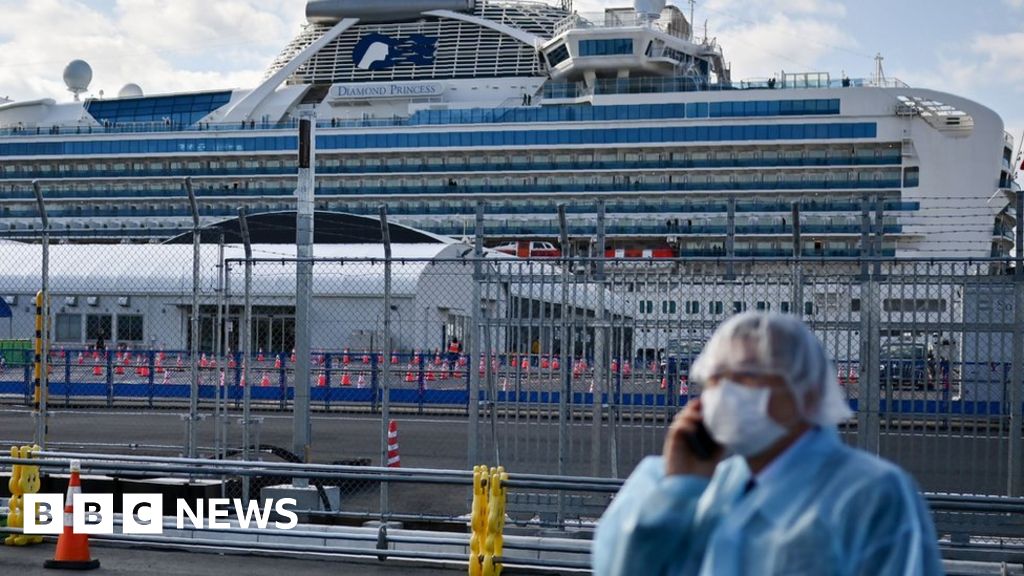
Diamond Princess in Japan
In terms of economic and reputational damage, travel was the first industrial sector to fall victim to the coronavirus and is expected to be the last to recover.
And among travel products, none has taken a harder reputational hit than cruising.
But recently, a path to reputation restoration has opened, and with it the possibility that cruising may even be credited with funding advances related to epidemiology.
Crises of the magnitude of Covid-19 spur a binary result for enterprises: innovation or collapse. And the high degree of risk posed to cruise lines is measurable, reflected in the cost of the loans and investments they arranged to ensure midterm liquidity. 
But signs have emerged that cruising will not only survive but even offer a case study of exemplary crisis management. Such a narrative might go like this:
When the initial reports of the virus came out of Wuhan, China, they were frightening but distant, clouded by medical unknowns and shrouded by official silence and secrecy.
A clearer, though far from complete account emerged from the disease's devastating impact on a cruise ship quarantined dockside in Japan. For more than two weeks, the attention of the world focused on a microcosm of an emerging pandemic. The setting -- the Diamond Princess -- became a metaphor for contagion and fear. Every new and morbid development was broadcast worldwide.
How does a product that has never been universally embraced -- it has devoted followers, but still struggles against outdated stereotypes and a persistent chorus of critics -- overcome the stinging characterization of being a "petri dish" of infection?
Even within the travel ecosystem, cruising's situation seemed particularly dire. Aviation and hospitality had been struck devastating blows; individual brands are still endangered. But because these sectors never stopped operating, enhanced protocols for sanitation were formulated and deployed quickly. 
Compared with cruising, these are relatively simple operations. Airline passengers occupy just a few cubic feet of space over a brief period of time. Service is minimal.
Hotels are more complex, but they don't move around and are typically surrounded by a community of supportive services.
A portion of cruising mirrors hotel operations, and like aircraft, ships move through multiple regulatory jurisdictions. But cruise companies also run shore excursions, manage private islands and maintain myriad public spaces, restaurants and recreational opportunities. They house staffs as well as guests. Maritime engineering and architecture bring additional challenges. And ships must be self-contained, often isolated from support for days.
It's the sheer number of issues cruising must address that may ultimately give it its halo. Travel Weekly news editor/acting cruise editor Johanna Jainchill and I interviewed former secretary of Health and Human Services (and three-time Utah governor) Mike Leavitt, former Food and Drug Administration commissioner Dr. Scott Gottlieb, Royal Caribbean Cruises Ltd. chairman Richard Fain and Norwegian Cruise Line Holdings CEO Frank Del Rio last week on a Zoom call to discuss a panel they assembled to develop health and sanitation protocols.
The panel comprises working groups. One, for example, will recommend how to operate a safe shore excursion, breaking it down to components in order to minimize the possibility of introducing the virus from a port onto a ship.
Fain and Del Rio expressed willingness to share what they discover with other cruise lines, and Gottlieb noted that, because the challenges of cruising are diverse, the work done by the panel may have applications in other industries. 
If so, the petri dish metaphor could be replaced by the image of a ship as a bubble of protection, an environment, as Gottlieb put it, of "exquisite control" that poses less threat than a land vacation.
Should this vision be realized, the extended No Sail Order may ultimately be viewed as an unintended blessing. The lines not only have the time to get it right but to emerge from the crisis as innovators and responsible corporate citizens.
It's not a far-fetched outcome. There's a parallel in the oft-cited challenge Tylenol faced in 1982 when cyanide was put, seemingly randomly, into bottles of the pain reliever on shelves of Chicago-area stores. Seven people died, and the brand became associated with fear and death.
At a cost of $100 million, the company recalled and destroyed all existing bottles of the drug and developed the multilayered, tamper-proof seals that have become standard for the industry. But more than that, manufacturer Johnson & Johnson was credited with putting values over profit. Confidence in Tylenol was restored and, as importantly, trust in the entire company was enhanced.
As noted above, cruising is a complex product. There are still hurdles to overcome, and the recruitment of big names for a blue-ribbon panel is not enough to ensure success. But after speaking with Del Rio, Fain, Gottlieb and Leavitt, I'm encouraged that if they follow through on their commitments for passenger safety, the industry will not only recover but may receive due credit in the annals of health and crisis management. 

Friday, 1 May 2020

British Airways ‘may not operate at Gatwick after pandemic’

British Airways ‘may not operate at Gatwick after pandemic’

History of British Airways - Wikipedia
British Airways at Gatwick Airport

British Airways has told its staff that it may not reopen its operation at Gatwick airport after the coronavirus pandemic passes.

A leaked memo written by the head of BA’s Gatwick hub, Adam Carson, was written after BA announced a consultation that could result in the loss of up to 12,000 jobs.

BA’s Gatwick operation, which is currently suspended amid travel restrictions, is about a fifth the size of its hub at Heathrow where it has a dedicated terminal.

The letter, seen by Travel Weekly, said: “As you know, we suspended our Gatwick flying schedule at the end of April and there is no certainty as to when or if these services can or will return. Today’s announcement outlines how we propose to ensure we are competitive and sustainable for the future, that we are the right size to meet demand and that we can be flexible and resilient to change.”

It also points to a “reduction in the size of our cabin crew community” and changes to pay and reveals that BA’s ground staff at Gatwick are expected to be transferred to BA subsidiary Gatwick Ground Services.

In a separate letter to pilots, seen by the BBC, BA said it cannot rule out suspending the rest of its Heathrow operation. The letter is quoted as saying that some of the airline’s rivals abroad are facing tough competition and reportedly suggests that a quarter of BA’s 4,300 pilots are set to lose their jobs.

BBC News said the letter from senior management says: “We need to ensure that our remaining operation is efficient, flexible and cost-competitive to enable us to survive in an increasingly lean and unpredictable industry.”

Travel Weekly has approached British Airways for comment.

On Tuesday, British Airways parent IAG said it could make up to 12,000 of the airline’s staff redundant in a restructure.

British Airways chief executive Alex Cruz said the “outlook for the aviation industry has worsened” over recent weeks, leaving the airline with no choice but to take action and “act decisively”.

Unions have criticised the move.

Responding to news that BA was considering its position at Gatwick, Brian Strutton, general secretary at pilots union Balpa, said: “As far as Balpa is aware, there is no truth in the rumour that British Airways will pull out of Gatwick and there has been no indication of that from BA to us. However, it is on our list of questions to ask them.”

Monday, 6 April 2020

DOT orders airlines to pay out refunds

DOT orders airlines to pay out refunds

DOT orders airlines to pay out refunds
Photo Credit: Oliver Le Moal/Shutterstock

The Transportation Department on Friday issued an enforcement notice, telling airlines that they remain obligated to pay out refunds for flights that they have cancelled. 
The order was prompted by an increase in complaints from ticketed passengers who have been denied refunds, the DOT said. Airlines instead are often giving travel vouchers. 
“The longstanding obligation of carriers to provide refunds for flights that carriers cancel or significantly delay does not cease when the flight disruptions are outside of the carrier’s control,” the DOT said in the order. “The focus is not on whether the flight disruptions are within or outside the carrier’s control, but rather on the fact that the cancellation is through no fault of the passenger.”
The unprecedented schedule cuts airlines have made in response to the Covid-19 crisis has left the airline industry with a $35 billion refund liability worldwide, according to a recent IATA estimate. 
With airlines already struggling due to enormous losses in revenue, IATA has been lobbying governments to suspend refund requirements. Thus far Canada, Germany, the Netherlands and Colombia have issued favourable rulings for airlines.
Airlines have also acted individually to make refunds more challenging to obtain. Some have stopped processing them entirely while many others are making it difficult for customers to find information on applying for refunds. In the U.S., United recently altered its refund process so that international ticket holders will have to wait a year to get repaid for a flight cancelled by the airline. 
In addition, 33 airlines (as of April 3) have unilaterally suspended refunds through the GDSs or ARC’s Interactive Agent Reporting system, forcing travel advisors to deal directly with the carrier. 
Meanwhile, the sheer volume of refund transactions facing airlines that are still processing them in the GDS has compelled ARC to delay its weekly remittance schedule. ARC will now turn over refunds to agencies 10 days after the Sunday end of each business week, rather than five. That decision, said ARC’s managing director of airline services Chuck Fischer, was prompted by the fact that with current refund volumes, many airlines simply can’t go through their procedures fast enough to meet the five-day schedule.
Fischer said ARC doesn’t like that some airlines have cut off GDS refund processing, “but we can’t stop them from doing that.”
IATA, which oversees agent channel billing and settlement for most of the world other than the U.S., has no such reluctance. In an open letter to travel agents Thursday, IATA director general Alexandre de Juniac said that the best solution right now for airlines and agents alike is for governments to suspend refund requirements.
“This would remove the pressure that is currently on agents to issue cash refunds at a time when airlines are making decisions based on their own need to preserve cash,” he wrote. 
The DOT’s enforcement notice pushes back against such airline efforts. The department stated that it considers any contract of carriage provision by an airline that denies refunds for cancellations or significant schedule changes to be a regulatory violation. (The DOT does not specifically define “significant schedule change.” A DOT spokesperson said it is determined on a case-by-case basis.) The notice applies to both U.S. and foreign carriers that operate in the U.S. 
The department said that for now, it will hold off on enforcement action against airlines that have provided travel vouchers in lieu of refunds to travellers with cancelled flights, but only if they meet three conditions:  
• Carriers must contact passengers to tell them they have an option for a refund.
• They must update contacts of carriage to make refund rights clear.
• They must brief all relevant personnel on the circumstances in which refunds should be made.  

Saturday, 22 February 2020

Coronavirus: Slump in-demand set to cost airlines almost $30bn

Coronavirus: Slump in-demand set to cost airlines almost $30bn

Image result for airlines

A slump in demand due to the coronavirus outbreak is set to cost the global airline industry $29.3 billion in lost revenue this year.

The bulk of the revenue loss – $27.8 billion – will hit carriers in the Asia-Pacific region, as Iata warned that 2020 would be a “very tough” year for the sector.

An estimated $12.8 billion will be lost in the Chinese domestic market alone with those outside the region expected to lose $1.5 billion in revenue, the airline trade body calculated.

The total forecast drop in demand of 4.7% would wipe out expected growth this year, resulting in a 0.6% contraction in passenger demand for the year.

This would represent the first overall fall in demand in more than a decade.

The estimated impact of coronavirus assumes that the centre of the public health emergency remains in China.

If it spreads more widely to Asia-Pacific markets then impacts on airlines from other regions would be larger, according to Iata.

The estimates are based on a scenario where coronavirus has a similar impact on demand as was experienced during the SARS outbreak in 2003.

“That was characterised by a six-month period with a sharp decline followed by an equally quick recovery,” Iata said.

“It is premature to estimate what this revenue loss will mean for global profitability. We don’t yet know exactly how the outbreak will develop and whether it will follow the same profile as SARS or not.

“Governments will use fiscal and monetary policy to try to offset the adverse economic impacts. Some relief may be seen in lower fuel prices for some airlines, depending on how fuel costs have been hedged.”

Iata director general and chief executive Alexandre de Juniac said: “These are challenging times for the global air transport industry. Stopping the spread of the virus is the top priority.

“Airlines are following the guidance of the World Health Organisation (WHO) and other public health authorities to keep passengers safe, the world connected, and the virus contained.

“The sharp downturn in demand as a result of COVID-19 (coronavirus) will have a financial impact on airlines – severe for those particularly exposed to the China market.

“We estimate that global traffic will be reduced by 4.7% by the virus, which could more than offset the growth we previously forecast and cause the first overall decline in demand since the global financial crisis of 2008-09. And that scenario would translate into lost passenger revenues of $29.3 billion.

“Airlines are making difficult decisions to cut capacity and in some cases routes. Lower fuel costs will help offset some of the lost revenue. This will be a very tough year for airlines.”

De Juniac called on governments to provide support. He said: “We have learned a lot from previous outbreaks, and that is reflected in the International Health Regulations (IHR). Governments need to follow these consistently.”

He added: “Airlines and governments are in this together. We have a public health emergency and we must try everything to keep it from becoming an economic crisis.”

Iata medical advisor Dr David Powell advised: “If you are sick, don’t travel.

“If you have flu-like symptoms, wear a mask and see a doctor. And when you travel wash your hands frequently and don’t touch your face.

“Observing these simple measures should keep flying safely for all.”

Monday, 2 June 2014

Report warns of climate-change threats to tourism

Report warns of climate-change threats to tourism

By Michelle Baran
A new report by the Union of Concerned Scientists (UCS) highlights threats from the impact of global warming to which the U.S. travel industry should be paying close attention.

Last month, UCS, an independent alliance of science analysts, undertook an in-depth study of the current and future impact of climate change on 30 at-risk historical and archaeological sites in the U.S. The group’s findings were released in a report titled “National Landmarks at Risk: How Rising Seas, Floods and Wildfires Are Threatening the United States’ Most Cherished Historic Sites.”

What UCS found was that rising sea levels, coastal erosion, increased flooding, heavy rains and more frequent large-scale wildfires are in some cases causing irreparable damage to archaeological sites, historical buildings and cultural landmarks across the U.S., and, if not addressed, could ultimately result in the total loss of many sites that are popular tourist attractions.

The report coincides with President Obama’s anticipated announcement this week of a politically controversial plan to crack down on power plant emissions.

In an interview last week, Adam Markham, director of the Climate Impacts Initiative at UCS and one of the report’s co-authors, said, “Climate change has become a lightning-rod political issue, and we were trying to depoliticize it by showing how seriously it impacts places that all Americans care about. For us, it was a way to take the politics away fro
Liberty Island damagem climate change.”

It is difficult to take politics and controversy out of the climate change debate. Skeptics disagree with scientists who claim that increased carbon emissions in the atmosphere are resulting in severe global warming. Yet the threats to the sites researched by UCS are well documented, whether or not one believes they are directly attributable to climate change.

The report is a collection of some 30 case studies of national parks, monuments and historical and archaeological landmarks from around the country, including the Statue of Liberty and Ellis Island, Boston’s historical districts, the Harriet Tubman National Monument, Historic Jamestown, NASA Kennedy Space Center and Cape Canaveral National Seashore, Bering Land Bridge National Monument, Mesa Verde National Park and Cesar Chavez National Monument.

“The area where it’s almost clearest that climate change is having an impact is from sea level rise,” Markham said. “So as the seas rise, that means we get more coastal flooding, and when storms hit, we get more storm surge.”

According to UCS, that possibility became a reality in 2012 when Hurricane Sandy submerged most of Liberty and Ellis islands, causing an estimated $77 million in damage to those sites alone and forcing parks officials to shut them down until the following year.

Jamestown Island in Virginia is another cause for alarm, according to Markham. With predictions for sea-level rise estimated at 3 feet or more by the end of the century, he said, the site of the first permanent English colony in America, which sits at 3 feet above sea level, is at risk of being submerged.
Fort MonroeIn Alaska, melting sea ice has given way to erosion of the coastlines of Cape Krusenstern National Monument and the Bering Land Bridge National Preserve. And in the Western states, climate change is increasing the risk of large wildfires by driving up temperatures, reducing winter snowpack and drying out forests, according to the report.

The goal of UCS in releasing the report is to raise awareness about the impact of climate change in general, but it is also a call to action for the support and preservation of sites that are or soon will be at risk and around which a robust and lucrative tourism industry has been built.

The hope, said Markham, is that observers will take a more serious look at the threats and take action to prevent the worst from happening.

Remediation could mean anything from moving actual landmarks — as was the case with the Cape Hatteras Lighthouse in North Carolina, which in 1999 was moved 2,900 feet from the spot on which it had stood since 1870 to avoid the threat of coastal erosion — to creating new sea walls or building up existing sea walls and sand dunes to protect important natural or historical sites.

For people interested in getting involved, Markham suggested offering money or in-kind support to organizations that work to protect such sites.

But he also noted that the larger objective for UCS is working to reduce carbon emissions and slowing the speed of climate change. For the travel industry, Markham suggested working to find ways to reduce the industry’s footprint with more sustainable travel practices and using travel’s influence as a way to raise awareness of the issue.

Climate scientists point out that the threats brought to light by the report are not unique to the case study sites but rather are issues that face destinations both within the U.S. and throughout the world. And they note that similar concerns are going to crop up with more frequency and greater urgency as significant cultural, historical and natural treasures increasingly are threatened by changing climate conditions.

“I talked to an archaeologist in Rome recently who was involved with how the recent floods in Europe are impacting some of the Roman remains, including at Pompeii,” Markham said. “And the World Heritage Sites within Unesco, they’ve also been looking at these impacts. So I think there’s a growing realization around the world that this is a major issue for both ancient and modern historic sites.”

Wednesday, 19 February 2014

Guest Post: A tale of two airlines and tech's role in the battle for customers

Guest Post: A tale of two airlines and tech's role in the battle for customers

By Travolution
By Travolution

By Boyan Manev, vice-president business development and product marketing at airfare search solutions firm Vayant
It was the best of times, it was the worst of times. At least for two of Europe’s largest low-cost carriers, who are now looking to refresh the low-cost model as competition for the customer is set to intensify.
The rise of the low-cost carrier made millions of people into frequent flyers and shook up the airline market with powerful price-led offers and a no-frills approach to service.
In the drive to cut ticket prices, these innovative carriers basically invented the unbundled model, where everything beyond the point-to-point fare – from onboard meals to hold baggage and allocated seating – came as an optional extra: otherwise known as an ancillary.
The low fares enabled by unbundled ticketing won over passengers, particularly in the leisure market. And it certainly made a big impact on aviation, to the extent that the global industry is formally embracing ancillaries via the New Distribution Capability (NDC) process being pushed by Iata.
But in the rush to reduce ticket prices, one low-cost carrier, Ryanair, showed signs of leaving the customer behind. Ryanair took its price-led offer seriously, even [apparently] floating the idea of all-standing flights or charging passengers to use onboard toilets. Anything to push down the price of a basic fare.
Customers were prepared to sacrifice a degree of comfort for cheap flights and Ryanair’s unrelenting focus on low fares had propelled it to the status of Europe’s largest airline.
But it seems customers would only put up with so much (and, increasingly, they could find great value fares and a good end-to-end experience on network carriers and innovative hybrid models like Lufthansa-Germanwings).
In a sign that customers were falling out of love with Ryanair’s very aggressive price-led model, the carrier announced its first profit warning in a decade in September, quickly followed by a second profit warning.
In contrast, Ryanair’s rival easyJet was announcing a 51% jump in pre-tax profits – and it all came down to the customer.
While Ryanair had clung to its price-led positioning, easyJet had taken a different direction, introducing a number of customer-friendly innovations. First came allocated seating on all flights, fast-track security for holders of flexi-fare tickets and an attractive inspiration-driven online shop (InspireMe).
Together, these technology-enabled improvements meant easyJet’s customers could tailor a better travel experience, and be satisfied they were still getting a budget price. This gave the easyJet brand a new appeal to older and more affluent leisure and business customers: a profitable segment who previously refused to even contemplate flying easyJet.
The easyJet story shows that the low-cost carriers are opening a new front in the battle for the customer, introducing more choice and a more customer-shaped experience. (And where easyJet led, Ryanair is now following and has announced a raft of measures to make life easier for customers.)
As we’ve argued here before, NDC will move the whole aviation industry towards greater flexibility. Airlines will gain the ability to package and fine tune the customer experience with more precision than ever before, and offer it across more channels.
The growth opportunity is clear – but, as the tale of easyJet and Ryanair shows, to realise the opportunity airlines will need to take advantage of technology tools to deliver choice, value and quality.
Today’s demanding customers want more than a great price – they also want a great experience.

Thursday, 14 March 2013

Thomas Cook reviews future of its airline

Thomas Cook reviews future of its airline
The future of Thomas Cook’s airline business is under review as part of chef executive Harriet Green’s turnaround plans for the loss-making group.
The disclosure came in the wake of moves to dispose of unspecified non-core assets to bring in as much as £150 million.
Green yesterday announced an additional £50 million of cost savings, taking the total to £350 million by 2015. This helped lift Cook shares almost 16% to 100.75p.
Part of those savings include £65 million from bringing its four airlines, which have 86 aircraft and employ 6,500 people, into one group.
Green would not rule out the disposal of all or part of the airline business.
“Does Thomas Cook need to have an airline in the future?” she told the Financial Times. “We have options. We are reviewing whether we should continue with the airlines that we have.”
The group had “over-complicated the business” through a series of acquisitions, including airlines, said Green.
“In essence, it is not a complex business that shouldn’t demand huge amounts of debt,” she said.
Green believed the group had become weak in its city break and winter sun offers, and would start to offer new products pitched at women and children.
The restructuring includes the closure of 195 high street agencies, contributing to the loss of 2,500 jobs.
New targets include 50% online sales and an earnings before interest and tax margin of 5%, both by 2015.
Cook earns about one-third of its revenues from online sales and the remainder from its outlets, according to the FT.
The group confirmed that a review of its capital structure could result in a future share placing.
“When that review is complete we will decide on what action we should take, if any, including whether to raise new debt and/or equity capital and the amount and structure of any such capital raising,” the company said.
Wyn Ellis, analyst with Numis, told the newspaper: “We wait to see how it progresses: a lot of hard work needs to be done if it is to succeed with its ‘high-tech, high-touch’ approach.”
James Hollins, analyst at Investec, said: “There is no update on a potential equity issue or refinancing...Current trading is stated to be ‘progressing well’ for the key summer period and the full-year 2013 outlook is ‘encouraging’.”

Monday, 11 March 2013

Airlines work to improve speed and availability of in-flight WiFi


Airlines work to improve speed and availability of in-flight WiFi

By Kate Rice
031113WiFiRoundUpAirlines and their in-flight WiFi service providers are upgrading their technologies — both terrestrial- and satellite-based — in an attempt to provide more robust service to a greater number of passengers.

The challenge with in-flight WiFi is that passengers who go online in flight are sharing a finite amount of bandwidth. Moreover, they’re sharing that bandwidth not just with other passengers on that flight.

In some cases, they are sharing it with passengers on other planes being flown at the same time by the same airline, who can be accessing the Internet from the same terrestrial towers or satellites.

Simply having more than 25% of passengers on any single plane online at the same time can seriously degrade WiFi service.

But it appears that is about to change. Airlines are adding capacity to satellite-based WiFi or upgrading their air-to-ground (ATG) services.

Gogo, which has the bulk of the aviation market, currently provides WiFi service to 1,800 planes. It is upgrading from its original ATG technology to an improved version known as ATG-4, which it says will enable up to half the passengers on a plane to be online simultaneously without degrading the quality of service.

At the same time, Gogo is adding satellite-based WiFi to its menu of offerings.
Until now, the company has relied on air-to-ground technology, having built out its own network of data transmission towers across the U.S.

ATG-4 increases speeds by adding a second modem and doubling the number of antennas on planes from two to four. Increasing speed basically means more people can be online without degrading the experience, according to a Gogo official.

So far, the company has installed ATG-4 on 100 aircraft, including one flown by Virgin America. As for satellite-based WiFi, Gogo is also outfitting more than 400 planes flown by several airlines with that technology.

The industry’s two other major players are Row 44, whose biggest U.S. customer is Southwest Airlines, and Panasonic Avionics, which provides WiFi service to several U.S. carriers. Both use satellite-based technologies.

Southwest uses Row 44 technology for both in-flight WiFi and on-demand TV shows and movies, which customers view on their own portable or mobile devices. This means that it can offer WiFi on its new Caribbean service to San Juan.

Some airlines are offering passengers a choice of speeds. United Airlines, for example, which has said it should have 300 mainline aircraft equipped with satellite-based WiFi by the end of this year, is offering its customers a choice of two speeds: Standard speed, which initially will be priced between $3.99 and $14.99 depending on the duration of the flight, and Accelerated speed, priced initially between $5.99 and $19.99.

JetBlue Airways is beginning the installation and certification process for its satellite-based in-flight WiFi. However, it must go through extensive testing and certification by the FAA before customers start using it, according to an airline spokeswoman.

While overall uptake of in-flight WiFi is currently small — under 6% overall, according to documents Gogo has filed with the Securities and Exchange Commission — usage can vary widely from one flight to another.

Virgin America, for example, has a huge uptake on its flights because it attracts a younger, more technically sophisticated demographic.

Across brands, there tends to be more WiFi usage on transcontinental flights because longer flights increase the demand for in-flight entertainment.
Major business routes tend to have greater uptake, as well.