Showing posts with label high street shop. Show all posts

Monday, 14 October 2013

Mobile could pose biggest threat to travel stores of the future

Mobile could pose biggest threat to travel stores of the future

By Travolution
By Travolution

The move by technology giant Apple to establish a high street presence should provide the inspiration for the bricks and mortar travel stores of the future, but mobile could emerge as their biggest threat.
The fourth annual WTM Vision half-day conference in London debated the future of the high street with David Burling, managing director of Tui UK and Andy Washington, managing director of Expedia taking part in a panel debate.
Burling used the example of Apple, which has a network of stores throughout the UK in prime locations showcasing its products, as an example of how the future of the high street might look.
“The travel agency has evolved and it will keep evolving. If you have bookings that can be transacted across different channels the stores of the future may be different from the stores of today.
“What is clear is that the quality of the service and advice that good travel agents can give is still very important.
“Channels are becoming more blurred. The technology will become more available for consumers to start the booking in one channel and finish it elsewhere.
“The strength of the retailer is really around the product knowledge and customer service but there is also a role for the stores of the future offering more inspiration at the very early stages of the booking.
“Who would have believed that Apple of all people would have decided to open a load of retail stores?”
Mike Greenacre, former managing director of Co-operative travel  and a delegate at today’s event agreed.
“I very much agree with Dave about inspiration. The high street has greatly evolved and I think it will continue. The big change that will come is how retail stores embrace this technology.
“Where there is an Apple store it’s the busiest shop in town by a long long way.”
However, Andy Washington, managing director of Expedia UK, said: “The biggest threat to the high street us mobile.
“What’s stopping me going into a high street store getting them to do all the work and then googling it on my mobile to find it cheaper?”
Burling said Tui UK’s strategy is based around its differentiated product offering that stems from its close partnerships with hoteliers that has seen it develop a number of resort concepts.
“We want to be involved in designing a particular hotel experience with our partners. By doing that we get a better consumer experience, better repeat business and better reviews."
Burling said concepts like its Splashworld water park resorts were showing “huge growth”.
“It’s identifying the customer requirements and working with hotel partners. We can do that because of our scale.”

Friday, 5 July 2013

Adopting an omnichannel strategy is critical, says Cook's Green

Adopting an omnichannel strategy is critical, says Cook's Green

By Travolution
By Travolution

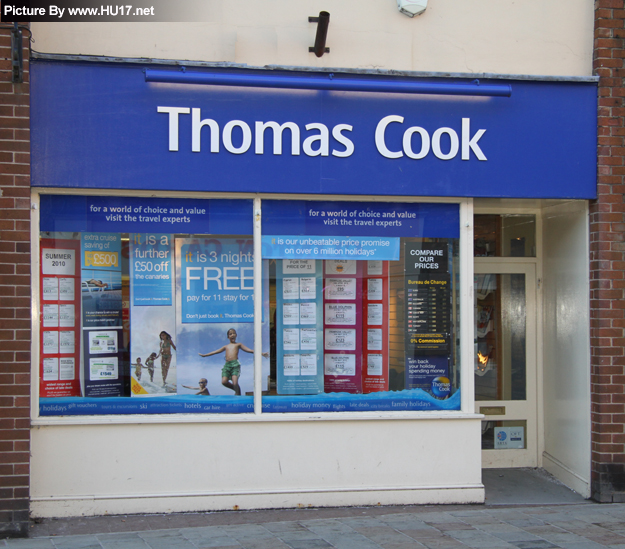
Implementing an omnichannel strategy is critical for success in today's market, according to Thomas Cook chief executive Harriet Green.
Speaking at a Travel Weekly Business Breakfast, Green said one of her first priorities when she started at the business in July last year was to integrate the websites with the rest of the business.
She said: "For reasons best known to this environment the web part of Thomas Cook and other major tour operators was completely separate.
"It had separate targets and none of the rest of the organisation worked with them - why would they, they had absolutely conflicting interests.
"The only time Thomas Cook sold anything effectively on the web was when no-one else wanted to. It was the most dysfunctional thing.
"On week 14 we said we’re going to emancipate all of you guys from the OTA and we’re going to develop the web channels in region then have this centre of excellence."
Green said the high street was still important, despite the company's plans to close 195 shops, but had to be used effectively with other channels.
She told delegates: "There has to be change and agility within an omnichannel environment. The web is important, but an omnichannel environment is critical.
"Retail as it was isn’t going to be with us any longer. In the UK the high street has a very important role, perhaps not to the level that Thomas Cook had penetration but on that we’ve made our plans very clear.
"It is staggering to me that Thomas Cook was the first company in the UK travel environment to put all products through all channels at the same price on the web last November. Other industries did that ten years ago."

Thomas Cook wins battle of the big guns for ‘holiday’ searches

Thomas Cook wins battle of the big guns for ‘holiday’ searches

By Travolution
By Travolution

Thomas Cook won the battle of the big guns for holiday searches on Google in May, beating its main rival Thomson and its all-inclusive brand First Choice, a Greenlight report has revealed.
But all three were beaten to the top spot for natural search by travelsupermarket.com which achieved a 53% share of voice for the 4.4 million ‘holidays’ search term queries.
The breakdown for search activity on desktops/laptops and mobile saw travelrepublic.co.uk claim top spot for mobile, although the leading OTA did not feature in the top 20 for desktops.
In the paid media sector, however, Travel Republic claimed top spot bidding on 2,864 keywords at an average position of five, ahead of rival OTA On The Beach and deals aggregator holidaydiscountcentre.co.uk.
Rival deals sites icelolly.com, trivago.co.uk and teletextholidays.co.uk were fifth, eighth and ninth respectively.
On mobile in May icelolly.com was the most visible paid search advertiser ahead of secretescapes.com, teletextyholidays.co.uk and onthebeach.co.uk.
The number of holiday-related keyword searches stood at 881,536 on mobile devices, still some way short of the 3.5 million generated on desktops.
The 12-month trend for search activity in this sector sees mobile remaining relatively flat while desktop saw a marked slump between June and November followed by a shallow recovery after January.
In the overall integrated search Thomas Cook was top both on mobile and desktops, followed by travelsupermarket.com and First Choice on both categories of devices.
Greenlight’s social media top 15 chart saw Thomson turn the table on Thomas Cook, coming out on top thanks to a market-leading number of Facebook fans and Youtube subscribers and a Klout score of 84.
Thomas Cook has the most Twitter followers among the top 15 (43,933) but a low number of Google+ followers (1,537).
Travel Republic, in 12th in the social media chart has approaching ten times the Google+ followers of its nearest rivals with 1.5 million.
Trivago.co.uk in 15th has the most Facebook fans (1.4 million) well ahead of Thomson (400,629), lowcostholidays.com (252,266) and Thomas Cook (221,402).

Saturday, 11 May 2013

New mobile app and tech-laden concept store for Thomson


New mobile app and tech-laden concept store for Thomson

By Travolution
By Travolution

Leading European tour operator Thomson has launched a new mobile app ahead of the summer holiday period as it prepares to unveil its next generation hi-tech store of the future.
The MyThomson app will allow customers to access information about their trip while on the go including destination guides, weather updates and flight times.
It will also be integrated into social networking sites like Facebook and Twitter.
Johan Lundgren, deputy chief executive of Tui Travel, said: “Tui Travel is an online driven business and we will continue to enhance our mobile offering.
“The launch of the MyThomson app is an exciting new way of connecting our customers with Thomson anytime, anywhere, anyway.
"Innovation is at the heart of our strategy to deliver future growth, and the launch of the MyThomson app reflects our position as market leader.
“The annual summer holiday is a significant purchase for our customers and we know that they not only spend time choosing and planning their holiday but also looking forward to it.
“The app is a fantastic way to get customers more excited about their holiday and will help them keep up to date with all the information they need in one place, just a tap away.”
 
Meanwhile, Tui will announce next month which location has been chose for its new concept store that it promises will harness the latest technology to drive customers in.
The firm hopes to have refitted 10 of its 700 UK stores by Christmas and as many as 100 in coming years.
Tui said  a key strategy is “selling directly to our customers through multiple channels, and so our retail network remains important to us”. It added "the emphasis of these new shops will be on service in a modern environment". 
 
Kathryn Ward, director of retail and financial services, said: “Our next generation store recognises the importance of people when it comes to choosing and booking a holiday, whilst integrating technology into the whole experience to really bring it to life.
“Customers will be able to immerse themselves in stunning, rich and evocative content as they research and browse our unique holidays in-store.”
 
 Key features of the next generation Thomson shops include:  
 
- The shop front will have a giant immersive video wall (2m x 3m) to showcase new video content and imagery of the holidays combined with evocative sounds and  aromas
- At the entrance an interactive map and interactive table will entertain customers and help them research holidays and find out more about the broad range of product available
- The Advice Bar will give customers the chance to browse the Thomson and First Choice websites on self-service laptops with staff on hand to answer any questions
- Free customer WiFi will also enable customers to use their own devices to research in store and check out review content
- High definition screens and booth projections around the store will feature changing images and videos to inspire customers and give them a feel of what to expect from their holidays before they book
- The store will be zoned to meet the needs of all customers and staff will join them to help with their holiday decisions.  Customers can choose from sitting around a laptop in the pool area, self-serving at the Advice Bar or have a more personalised experience in the booths where images of their chosen holiday will be projected on the wall
- All customers will be served with barista style coffee to further enhance the booking experience 

Thursday, 28 March 2013

Greenacre voices concern for future of Co-operative Travel


Greenacre voices concern for future of Co-operative Travel

Greenacre voices concern for future of Co-operative Travel

Former Co-operative Travel head Mike Greenacre has questioned Thomas Cook’s plans to close shops and appoint ‘cluster managers’.

Writing for this Business:am, Greenacre, architect of the joint venture with Thomas Cook, asks Cook to consider whether the plan “will deliver”.

He also queries the future for The Co‑operative Travel name, arguing: “There appears little attempt to continue differentiation between brands.”

Greenacre ran The Co-operative Travel for three decades, retiring at the end of 2011 after completing the joint venture.

He says the deal to combine the retail businesses “aimed to ensure The Co-operative Travel would continue to flourish while as many jobs as possible were protected”.

Greenacre argues the company was “still profitable” at the time, although its profitability was declining. “We knew not all jobs would be protected [and] unprofitable shops and businesses would close”, he says. But he said only about 15 shops “were losing significant money”.

Thomas Cook this month announced the closure of 195 shops – 103 of them Co-operative Travel branches – and is in consultation over the loss of 2,500 jobs.

Greenacre acknowledges the seriousness of Cook’s financial situation, but pleads: “Make certain the branches on the closure list really have no future.”

He says in his experience “less business transfers [to other branches] when a shop closes than you think”.

He also advises Cook to rethink the policy on cluster managers, saying: “This has been tried many times and never delivered.” Cook plans for assistant managers to run shops day to day, with ‘cluster managers’ having overall responsibility for two to five shops.

Greenacre’s biggest concern is the future of The Co-operative Travel brand.

“There has been little commentary about the part The Co-operative Travel will play in the long term,” he says.

A Thomas Cook spokesman said: 
“We are absolutely committed to The Co-operative Travel.”

Tuesday, 26 March 2013

Young agents organize to reinvent travel retail for millennial age


Young agents organize to reinvent travel retail for millennial age

By Kate RiceAS
After years of industry hand-wringing over the graying of travel agents, young travel professionals are taking it upon themselves to recruit more of their own into an industry that one young organizer recently called “sexy.”

In recent months, young travel professionals have formed a handful of industry groups — significantly, none exclusively for travel agents. They hold virtual as well as actual cocktail parties. They communicate as much by Facebook, Twitter and LinkedIn as by email.

And when they hold an event, be it a website launch party or a regularly scheduled monthly meet-up, the venue is packed.
YoungTravelProPartyTheir goal is to spread the word about travel careers to a generation that grew up in an online world.

“I never knew anyone who used a travel agent,” said Karen Magee, 26, a member of the board of New York-based Young Travel Professionals and manager of hotel sales and marketing for Ultramar Travel Management in lower Manhattan.

At present, three distinct groups have been formed, though at the 30,000-foot level, they have similar goals: Each is targeting young travel professionals, and each wants to attract new, young talent to a “fun, exciting, sexy industry,” in Magee’s words.

And they’re getting a response.

California-based Millennials in Travel budgeted for 60 people to attend their launch party in Los Angeles last month and attracted more than 100, said Joshua Smith, Millennials’ director of strategic development and independent journeys manager for Travcoa.

Before the group even held the event, he got email queries from peers in Miami and Chicago interested in starting their own chapters.

“I think it’s great,” 36-year-old Ryan McGredy, president of ASTA’s Young Professionals Society (YPS) and president of Moraga Travel in Moraga, Calif., said of the mushrooming number of groups for young people in the travel industry. “It means that there are enough of us out there now to have some different ideas about how these groups can run.”

Most of the differences between the groups lie in their membership requirements and focus.

ASTA’s youth chapter

ASTA’s YPS, the most senior of the three groups, celebrated its 10th anniversary last year. But in the past year, it has undergone some radical changes.

Last summer, it morphed from committee status to a full-fledged chapter, becoming ASTA’s first chapter to not be based on geography.

“We were coming up with events, fund-raising, doing all the things that a chapter board does but without the power of a chapter,” McGredy said.

A classic example of a young travel pro, McGredy came to travel from the tech industry, finding travel, fun, interesting, challenging and lucrative.
“It’s a great business to be in,” he said. “You can make a lot of money doing it.”

Getting the word out that being a travel agent is an attractive career is one big goal, he said, as are training and networking.

Joining forces is important, he said.

“We can benefit from each other, and not just networking-wise,” McGredy said. “We are such a heavily regulated industry [that] it’s important for us to start understanding advocacy.”

Noting that federal, state, county and local governments all regulate travel, he said, “It can affect us, from making our jobs harder to raising our costs of doing business to cutting our margins.”

For example, he pointed to sequestration as a federal budget issue that could have a constraining impact on travel. A Members-Only Day in Washington last November saw YPS members going around the capital to talk to high-ranking staffers of their representatives on Capitol Hill and meeting with legislative analysts.

“People came out saying, ‘Wow, I didn’t even know that you could do this, that people care about what you say,’” McGredy recalled recently.

At the same time, YPS is addressing a gap that McGredy saw when he first entered the travel business, between the old guard’s way of doing business and young turks coming in and reinventing the wheel.

He wanted to find a way for young industry entrants to connect with their peers and also connect with the legacy of the travel industry, and he sees YPS as a way to accomplish that.

Senior members of ASTA last year voiced strong support for YPS’ efforts to become a full-fledged chapter.

Because YPS is part of ASTA, it is focused on agents, but it is not limited to agents. McGredy stressed that suppliers are just as active in the group.

Membership in YPS is currently about 400, but it changes as new members enter and as older members “age out” at 40. The only limitation on suppliers is that they cannot attend the group’s retreats, which YPS calls its “fams.” That’s because retreat sponsors want agents who will sell their destination or product on these trips.

The group says it plans to play a larger role at ASTA’s Travel Retailing and Destination Expo in Miami in September.

Young Travel Professionals

Magee said that Young Travel Professionals, a group based in New York, has three goals.

The first is relationship building. To that end, the group holds monthly events at hotels or bars as well as special events such as their website launch party in February. It has 800 members and averages about 100 attendees at its monthly get-togethers.

The second goal is career development, helping people network to find new jobs. It also encourages members to post new jobs on its Facebook and LinkedIn pages.

Allison Davis, 24, social media manager for YTP and social media coordinator of marketing for Ultramar Travel Management, said she got a job thanks to one such posting, and her involvement in YTP is attractive to employers because she’s connected to a talent pool of young people enthusiastic about the industry.

The third goal is to bring new blood to the industry. Magee said that event attendees include people from other fields such as finance and media. The group is planning a mentoring program and ultimately plans to expand to other cities.

YTP is hospitality-focused but defines hospitality very broadly. Its members include hotels, restaurants, meetings and event planners, airlines, other transportation providers, operators, agencies, online travel agencies and deal sites such as Jetsetter. It has no age requirements.

Millennials in Travel


The main goal of Millennials in Travel is career development, Smith said. It is looking at a mentorship program that pairs young professionals with one or two years in the industry with more experienced, five- or 10-year veterans.

Millennials is targeting colleges and universities to show students the value of a travel career. It’s creating a jobs board and has already seen one person change careers thanks to one such posting. Its membership is open to those born between 1979 and 2000.

“That is the millennial generation,” said Smith, who adds this group is differentiated from previous generations by the acceleration of technology and by the rise of a global economy.

It will hold elections to its board every two years and has an advisory board of high-level executives who are guiding the group.

Millennials is headquartered in Los Angeles, but the group plans to expand into Washington and Atlanta this year and into New York, Miami, Chicago, Denver and Dallas in 2014.

Its members include travel agents, suppliers, destinations, marketing rep companies and media. Because of its Los Angeles roots, the group is attracting members from companies such as HBO and Paramount, which Smith said are a part of the travel industry, though a different sector of it.

He added that Millennials is open to alliances.

LAN Airlines was a sponsor of its February launch event, giving away two roundtrip tickets.

Smith said the group’s core values were a passionate commitment to the travel industry, behaving professionally in both social and work environments, a strong belief in the potential of travel and a desire to help drive tourism on a global level.

Thursday, 14 March 2013

Thomas Cook reviews future of its airline

Thomas Cook reviews future of its airline
The future of Thomas Cook’s airline business is under review as part of chef executive Harriet Green’s turnaround plans for the loss-making group.
The disclosure came in the wake of moves to dispose of unspecified non-core assets to bring in as much as £150 million.
Green yesterday announced an additional £50 million of cost savings, taking the total to £350 million by 2015. This helped lift Cook shares almost 16% to 100.75p.
Part of those savings include £65 million from bringing its four airlines, which have 86 aircraft and employ 6,500 people, into one group.
Green would not rule out the disposal of all or part of the airline business.
“Does Thomas Cook need to have an airline in the future?” she told the Financial Times. “We have options. We are reviewing whether we should continue with the airlines that we have.”
The group had “over-complicated the business” through a series of acquisitions, including airlines, said Green.
“In essence, it is not a complex business that shouldn’t demand huge amounts of debt,” she said.
Green believed the group had become weak in its city break and winter sun offers, and would start to offer new products pitched at women and children.
The restructuring includes the closure of 195 high street agencies, contributing to the loss of 2,500 jobs.
New targets include 50% online sales and an earnings before interest and tax margin of 5%, both by 2015.
Cook earns about one-third of its revenues from online sales and the remainder from its outlets, according to the FT.
The group confirmed that a review of its capital structure could result in a future share placing.
“When that review is complete we will decide on what action we should take, if any, including whether to raise new debt and/or equity capital and the amount and structure of any such capital raising,” the company said.
Wyn Ellis, analyst with Numis, told the newspaper: “We wait to see how it progresses: a lot of hard work needs to be done if it is to succeed with its ‘high-tech, high-touch’ approach.”
James Hollins, analyst at Investec, said: “There is no update on a potential equity issue or refinancing...Current trading is stated to be ‘progressing well’ for the key summer period and the full-year 2013 outlook is ‘encouraging’.”

Harriet Green insists 'Cook is not in decline'


Harriet Green insists 'Cook is not in decline'


Thomas Cook chief executive Harriet Green today hit out at any suggestion the group is in decline.
Green said: "Cook is a super brand in a growth industry."
Having outlined the new strategy for the group yesterday, Green insisted the company would retain a presence on the high street.
"Retail is a very important part of Thomas Cook's future," she said.
"We do not want to be an online travel agent with every piece of product out there and with no assurance.
"Everything on our website will be fully quality assured and checked by Thomas Cook."
Green said: "We have made extraordinary progress in 32 weeks. This company was not very well when I joined. Now we are into transformation. We have a credible, profitable, growth story. The company has to prove it can execute it."
She insisted: "Thomas Cook will grow and grow profitably. We have no intention of shrinking to greatness but it's about being simpler and clearer."

Wednesday, 13 March 2013

Cook boss Green reveals strategy for the future


Cook boss Green reveals strategy for the future

Thomas Cook today unveiled long-awaited plans for a turn-around in the business involving the sale of non-core assets to raise up to £150 million.
No businesses were identified but ski arm Neilson and Preston-based luxury operator Gold Medal are thought to be among the divisions considered for disposal.
The group said the non-core disposal programme is underway with the opportunity to realise gross proceeds of £100 million to £150 million.
In a brief trading update ahead of half year results being published in May, the group described the UK turnaround as being on track.
Cook said its new profitable growth strategy was focused on “simplification, web innovation, flexible new products and services, enabled by rigorous execution and an integrated IT platform”.
Group chief executive Harriet Green said: "Our business transformation plans are ahead of schedule and already delivering substantially improved performance, which resulted in our recent return to the FTSE 250.
"We have exceeded our initial commitments and today announced a further £50 million of cost out actions, bringing the total profit improvement actions identified already to £350 million, £290 million of which is still to come.
"Stabilising the business has been our priority through addressing our cost and cash challenges, and strengthening the leadership team to create a more effective, aligned organisation focused on rigorous execution."
She added: "We are excited to now reveal our new strategy based on four cornerstone principles; delighting customers with trusted, personalised holiday experiences through a high-tech, high-touch approach.
"Based on comprehensive consumer research we aspire to occupy a unique position in the market through our new strategy, deliver industry leading margins and customer loyalty, whilst maintaining consistent quality that can be trusted.
"We will expand our already successful hotel concepts; and build a new portfolio of flexible, trusted products and services; creating a single gateway for customers to access personalised recommendations, specifically tailored to meet their needs.
"The operational credibility of this strategy rests on the success of our self-help measures to date, our trusted brand and the clear targets and KPI's against which we are ready to be judged.
"We have real options now, with the prospect of delivering improved revenues, strengthened gross margin, better cash flow and disposal opportunities, to build a strong and exciting future for the Thomas Cook Group, worthy of our customers and our heritage."
Cook said the new strategy, which includes raising web penetration to half of all sales, has been based upon extensive research and analysis including a comprehensive, in-depth survey measuring the attitudes and changing needs of almost 18,000 travellers, validated against the experiences of many of its own customers.
The group added: “Building on its trusted brand and 171 year heritage Thomas Cook will deliver personalised holiday experiences through a high-tech, high-touch approach.”
This comes a week after the company under UK boss Peter Fankhauser announced 2,500 job losses and the closure of 195 travel agency branches.
Today the group said the “thorough” UK restructuring was underway to re-shape the organisation to meet customer needs with a target to deliver UK EBIT margin in excess of 5% by 2015.
A transformed approach to hotel purchasing to utilise group scale is already delivering “tangible benefits”.
Cook described its business transformation as gaining momentum with a further £50 million of “cost-out actions” identified bringing the total profit improvement actions so far to £350 million with more to come.
The Northern and Central Europe divisions continue to build on their industry leading positions while Cook is creating a group-wide airline business to improve costs, quality, reliability and customer experience to build a stronger business.

Wednesday, 6 March 2013

Thomas Cook to cut 2,500 jobs


Thomas Cook to cut 2,500 jobs

The back office roles will include staff at the head offices in Peterborough and Preston. The consultation also includes the proposed closure of the Accrington office.
Thomas Cook Group is to cut 2,500 jobs across its back office and retail network.
The group also plans to close 195 stores as part of the restucture of the UK business.
A 90 day consultation begins today over the future of 2,500 jobs, both back office and retail. The group currently employs 15,500 people in the UK.
Stores will close which do "not meet the performance targets of the business" and are in areas where Thomas Cook has more than one retail outlet. 
Peter Fankhauser, chief executive Continental Europe & UK, said:  "It is never easy to make decisions that impact directly on our people, but we also owe it to our customers to shape the business effectively and ensure that, when they book their holiday with us, our administrative costs are as low as possible.
"As we improve and develop our online capabilities, maintaining a strong presence on the High Street is an important part of our omni-channel strategy. Even after these changes we will still have one of the largest retail networks in UK travel.
He added: "It is essential that we operate with the right number of people as we move forward into the next era for our company, allowing us to meet the future needs of our customers more effectively.
"These proposals will mean a stronger Thomas Cook that continues to be a major employer in the UK dedicated to providing excellent holiday experiences to our 23 million customers. We are in consultation with our unions and employee representative bodies to minimise the impact of these changes and I am speaking personally to all employees today to provide information and support through this period of consultation."

Thursday, 28 February 2013

Research finds two thirds of holidaymakers will book online


Research finds two thirds of holidaymakers will book online

Research finds two thirds of holidaymakers will book online
The latest TNS consumer insight for Travel Weekly underlines the popularity of digital channels. Ian Taylor reports
Two thirds of UK adults planning an overseas holiday or break intend to book online this year, according to research for Travel Weekly.
A survey of more than 2,000 adults by TNS in early February suggests up to 20 million could book their travel online, compared with more than eight million with a high street agent or by phone.
Researchers found that 42% of respondents (including those not planning an overseas holiday) said they would book online, 12% on the high street and 5% by phone.
Of course, booking online does not have to mean going direct or buying from someone outside the trade. Few high street retailers fail to sell online; Tui Travel reported 37% of its summer 2013 bookings were made online up to early February and expects this proportion to increase this year.
However, the results confirm consumers are increasingly at ease booking all kinds of holidays – including package holidays – on the internet.
Young adults are clearly most at ease: 55% of 16 to 34-year-olds said they would book a holiday or break online, against 25% of over‑55s. The proportion of student online-travel bookers (60%) was three times higher than those of retired age (20%).
More than half (54%) of adults in better-off households expected to book online, as did a similar proportion (52%) of those with children living at home.
Londoners and those in the southeast showed a similar propensity to book on the internet (54%), while less than one-third did so in Yorkshire, the East Midlands and Scotland and just 36% across the north – suggesting a digital divide.
However, the greatest variation in the survey results was in the proportion planning to take an overseas holiday, rather than how they would book it.
TNS found more than one third (36%) of respondents did not expect to go overseas in 2013 and a further 4% were undecided.
That suggests 60% intend to have a holiday abroad – a healthy market in light of previous research showing less than half the adult population (44%) are likely to go away in any year.
It is important to note people often express an intention to go abroad at this time of year but subsequently fail to do so – the young being especially prone to this.
February’s TNS survey found three-quarters of 16 to 24-year-olds planned an overseas holiday (and 56% intended to book online). Yet previous TNS research which asked 16 to 24-year-olds whether they had a holiday abroad in the past 12 months found 60% had not.
Almost half (48%) of adults over 55 said they were not planning an overseas holiday this year; neither were half the adults in less well-off households (47%).
Most adults with children did plan a holiday (68%), compared with 56% of those with no children. But the former appear more dependent on finding a cheap holiday – 38% of those with children identifying price as an important factor in whether they go away, against 28% of those without children.
TNS group director of travel Tom Costley noted “significant age variations” in online booking habits but said: “The proportion choosing to book via a high street agent does not vary to any significant extent, irrespective of age.”
He added: “It’s evident that being able to access a cheap price allows some to go on a holiday which might otherwise not be available to them.”