Showing posts with label tourism. Show all posts

Tuesday, 12 August 2025

Royal Caribbean Informs Guests of New Greek Cruise Taxes

Royal Caribbean Informs Guests of New Greek Cruise Taxes


Royal Caribbean International recently issued a statement informing guests about a new cruise tax that recently took effect in Greece.

The new seasonal fees were introduced in July and, according to the local government, are aimed at combating overtourism as well as improving the country’s tourism infrastructure.

“Beginning with sailings that depart on August 1, 2025, a seasonal cruise tax will be implemented across various ports in Greece, including iconic destinations like Mykonos and Santorini,” Royal Caribbean said in a statement.

“This initiative supports sustainable tourism and helps preserve the natural beauty and cultural heritage of these beloved destinations,” the company continued.

According to Royal Caribbean, guests who booked their sailings on or after September 20, 2024, have already paid for the fees, which were included within the taxes and fees section of their invoice.

The new taxes vary by destination being visited, as well as the time of the year.

For visits to Santorini and Mykonos taking place between June 1 and September 30, guests will pay 20 euros per person. During the same timeframe, each passenger will pay 5 euros when visiting other Greek ports.

Shoulder seasons will see passengers paying 12 euros for visits to Mykonos and Santorini that take place in October 2025, as well as between April 1 and May 31.

For other calls in Greece during the same timeframe, passengers will be required to pay 3 euros.

From November 1 to March 31, the fees decrease to 4 euros per person for visits to Mykonos and Santorini and to 1 euro per person for all other Greek destinations.

For guests who have already paid for the taxes along with their booking, Royal Caribbean will exchange the amounts at a monthly forecasted rate.

The company also said that for guests who choose to remain onboard and not go ashore in the Greek ports, the fee amounts will be automatically refunded to their onboard accounts at the end of the cruise.

Passengers who booked their cruises before September 20, 2024, will be required to pay the new taxes before disembarking in Greece.


Thursday, 15 May 2025

Princess Cruises Adds Third Solar Eclipse Voyage for 2026

Princess Cruises Adds Third Solar Eclipse Voyage for 2026


Princess Cruises has announced a third voyage in its 2026 Total Solar Eclipse series: a 14-day Mediterranean & Adriatic with Total Solar Eclipse cruise onboard the Enchanted Princess, departing from Rome.

The new Enchanted Princess sailing joins two other eclipse-focused Princess cruises onboard Sky Princess (August 8, 2026, from Southampton) and Sun Princess (7-, 14- and 21-day itineraries departing from Barcelona and Athens).

Highlights of the Enchanted Princess itinerary, sailing August 4-18, 2026, include:

  • Civitavecchia (Rome)
  • Naples (for Capri & Pompeii)
  • Kotor, Montenegro
  • Dubrovnik, Croatia
  • Corfu, Greece
  • Messina & Palermo, Sicily.
  • Gibraltar
  • Alicante, Spain
  • Barcelona, Spain


“Adding Enchanted Princess to our 2026 solar eclipse lineup allows more guests to be part of this extraordinary moment at sea while exploring breathtaking Mediterranean and Adriatic destinations,” said Terry Thornton, Princess Cruises' Chief Commercial Officer. “With limited availability on Sky Princess and Sun Princess, we’re excited to give our guests a new opportunity to be part of this rare astronomical event aboard another of our spectacular ships.”

During the eclipse, guests will gather on the top decks with Princess eclipse viewing glasses, and enjoy lectures from astronomy experts, themed treats and drinks, stargazing at night, solar system trivia and more.

Princess said guests are encouraged to set up their own telescopes on deck and wear festive eclipse-themed apparel and accessories.

Wednesday, 25 December 2024

Cruise Saudi Welcomes First Guests to Saba Beach on New Private Island

Cruise Saudi Welcomes First Guests to Saba Beach on New Private Island


Cruise Saudi welcomed its first guests to Saba Beach on Jabal AlSabaya, the destination’s newly developed private island, on December 21, according to a company statement.

Located approximately 220 nautical miles from Jeddah, Jabal AlSabaya will be exclusively accessible to cruise passengers, offering a Red Sea experience that highlights local culture and the natural beauty of the coastline.

Lars Clasen, CEO of Cruise Saudi, said: “Since the inception of Cruise Saudi, our vision has been to create unique and exceptional cruise experiences for passengers from around the world. The launch of Saba Beach represents not only a world-class destination but also our commitment to enhancing Saudi’s tourism industry. We are opening up a truly unique area of the region and look forward to welcoming cruise passengers from around the world.”

The destination will include a floating park, a full-service restaurant, retail shops, a VIP beach and VVIP beachfront villas. Guests can also enjoy a spa experience and a shisha lounge, as well as a variety of land and water activities.

Barbara Buczek, chief destination experiences officer of Cruise Saudi, said: “The soft launch of Saba Beach on Jabal AlSabaya is another pioneering and innovative development in the creation of Saudi Arabia’s cruise sector. At the heart of what we offer is the guest experience, showcasing Saudi’s incredible and diverse natural assets, culture and history to our passengers and the launch of Saba Beach represents a milestone in bringing a previously unseen Saudi to the local, regional and international markets.”

Monday, 24 April 2023

Jamaica Experiences Its Biggest Winter Season Ever

Jamaica Experiences Its Biggest Winter Season Ever


Jamaica’s Minister of Tourism, Edmund Bartlett has stated that Jamaica is experiencing its biggest winter season in the history of tourism, adding that the tourism boom is set to continue, according to a press release.

“For the January to March 2023 period, it is estimated that Jamaica welcomed 1.18 million visitors, which represents a growth of 94.4 per cent when compared to the same period in 2022. This represents earnings of $1.15 billion, 46.4 per cent above the $786.8 million earned for the same period in 2022,” said Bartlett.

“If there was ever an industry that has the potential to transform our nation, our communities and the lives and livelihoods of the Jamaican people for the better, it is tourism.

Bartlett added that gross domestic product (GDP) for the economy is projected to grow by up to 3.0 per cent to 5.0 per cent during January – March 2023 compared to the same period in 2022.

Speaking at the Sectoral Debate in Parliament, Bartlett said that arrivals for 2022 were up by 117 per cent while earnings were up by 71.4 per cent compared to 2021. In 2022, Jamaica welcomed 3.3 million visitors and earned about $3.7 billion. Projections earnings in 2024 go up to $4.1 billion.

“Never before in the history of Jamaica has tourism made such a great contribution to the national economy and we are willing to contribute to that process and to make even greater contributions,” added Bartlett.

“Investments continue to boom to drive the industry’s recovery (and) over the last five years tourism investment contributed 20 per cent of the island’s total foreign direct investments (FDI) and over the next 5 to 10 years, there are multiple upcoming investment projects which will see the addition of 15,000 to 20,000 new rooms with an investment of $4 billion to $5 billion.”

Monday, 27 February 2023

Chinese Tourism Starting to Climb Back?

Chinese Tourism Starting to Climb Back?


Chinese tourism is starting to climb back, according to COTRI (China Outbound Tourism Research Institute).

COTRI said in a prepared statement that the speed of the recovery process is impressive with reports from many cities indicating that it takes only about a week to get a new passport and that travel restrictions are also falling by the wayside quickly.

The clash between South Korea and China over discriminatory treatment seems to be over. South Koreans can now get visas for China again and the South Korean government has ended special treatment for the Chinese, COTRI said.

European Union countries have reportedly also agreed to phase out COVID-19 restrictions on travellers from China and will also stop random testing of travellers from China by the middle of March.

Chinese companies have also started investing in outbound tourism infrastructure again with the Shanghai retailer Yuyuan Tourist Mart announcing plans to invest about US$120 million in a Japanese ski resort project on Hokkaido.

Airlines are bringing back a multitude of routes to and from China and ticket prices are in most cases back to pre-pandemic levels, according to COTRI.

Business, studies and family reunions are major reasons for the first outbound travellers, the research institute said, but the first leisure tourists have already been sighted not only in the neighbouring countries but also in Sydney, Paris and Milan.

It was less than two months ago that Chinese citizens could again apply for passports and just two weeks ago that Chinese tour operators were officially allowed to sell outbound trips for what is called “group travel” to 20 destinations, even though most customers are said just to buy air tickets and hotel reservations.

Contributing to the interest in travel, COTRI said, are all the marriages that have been put on hold during COVID, expecting to result in a wave of honeymoon trips.

The year 2022 ended with a total number of outbound trips below nine million, about 5 per cent of the 2019 level. Five million of these trips went no further than Macau. Hong Kong welcomed 375,000 mainlanders, five times the number of 2021, but still less than 1 per cent of the 2019 arrivals.

Assuming no further disruptions or an attack on Taiwan, COTRI said, Chinese travellers could make the steep climb back to the top of all international tourism source markets during the current year.

COTRI is a research organization for the China outbound tourism market-based in Hamburg, Germany.

Saturday, 2 October 2021

Royal Caribbean Partners With U.S. Virgin Islands to Improve its Tourism Product

Royal Caribbean Partners With U.S. Virgin Islands to Improve its Tourism Product


The Virgin Islands Port Authority (VIPA) and Royal Caribbean Group have partnered to revitalize the U.S. Virgin Islands’ cruise industry with a commitment from Royal Caribbean Group to develop infrastructure and attractions. 

A Memorandum of Understanding between the two organizations was signed by VIPA Executive Director Carlton Dowe and Royal Caribbean Group’s Vice President of Destination Development Joshua Carroll during a cruise event in Miami. The memorandum is a recommitment from Royal Caribbean Group to extend its existing 10-year, pier-use agreement for preferential berthing at VIPA’s cruise facilities in Crown Bay, St. Thomas and Frederiksted, St. Croix.

The existing agreement was executed in June 2016, and by signing the memorandum, VIPA and Royal Caribbean Group agree to collaborate on an extension of that agreement for an additional number of years.

Dowe also announced that in addition to guaranteed minimum revenues to VIPA and increased cruise visits to both St. Thomas and St. Croix, Royal Caribbean Group has expressed an interest in developing enhancements to the cruise facility in Crown Bay and making “landside improvements” in the Crown Bay District and St. Croix to enhance the island’s tourism products.

Dowe stated that this development signals “an important boost for the territory’s economy and increased opportunities for businesses and entrepreneurs in the tourism sector in the USVI.”

“Royal Caribbean is the leading cruise company in the industry, and it has committed to a major infusion of capital as well as guaranteed cruise visits to our islands. In this currently strained economic climate, this substantial commitment indicates Royal Caribbean Group’s dedication to the people of this territory and our economy,” he said.

Dowe added that VIPA is "pleased" to continue its working relationship with Royal Caribbean Group.

“This MOU extends what has been an exceedingly amiable, reliable, and beneficial arrangement for both parties. Our unified goal is to ensure that the U.S. Virgin Islands is a premier destination in the Caribbean,” he noted.

VIPA will align with Royal Caribbean Group to expand the Austin “Babe” Monsanto Marine Facility in Crown Bay to allow the berthing that includes Icon- and Quantum-class ships and the development of a third berth. The vision for the Crown Bay District will complement the port authority’s plans to revitalize the district to appeal to residents and cruise visitors.

Royal Caribbean Group has also committed to partner with VIPA and the Government of the USVI to develop and enhance the overall visitor experience in St. Croix.

“The U.S. Virgin Islands is one of our best destination partners and the opportunity to continue innovating on ways to refine the guest experience helps guide our decision to expand our already strong relationship with the U.S. Virgin Islands,” said Carroll. "We thank Governor Albert Bryan Jr., the VIPA Board of Governors, Commissioner of Tourism Joseph Boschulte and Executive Director Carlton Dowe and his team for collaborating on this exciting opportunity to develop destination experiences that benefit tourists and citizens of the USVI."

The U.S. Virgin Islands recently started receiving cruise visits to its islands following the halt of cruising in March 2020. Most of the territory’s cruise visits have been Royal Caribbean International and Celebrity Cruises vessels.

The Celebrity Edge was the first ship to call on St. Thomas on July 20, and in St. Croix, the Celebrity Equinox was the first ship to berth since the pandemic on Aug. 8.

According to a press release, VIPA has had 22,991 cruise visitors to the territory since July 2021, making it one of the most visited cruise destinations in the world.


Wednesday, 8 April 2020

Canada further tightens cruising restrictions

Canada further tightens cruising restrictions

Canada further tightens cruising restrictions

Canada’s government has enacted tighter restrictions on passenger ships, prohibiting commercial vessels with a capacity for more than 12 passengers from engaging in tourism and other recreational activities through at least June 30.
Last month, Canada banned cruise ships with more than 500 passengers from making port calls.
In other measures that will remain in place through Oct. 31, Canadian cruise ships are prohibited from the mooring, navigating or transiting in the country’s Arctic waters, and any foreign passenger vessel seeking to enter Arctic waters must give Canada’s minister of transport 60 days’ notice.
The new restrictions do not apply to “essential passenger vessels” such as ferries, water taxis and medical-use vessels nor to cargo ships and fishing vessels, said Transport Canada.
“These new measures will help reduce the spread of Covid-19 while continuing to support the continued movement of goods through the supply chain and ensuring Canadians can access their homes, jobs and essential services in a safe manner,” said transport minister Marc Garneau.

Tuesday, 3 March 2020

Coronavirus outbreak ‘biggest tourism challenge since 1991 Gulf War’

Coronavirus outbreak ‘biggest tourism challenge since 1991 Gulf War’

Image result for coronavirus map

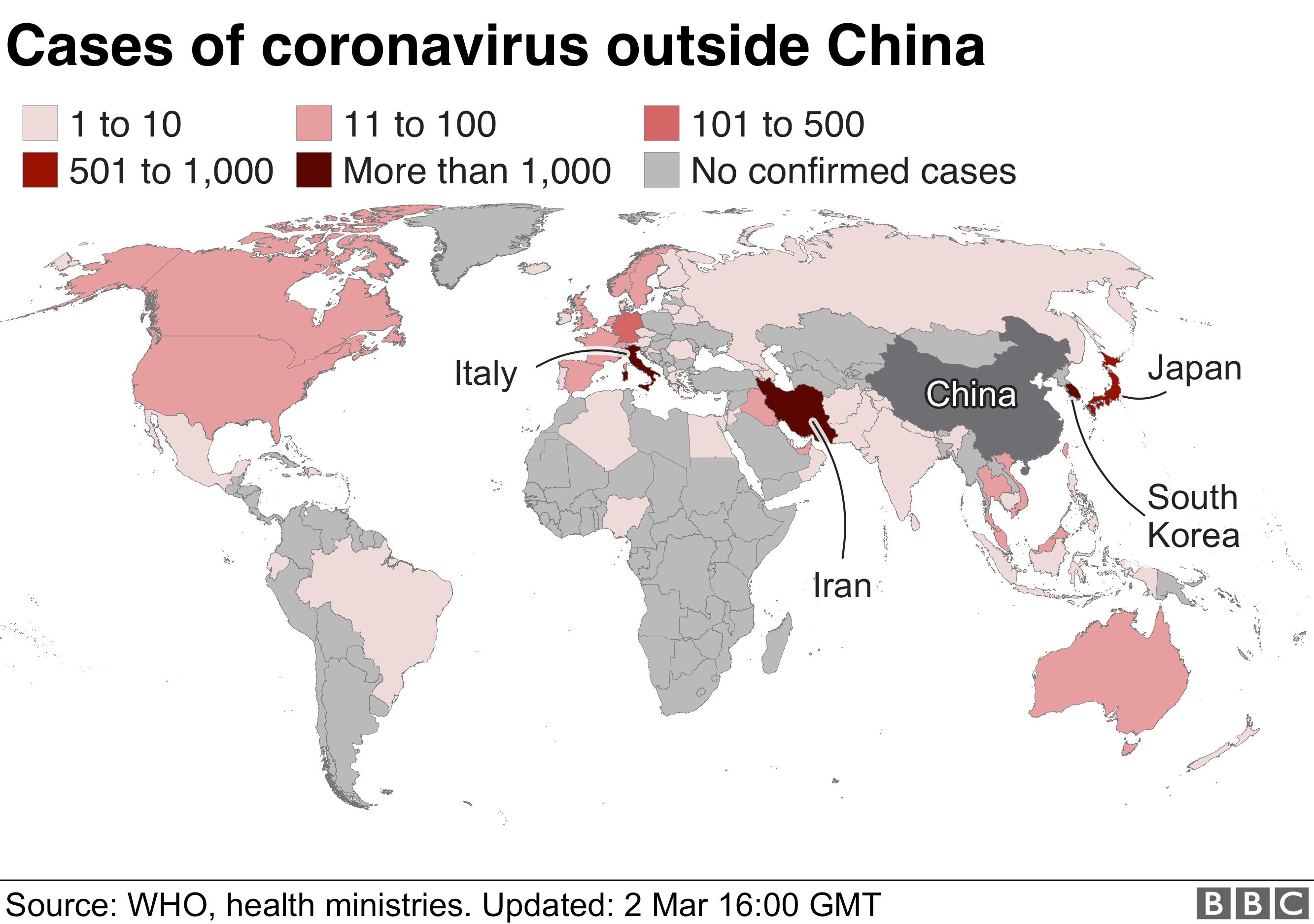
The coronavirus crisis means tourism into Europe faces its biggest challenge since the 1991 Gulf War, a trade association has warned.

The threat posed by the virus and the “inherently irrational” fear generated by the threat has been highlighted as the two main problems by the European Tourism Association (ETOA).

Chief executive Tom Jenkins said: “The new coronavirus outbreak is posing extraordinary difficulties for the European Inbound travel industry.

“Inbound European tourism is facing its toughest challenge since the 1991 Gulf War.

“There are two principal problems: the threat posed by the virus, and the fear generated by this threat.

“The first is comprehendible: strains of ‘flu are regular occurrences, though not with this level of celebrity status. The news from China that the epidemic is plateauing is heartening, as are the statistics on the severity of its impact on individuals.

“The second is the major problem as it is inherently irrational. Local governments spray antiseptic over buildings. Facemasks are used as a prophylactic against disease rather than a block to spreading it.

“You cannot reason with such irrationality. All you can do is file it alongside the cholera bonfires of the nineteenth century, rubbing yourself with a dead pigeon to cure the plague or striking an offending body part with a bible to cure syphilis.”

He added: “At best this is harmlessly weird behaviour, but it becomes genuinely alarming when confidence is eroded.

“A balance has to be struck between containing what is becoming a pandemic and the damage such containment measures cause.

“The danger lies when governments act because they feel they need to pander to fear. This fans the problem that it ostensibly seeks to extinguish, as they struggle to control what they cannot influence.

“Public panic is a natural reaction to authorities addressing what they assert is a crisis with floundering impotence.  What is served by a country stopping outbound trips, but allowing inbound visitors?”

ETOA expects coronavirus will continue to spread within the next three weeks, and then gradually “fizzle out” over the following six weeks.

“Influenza outbreaks are seasonal and dissipate with the spring. It is likely that the pandemic of fear will run for the same period,” Jenkins said.

“The third, which is the wider economic impact is harder to establish, but we have to assume that the impact of a shut down in the Chinese manufacturing sector, combined with a crisis of confidence in the service sector, will depress demand.

“How far this occurs is contingent on how governments handle the crisis. If the coronavirus scare triggers a recession, then the figures projected will have to be downgraded.

“It ought to be remembered that influenza outbreaks are seasonal: they tend to dissipate with the spring in the northern hemisphere. But it is likely that the pandemic of fear will run for the same period.”

ETOA operators will continue to run tours, unless “explicitly ordered otherwise,” Jenkins stressed.

“People from a non-affected area visiting another non-affected area pose no threat.

“As an association, we are running all scheduled events and attending all forthcoming events.

“Tourism is a vital component in the economy and a bell-weather for confidence in the service sector. Where it can continue, it must.

“We have every intention of running our China European Marketplace (CEM) in Shanghai on May 12 – this is where European suppliers meet Chinese buyers.

“China is a vital and growing market who now needs – it deserves – cultivation and support. The recovery will come, and we need to lay the groundwork now.”

Monday, 2 June 2014

Report warns of climate-change threats to tourism

Report warns of climate-change threats to tourism

By Michelle Baran
A new report by the Union of Concerned Scientists (UCS) highlights threats from the impact of global warming to which the U.S. travel industry should be paying close attention.

Last month, UCS, an independent alliance of science analysts, undertook an in-depth study of the current and future impact of climate change on 30 at-risk historical and archaeological sites in the U.S. The group’s findings were released in a report titled “National Landmarks at Risk: How Rising Seas, Floods and Wildfires Are Threatening the United States’ Most Cherished Historic Sites.”

What UCS found was that rising sea levels, coastal erosion, increased flooding, heavy rains and more frequent large-scale wildfires are in some cases causing irreparable damage to archaeological sites, historical buildings and cultural landmarks across the U.S., and, if not addressed, could ultimately result in the total loss of many sites that are popular tourist attractions.

The report coincides with President Obama’s anticipated announcement this week of a politically controversial plan to crack down on power plant emissions.

In an interview last week, Adam Markham, director of the Climate Impacts Initiative at UCS and one of the report’s co-authors, said, “Climate change has become a lightning-rod political issue, and we were trying to depoliticize it by showing how seriously it impacts places that all Americans care about. For us, it was a way to take the politics away fro
Liberty Island damagem climate change.”

It is difficult to take politics and controversy out of the climate change debate. Skeptics disagree with scientists who claim that increased carbon emissions in the atmosphere are resulting in severe global warming. Yet the threats to the sites researched by UCS are well documented, whether or not one believes they are directly attributable to climate change.

The report is a collection of some 30 case studies of national parks, monuments and historical and archaeological landmarks from around the country, including the Statue of Liberty and Ellis Island, Boston’s historical districts, the Harriet Tubman National Monument, Historic Jamestown, NASA Kennedy Space Center and Cape Canaveral National Seashore, Bering Land Bridge National Monument, Mesa Verde National Park and Cesar Chavez National Monument.

“The area where it’s almost clearest that climate change is having an impact is from sea level rise,” Markham said. “So as the seas rise, that means we get more coastal flooding, and when storms hit, we get more storm surge.”

According to UCS, that possibility became a reality in 2012 when Hurricane Sandy submerged most of Liberty and Ellis islands, causing an estimated $77 million in damage to those sites alone and forcing parks officials to shut them down until the following year.

Jamestown Island in Virginia is another cause for alarm, according to Markham. With predictions for sea-level rise estimated at 3 feet or more by the end of the century, he said, the site of the first permanent English colony in America, which sits at 3 feet above sea level, is at risk of being submerged.
Fort MonroeIn Alaska, melting sea ice has given way to erosion of the coastlines of Cape Krusenstern National Monument and the Bering Land Bridge National Preserve. And in the Western states, climate change is increasing the risk of large wildfires by driving up temperatures, reducing winter snowpack and drying out forests, according to the report.

The goal of UCS in releasing the report is to raise awareness about the impact of climate change in general, but it is also a call to action for the support and preservation of sites that are or soon will be at risk and around which a robust and lucrative tourism industry has been built.

The hope, said Markham, is that observers will take a more serious look at the threats and take action to prevent the worst from happening.

Remediation could mean anything from moving actual landmarks — as was the case with the Cape Hatteras Lighthouse in North Carolina, which in 1999 was moved 2,900 feet from the spot on which it had stood since 1870 to avoid the threat of coastal erosion — to creating new sea walls or building up existing sea walls and sand dunes to protect important natural or historical sites.

For people interested in getting involved, Markham suggested offering money or in-kind support to organizations that work to protect such sites.

But he also noted that the larger objective for UCS is working to reduce carbon emissions and slowing the speed of climate change. For the travel industry, Markham suggested working to find ways to reduce the industry’s footprint with more sustainable travel practices and using travel’s influence as a way to raise awareness of the issue.

Climate scientists point out that the threats brought to light by the report are not unique to the case study sites but rather are issues that face destinations both within the U.S. and throughout the world. And they note that similar concerns are going to crop up with more frequency and greater urgency as significant cultural, historical and natural treasures increasingly are threatened by changing climate conditions.

“I talked to an archaeologist in Rome recently who was involved with how the recent floods in Europe are impacting some of the Roman remains, including at Pompeii,” Markham said. “And the World Heritage Sites within Unesco, they’ve also been looking at these impacts. So I think there’s a growing realization around the world that this is a major issue for both ancient and modern historic sites.”