Showing posts with label SARS. Show all posts

Thursday, 24 March 2022

Carnival: 3.8 Percent of Capacity Was Set to Call in Russia

Carnival: 3.8 Percent of Capacity Was Set to Call in Russia


Carnival Corporation had 3.8 per cent of its 2022 cruise capacity calling on Russian ports before Russia's invasion of Ukraine, leading the company to cancel and replace calls to Russian ports.

"We have decided to totally withdraw from Russia and have found attractive alternatives," said President and CEO Arnold Donald, speaking on the company's first-quarter earnings call.

"That said, Saint Petersburg was a marquee port for us. And while there have been times where we were unable to offer certain itineraries, in this instance, the close end nature of the deployment change does lead to some regional disruption in recent booking patterns."

Donald admitted the war had added some volatility to Carnival's business and had impacted consumer confidence.

"With 50 years under our belt, we have successfully managed through a plethora of headwinds like spikes in fuel prices, the Gulf War, Arab Spring, September 11, Ebola, Zika, SARS, MERS and more," Donald said. "And once again, the mobility of ships continues to be an asset. Time and time again, we have seen guests travel through challenges. In fact, Carnival Cruise Line turned 50 this month and recently enjoyed its three best weeks of bookings since resuming operations."

Wednesday, 26 February 2020

Antimicrobial surface coating said to show promise for ships, hotels

Antimicrobial surface coating said to show promise for ships, hotels

T0224PremiumPurity2_HR
A room is treated with Act. Global’s Act CleanCoat, a coating that is then activated with sunlight or artificial light.

As concern about the Covid-19 coronavirus grows, a promising new antimicrobial surface coating is being marketed to hospitality and transportation companies. 
Its maker, Act. Global, founded in 2013, offers a proprietary Premium Purity system that involves the application of Act CleanCoat, a transparent, odourless coating that the company says decomposes microbes, including bacteria, viruses, mould spores and volatile organic compounds. 
Richard Tubb, a retired U.S. Air Force brigadier general and former White House physician is now an informal advisor to Act. Global. 
“We had SARS in 2002, MERS-CoV in 2012 and now the coronavirus almost 10 years later,” Tubb said. “These types of things come and go, but they will never fully go away. What we need is a containment approach to allow us the luxury of turning our attention to the discovery of treatment and prevention, while also restoring people’s confidence in a way that will get them to engage with the economy.”
Hotels in a number of countries and the cruise line Lindblad Expeditions are among the early adopters of Denmark-based Act.Global’s product.
The coating’s key ingredient is titanium dioxide, a non-toxic, naturally occurring compound often used in paints, sunscreen and toothpaste, among other products.
The company claims that once exposed to sunlight or artificial light, a photocatalytic reaction activates the coating, producing a continuous surface- and air-purification cycle.
According to Act.Global, the coating has undergone extensive testing and has been approved by several independent laboratories, including Dr Brill and Dr Steinman Institute for Hygiene and Microbiology in Germany, ISI Food Protection in Denmark and Chang Gung University on Taiwan.
T0224PremiumPurity1_HR
An Act ECA Generator produces an eco-friendly cleaning agent called Act ECA Water.
While still relatively new, the company is marketing its Premium Purity system to a variety of commercial and industrial venues, including hotels. To date, the company has launched the system in a dozen hotels throughout Denmark, Germany, India and Thailand.
Christopher Luscher, the company’s chief technology officer, said, “Act. Global is founded on the premise of sustainable disinfection, and what we have seen in the hospitality sector is that we’ve been able to convert the method of cleaning so it’s less like a firefighter coming in and trying to fight a fire and more like the installation of fire-resistant materials.”
In the hotel setting, the company’s CleanCoat can be applied on almost any fixed surface, hard or soft, though Luscher said his rule of thumb is that “if the Mona Lisa is hanging on the wall, it’s best to take it down.” After the coating is applied, it takes two hours to set. 
How it works
Post-application cleanliness is maintained with the use of an eco-friendly and affordable cleaning agent called Act ECA (for electrochemically activated) water. The water is produced using an Act ECA Generator, which is installed on-site and requires just two ingredients: water and salt. 
Coating costs vary greatly by region and venue. Act. Global sells Premium Purity with a three-year service contract.
Hotels aren’t the only settings in which an antimicrobial coating offers a promising solution. In the wake of the Covid-19 crisis, Luscher reported that the company is seeing a surge in demand from airports and restaurants as well as from airlines, railways and cruise ships.
Among the first cruise lines to adopt Premium Purity is Lindblad Expeditions, which deployed the system aboard its National Geographic Explorer ship in mid-2018.
Bruce Tschampel, Lindblad’s vice president for hotel operations, said, “We’re very careful about the environment, and we were looking for options for a green cleaning method that used fewer chemicals and plastic. Also, with cruise lines, we have to be absolutely clean and sanitary because you’re in this small environment, and someone could bring on a cold, and it’s easily passed around.”
The results made a compelling case for the product.
Following the National Geographic Explorer’s trial run, Tschampel said, the company “reduced guest-reported illness by 50%, eliminated over 1,000 plastic bottles of cleaning products and reduced water usage by 1.1 million gallons per year.” 
Lindblad has since announced plans to adopt Premium Purity across its entire fleet, coating all of its eight ships, including all public areas and guest and crew cabins. The process is set to be completed by early March. Lindblad’s newest ship, the Endurance, will also be using the system when it debuts next month. 
“There is a choreography that has to be managed, whether you’re a hotel or a ship,” Tschampel said. “How do you get all these areas coated, and when is the right time to do it? But so far, we’re extremely pleased, and there are so many benefits. The results have been even better than we expected.”

Saturday, 22 February 2020

Coronavirus: Slump in-demand set to cost airlines almost $30bn

Coronavirus: Slump in-demand set to cost airlines almost $30bn

Image result for airlines

A slump in demand due to the coronavirus outbreak is set to cost the global airline industry $29.3 billion in lost revenue this year.

The bulk of the revenue loss – $27.8 billion – will hit carriers in the Asia-Pacific region, as Iata warned that 2020 would be a “very tough” year for the sector.

An estimated $12.8 billion will be lost in the Chinese domestic market alone with those outside the region expected to lose $1.5 billion in revenue, the airline trade body calculated.

The total forecast drop in demand of 4.7% would wipe out expected growth this year, resulting in a 0.6% contraction in passenger demand for the year.

This would represent the first overall fall in demand in more than a decade.

The estimated impact of coronavirus assumes that the centre of the public health emergency remains in China.

If it spreads more widely to Asia-Pacific markets then impacts on airlines from other regions would be larger, according to Iata.

The estimates are based on a scenario where coronavirus has a similar impact on demand as was experienced during the SARS outbreak in 2003.

“That was characterised by a six-month period with a sharp decline followed by an equally quick recovery,” Iata said.

“It is premature to estimate what this revenue loss will mean for global profitability. We don’t yet know exactly how the outbreak will develop and whether it will follow the same profile as SARS or not.

“Governments will use fiscal and monetary policy to try to offset the adverse economic impacts. Some relief may be seen in lower fuel prices for some airlines, depending on how fuel costs have been hedged.”

Iata director general and chief executive Alexandre de Juniac said: “These are challenging times for the global air transport industry. Stopping the spread of the virus is the top priority.

“Airlines are following the guidance of the World Health Organisation (WHO) and other public health authorities to keep passengers safe, the world connected, and the virus contained.

“The sharp downturn in demand as a result of COVID-19 (coronavirus) will have a financial impact on airlines – severe for those particularly exposed to the China market.

“We estimate that global traffic will be reduced by 4.7% by the virus, which could more than offset the growth we previously forecast and cause the first overall decline in demand since the global financial crisis of 2008-09. And that scenario would translate into lost passenger revenues of $29.3 billion.

“Airlines are making difficult decisions to cut capacity and in some cases routes. Lower fuel costs will help offset some of the lost revenue. This will be a very tough year for airlines.”

De Juniac called on governments to provide support. He said: “We have learned a lot from previous outbreaks, and that is reflected in the International Health Regulations (IHR). Governments need to follow these consistently.”

He added: “Airlines and governments are in this together. We have a public health emergency and we must try everything to keep it from becoming an economic crisis.”

Iata medical advisor Dr David Powell advised: “If you are sick, don’t travel.

“If you have flu-like symptoms, wear a mask and see a doctor. And when you travel wash your hands frequently and don’t touch your face.

“Observing these simple measures should keep flying safely for all.”

Wednesday, 12 February 2020

Coronavirus: Cruise lines cancel and change itineraries amid mounting travel restrictions

Coronavirus: Cruise lines cancel and change itineraries amid mounting travel restrictions
Image result for quantum of the seas
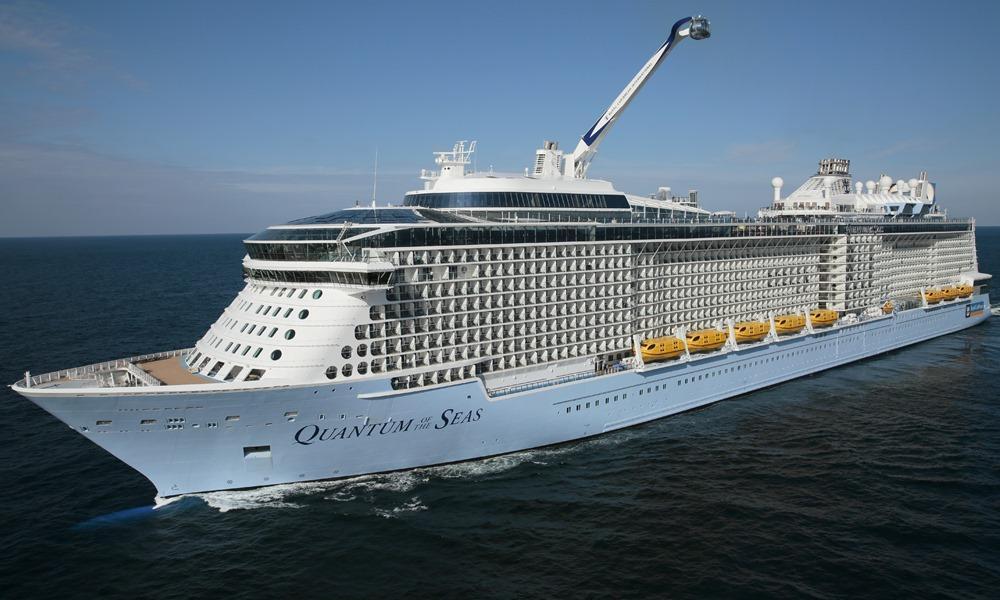
Quantum of the Seas

Cruise lines have responded to a wave of travel and entry restrictions from countries across southeast Asia by cancelling and changing itineraries amid the coronavirus outbreak. Harry Kemble rounds up all the latest developments.

Royal Caribbean International has cancelled two Quantum of the Seas sailings departing from Singapore on February 15 and February 24.

Affected passengers have been given full refunds, the line said.

A Royal spokesperson added: “Royal Caribbean’s number one priority is ensuring the health and welfare of our guests and crew.

“We will continue to monitor conditions and will share other itinerary adjustments should they become necessary.

“The Singapore market remains of great importance to us and we look forward to returning there very soon.”

Royal Caribbean Cruises has lifted its ban on passport holders from China, Hong Kong and Macau after adopting the controversial policy last week.

A statement from Royal Caribbean Cruises, parent of Royal Caribbean, Celebrity Cruises, Azamara and Silversea confirmed the reversal on Tuesday.

Every passenger who has travelled from, to or through mainland China, Hong Kong and Macau 15 days prior to the departure date is still banned from boarding any of Royal’s vessels.

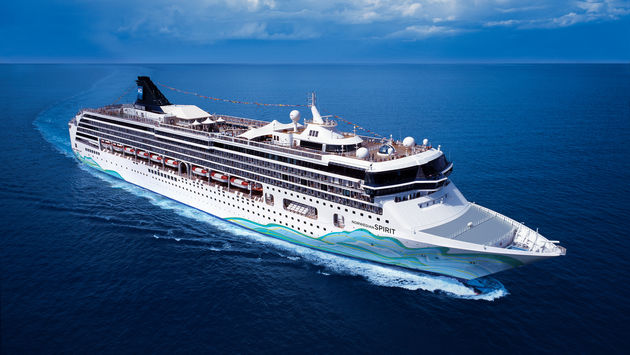
Norwegian Cruise Line has pulled its entire Asia programme for the newly refurbished ship, Norwegian Spirit.

Image result for norwegian spirit
Norwegian Spirit with its new hull design.

All sailings between 15 and December 7 have been dropped and full refunds are being offered, along with 10% future cruise credit.

The line also said it would cover up to $300 per person for any air change fees.

“While it is always our intention to maintain original itineraries, at times, unforeseen circumstances require us to make modifications,” the line said. “We appreciate our guests’ patience during this time.”

Celebrity Cruises has cancelled Celebrity Millennium’s sailing departing from Hong Kong on February 15 and altered two Celebrity Constellation itineraries to avoid Singapore and Thailand.

Constellation will spend more time in Cochin, Goa and Mumbai, instead of calling into Phuket, Thailand.

Cunard ship Queen Mary 2 is to miss several ports in southeast Asia and will sail direct to Fremantle, Australia, during its world cruise.

The vessel had been scheduled to call into Phuket, Thailand; Pulau Penang Island and Klang in Malaysia; Singapore; and Hong Kong.

Cunard said the “various travel and entry restrictions…are increasingly impacting ship itineraries and connecting travel” across the world.

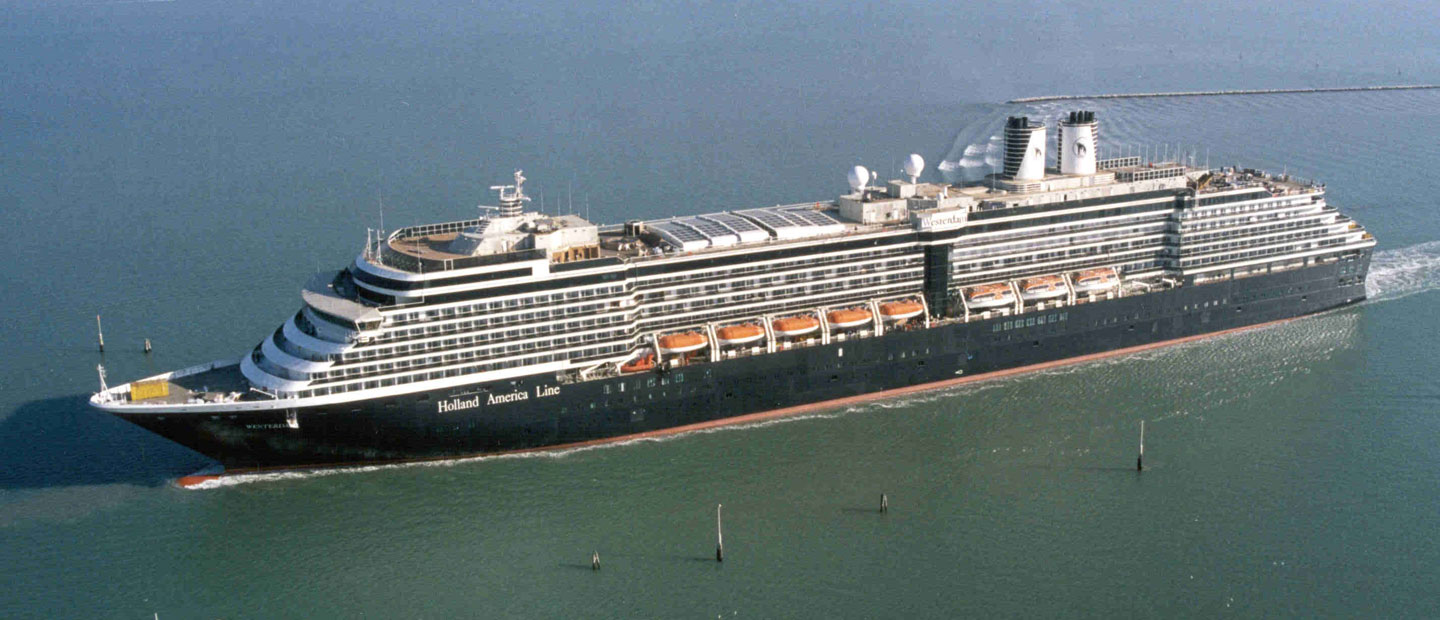
Holland America Line (HAL) ship Westerdam was stopped from docking in Laem Chabang, Thailand, a day after the ship had been diverted from Japan.

Image result for westerdam
Holland American cruise ship Westerdam who got turned away from Thailand yesterday (Tuesday)

On Tuesday, HAL said: “We are actively working on this matter and will provide an update when we are able.”

Princess Cruises on Wednesday confirmed a further 39 passengers onboard Diamond Princess tested positive for coronavirus. The total has now risen to 174 confirmed cases out of 3,700 passengers and crew on board.

The ship is the largest centre of cases outside China.

P&O Cruises is removing calls into Shanghai on March 5-6 and Hong Kong on March 9-10 as part of Arcadia’s world cruise and will announce alternative ports “as soon as possible”.

The UK line said: “We are very closely monitoring and assessing the impact of the latest developments and health advisories, as well as various travel and entry restrictions which are increasingly impacting ship itineraries and connecting travel.

“We are actively seeking to mitigate these risks to our guests and crew, and are making appropriate adjustments to our operations to protect all onboard our ships.”

Monday, 10 February 2020

Sixty-six more passengers on Diamond Princess test positive for coronavirus

Sixty-six more passengers on Diamond Princess test positive for coronavirus

Image result for Diamond Princess

A further 66 passengers onboard Diamond Princess have contracted coronavirus, taking the total number of people infected to 136.

The Japanese health ministry confirmed the cases over the weekend and on Monday following further testing.

The ship is believed to be the largest centre of cases outside China.

The new cases are from Australia (four), Canada (one), UK (one), Japan (45), Philippines (three), Ukraine (one) and USA (eleven).

The ship, carrying 2,666 passengers and 1,045 crew, has been placed under quarantine in Yokohama for 14 days with two cruises cancelled.

The line said it was “not unexpected that additional cases would be reported involving individuals who were exposed prior to the start of the quarantine”.

It said it was following guidance from the Japan Ministry of Health on plans for disembarkation to provide medical care for the new cases.

The quarantine end date is February 19 “unless there are any unforeseen developments”, the line added.

Separately, ten guests were taken off the ship for non-coronavirus related medical reasons over the weekend and transferred to local hospitals, the line said.

Image result for Diamond Princess Update from Princess Cruises President .

The line’s president Jan Swartz issued a video statement over the weekend and said the company was working with the Japanese authorities to distribute medication to guests not relating to coronavirus, based on medical priority.

Telephone counselling is also being offered to all guests.

The line said guests will receive a full refund for their cruise fare, including air travel, hotel, ground transportation, pre-paid shore excursions and gratuities.

They will also receive cruise credit to use on a future sailing.

Meanwhile, thousands of passengers who were kept on board the World Dream cruise ship in Hong Kong for four days have been allowed to disembark.

Around 3,600 passengers and crew on the ship were quarantined amid fears some staff could have contracted the virus on an earlier voyage but tests for coronavirus came back negative.

There have been more than 37,000 cases of the virus globally, mostly in China, where it originated, overtaking the Sars epidemic.

The number of people in the UK who have contracted coronavirus has doubled to eight.

On Monday the UK government declared coronavirus a “serious and imminent threat” to public health.

Friday, 24 January 2020

Cruise Lines Race to React to Coronavirus

Cruise Lines Race to React to Coronavirus

Costa Atlantica
The early 2000s and the SARS virus sent Asia-Pacific operators scrambling to move ships, and the same may be about to play out as a number of brands operating in the Chinese market are reacting to the outbreak of the Coronavirus in China.

In a prepared statement, Astro Ocean Cruises said it is offering full refunds to any passengers that have a fever or have been diagnosed with the virus. In addition, for groups departing from Wuhan, where most cases have been concentrated, refunds are also on the table if guests cannot join the trip due to “pneumonia-related management measures.”

The company also said medical personnel that are unable to travel are also eligible for refunds or have the option to change their sailing to a future date.

Costa also issued a statement, saying it was working with port authorities to strengthen passenger screening procedures for guests that may have a fever.

The Italian brand is also modifying cruise policies to allow for full refunds for guests that have the virus or have a fever; as well as any guest from the Wuhan area; and similar to Astro Ocean, medical staff that cannot travel due to work commitments.