Thursday, 17 January 2013

Host agencies help retailers forge ahead with mobile technology


Host agencies help retailers forge ahead with mobile technology

By Kate Rice
HostMobilePlatformsWhen it comes to profitably exploiting the business potential of mobile technologies, many agencies and agents have been well ahead of the curve.

And frequently, these have been home-based travel retailers taking advantage of solutions provided by forward-thinking hosts.

Jeff Anderson, vice president of marketing for Avoya Travel/American Express, whose affiliated agents have full access to Avoya’s technology platform on their handhelds and tablets, said the host agency opted early on to build a browser-based technology platform. That immediately put Avoya on the path to mobile.

“We were using mobile significantly eight years ago,” Anderson said. Avoya was first able to do mobile bookings in 2006 with the Palm Treo 700, and since then its platform has offered everything agents need to do business, from customer relationship management to booking engines.

“All the functionality they have on their desktop is 100% available to them on their iPhone, iPad and Android platforms,” Anderson said.

Avoya has tweaked its technology, making sure its platforms are “thumb-friendly.” Its server recognizes what kind of device is accessing it so it can adjust the browser’s text size and screen resolution accordingly.

Avoya’s LiveLeads program, which drives leads to agents, is also built for mobile; if agents are not at their desks, leads are pushed to their handhelds via text.

Cruise Planners’ ERez mobile enables its home-based agents to run their businesses from the palm of their hand, said Vicky Garcia, the host’s executive vice president of sales and marketing.

Michael Consoli, a Cruise Planners franchisee, said that ERez mobile enables him to make a booking from anywhere in the world using an iPad or iPhone. He can send a customized quote from any device that automatically updates. That means if the price changes between the time he sends it and the moment his client opens the quote, it will update automatically.

Consoli, who said he had booked a Royal Caribbean cruise using his iPad minutes before he was interviewed for this report, does a lot of group business, and he said he can work on a group on his handheld.

This kind of easy and instant access is one reason Consoli was named Royal Caribbean’s Southeast Partner of the Year and was Viking River Cruises’ Top Travel Advisor for 2012.

Besides B2B tools, Cruise Planners has a B2C white-label app for its agents, which enables their customers to find vacations and book them from within the app. It lets them access travel reservations and see the destination they’ll be visiting, check out the weather and get directions.

The app has social functions that enable clients to share that trip with friends and family. The agent’s business name and contact information are embedded in the app.

Virtuoso is revamping its technology platform for its agents to make it mobile-friendly, according to David Kolner, senior vice president of consumer acquisition for Virtuoso. It began the redesign about a year ago, and a key goal was to make it tablet- and handheld-friendly.
David KolnerSome agents are testing the new site now, Kolner said. They can access the more than 1,000 hotels in Virtuoso’s hotel program, refine the search to see the ones that will fit the client and access the Little Black Book that includes contact information for each property, commissions and other information.

“How many people work while sitting on a couch with a tablet while watching ‘Real Housewives of Beverly Hills’ and thinking about what property is right for a client or what cruise looks good to them for a client?” he said.

Virtuoso, which is also revamping its consumer website, is following principles of consumer website design for its agent site, rather than travel industry conventions. That’s being done to accommodate new entrants who might go into shock when presented with the legacy green screen of a GDS, Kolner said.

Virtuoso has also given the mobile-friendly treatment to Composer Reports, a management reporting tool that synchronizes with members’ back-office systems and CRMs. Members can check their total sales, their performance with preferred suppliers, client activity, individual agent activity and other data while on the go.

“It’s not like people are sitting at a desk all day long,” Kolner said. “They are in Bora Bora, on a cruise ship, on a river cruise, in Antarctica.”

Virtuoso also has a B2C mobile tool called Travel Folio, which agents can use to quickly send up to three options for a client. It is a social tool, which means they can extend it to friends and family members who can vote for or comment on the choices.

Travel Leaders Franchise Group, which has several mobile apps for corporate travel managers, this spring introduced a leisure travel app for agents to provide to clients for use on their vacations: a mobile version of Travel Leaders’ “Personalized Travel Planner” that provides destination content.

It uses augmented reality technology, which means users can point a device at a landmark or attraction to learn about it, as well as get information such as business hours and admission fees.
RogerBlock“The entire reason why we’re investing in mobile app technology, both on the business and leisure sides, is to further enhance the level of service our Travel Leaders agents are able to provide their clients,” said Roger Block, president of the Travel Leaders Franchise Group. “Instead of providing apps to enable consumers to book directly, each app underscores the continued need for a trusted travel adviser’s counsel and help throughout the booking process.”

Vacation.com announced a post-purchase mobile app last summer called GoSiteSee. Once the client buys a trip, the agent can input the traveler’s itinerary: flights, hotels and recommended points of interest.

Other highlights include pictures, reviews, maps, and navigation. The application also enables trip sharing; clients can write a trip journal and post pictures and postcards online and via email.

Vacation.com’s AirPro and CruisePro are Web-based and mobile friendly; agents can make bookings on them using handhelds and tablets.

CruiseOne and Cruises Inc. will be launching mobile-friendly websites in Q2, according to a company spokesperson. The goal is to make it easier for customers to shop from their phones, search for their local agent, sign up for the email newsletter and find cruise itineraries.

Liberty Travel is developing its mobile technologies; consultants at its Madison Avenue flagship store in New York have access to Liberty’s full suite of booking tools on their iPads.

Even GDSs are going mobile. Travelport, which last October introduced a mobile app, in November significantly upgraded the product, bringing complete green-screen functionality to Apple and Android devices. 
Jason Coleman
The host agency Oasis said its online booking tool, Freedom, scheduled to be launched in the first quarter, will be tablet friendly.

Some suppliers provide agents with mobile enabled websites. Royal Caribbean’s CruisingPower is one. Starwood Hotels and Resorts’ two agent websites, StarwoodPro.com and StarwoodMeetings.com, are both smartphone- and tablet-friendly.

And, of course, agents can also use their handhelds to access supplier websites even if the site is not mobile-enabled.

One agent sees suppliers as lagging when it comes to providing mobile tools for agents.

“None of my preferred suppliers have travel agent apps that I can use to book clients,” said Jason Coleman, president of Jason Coleman Inc. “Suppliers are behind the curve on this one. Thankfully, most of their travel agent websites work on my iPad, fewer on my iPhone, so I can still book clients that way, but it’s a challenge.” 

FAA grounds 787 Dreamliners


The FAA grounded Boeing's much-anticipated but beleaguered 787 Dreamliner Wednesday night to address a potential battery fire risk in the planes.

The FAA's action came after an All Nippon Airways and Japan Airlines grounded their 787s after two incidents involving lithium batteries. An ANA plane had to make an emergency landing in Takamatsu Airport in Japan Wednesday after pilots reportedly smelled a smoke-like odor in the cabin and a battery warning light flashed on. A lithium battery is a suspect in a fire last week in a JAL plane parked in Boston.

Both ANA and JAL, which have 17 and 11 of the planes, respectively, grounded their 787s after the ANA incident. Both airlines issued apologies to their customers in announcements about the groundings on their websites.

United Airlines is the only U.S. carrier operating the 787 and has six of the planes. One was in the air Wednesday night when the FAA announced its emergency airworthiness directive.

"This is way beyond just normal teething problems," said Darryl Jenkins, aviation analyst with the Aviation Consulting Group.

Jenkins said that switching out six planes would probably have little impact on United's scheduling but the number of 787s in the ANA and JAL fleets could prove more problematic.

The FAA said that it will work with both Being and affected airlines to develop a plan to allow the 787 to return to the skies "as quickly and safely as possible."

The FAA said that the battery failures resulted in release of flammable electrolytes, heat damage, and smoke, which could cause damage to critical systems and structures. It had already ordered a comprehensive review of the 787's critical systems last Friday.

In addition to reviewing the aircraft's design, manufacture and assembly, the agency also will validate that 787 batteries and the battery system on the aircraft are in compliance with the special condition the agency issued as part of the aircraft's certification. 


FAA grounds 787 Dreamliners

By Kate Rice

Wednesday, 16 January 2013

The construction of MSC Cruises


The construction of MSC Cruises

By Tom Stieghorst
The 1,580-passenger Lyrica was MSC’s first new-out-of the-box ship. It wasn’t the biggest ship in the Caribbean, but it was big enough and, more importantly, new enough, to command a decent price.  At the same time, an 11-night cruise at $999 was enough of a bargain to fill easily.
TInsighthe retirement of MSC Melody underscores one of the most remarkable transformations in the cruise business.
Starting at the back of the field, MSC Cruises has become a competitive force by spending massively on new ships.
When the Melody began sailing for the line in 1995, it was state-of-the-art for MSC, even though it was already 13 years old.  The Melody’s main virtue was that it was newer than MSC’s other ships, the Rhapsody (1977) and the Monterey (1952).
With a small pool, no balconies and cramped public spaces, it arrived at Port Everglades about the time that Princess Cruises was designing the 3,100-passenger Caribbean Princess.TomStieghorst 
MSC's parent company, Mediterranean Shipping Co., is huge in the container shipping business but was just a tiny player in the cruise sector.  It recognized it would have to either commit in a big way to cruising or get out.
In 2003, it began planning for the $275 million Lyrica, and in 2004 it moved its U.S. headquarters from New Jersey to Fort Lauderdale to be closer to the pulse of the industry.
From there, it went on to build the Opera, and to acquire the Armonia and Sinfonia from the now-defunct Festival Cruises. MSC now has 11 ships, with an average age of a little over five years, going from perhaps the oldest fleet in the industry to the youngest in two decades.
The 30-year-old Melody has reached the end of its useful life at MSC. In a few months MSC will take delivery of Preziosa, which at 139,400 gross tons is at the upper end of the size spectrum for any cruise company. The exit of one and the entrance of the other shows how far MSC has come.
It will be interesting to see what the next 20 years hold. 

Sixth Dreamliner problem forces grounding in Japan


Sixth Dreamliner problem forces grounding in Japan

The decision was talen after one was forced to make an emergency landing over night because of battery problems.
All Nippon Airways grounded its fleet of 17 Dreamliners after a flight from Yamaguchi Ube in western Japan was forced to land shortly after takeoff.
The ANA flight landed at Takamatsu airport at 8:47am local time on Wednesday after the pilot saw an error message and smoke was seen in the cockpit.
Japan Airlines then followed suit, saying it would take its fleet of seven 787s out of service from today (January 16) until further notice.
Dreamliners have suffered a total of six issues, including fuel leaks, a cracked cockpit window, brake problems and an electrical fire, in recent weeks.
ANA said that the 129 passengers and 8 crew were evacuated, with a number of people sustaining minor injuries.
Five people were injured, according to Reuters, while Bloomberg said that one person was sent to hospital.
A Boeing spokesman told the BBC that the company was "aware of the diversion of a 787 operated by ANA to Takamatsu in western Japan".
He added that Boeing "will be working with our customer and the appropriate regulatory agencies".
Boeing was already facing a probe by Japanese and US authorities over its Dreamliner issues.
The US Federal Aviation Administration last week started a broad review of the design, manufacturing and assembly of the Dreamliner.
India's aviation regulator said it would review the Dreamliner's safety and talk to parts makers following the ANA incident.
United Airlines is the only US carrier currently flying Dreamliners, and the carrier said it was not taking any immediate action.
Thomson Airways is due to start flying the 787 this year followed by British Airways and Virgin Atlantic.

Monday, 14 January 2013

Concordia: One year later


Concordia: One year later

By Tom Stieghorst


The rock that pierced the Costa Concordia on Jan. 13, 2012, ripped a hole in more than its steel hull.

The accident, which killed 32 people, also tore open a debate about the safety of cruise ships and created a breach in the industry’s finances that is still being repaired.

Graphic footage of the ship’s evacuation led many people, at least for the short term, to shun a cruise vacation. Testimony from passengers left room for doubt that existing safety measures were adequate.

A year after the Concordia tragedy, it’s hard to calculate exactly its impact on cruise safety and business conditions. But evidence does suggest that while the bulk of the financial impact has already occurred, the safety impact for the most part is only beginning.

“What’s clear is there will be fairly fundamental amendments to SOLAS [the International Convention for the Safety of Life at Sea] as a result of Costa Concordia,” said Andrew Linington, a spokesman for London-based Nautilus International, a union for ship’s officers. “That process is going to be years, not months.”

That’s not so surprising, given the number of agencies and jurisdictions with some hand in the Concordia investigation. In Italy alone, the authorities involved included the Coast Guard, a maritime technical agency and criminal prosecutors. The U.S. Coast Guard and National Transportation Safety Board are lending a hand. The European Maritime Safety Agency also has a role.

But priority in the Concordia investigation thus far has been given to prosecutors looking at the incident as a possible crime. They have spent 2012 building a case to indict the ship’s captain, Francesco Schettino, and seven other Costa crew members and executives. They are expected to seek an indictment at the end of this month, at which point a judge would decide its validity.

That process has hindered the determination of what precisely caused the ship’s demise.

“The criminal investigation has taken precedence over the technical investigation,” Linington said. “The technical investigation is way, way behind where it should be.”

Without a report, regulators have no basis to craft new rules. With a few exceptions, most of the response to the Concordia accident has come from cruise lines making voluntary policy changes.

They have channeled their efforts through CLIA and the European Cruise Council, trade groups that can coordinate collective action.

To date, the groups have adopted 10 policy reforms. Observers say that if nothing else, voluntary self-regulation can be accomplished much more quickly than waiting for official investigations and rulemaking.

Some, but not all, of the rules address specific problems brought to light by the Concordia. Under existing rules, the emergency muster drill on the ship was allowed to be deferred for 24 hours after passengers boarded. Some passengers who departed Rome’s port, Civitavecchia, the evening of the accident had not been briefed about crisis response.

So CLIA member lines adopted a rule to make the muster mandatory prior to departure. They also agreed on 12 common features that must be referenced in each drill. The common elements include things like where to muster when the emergency signal is sounded and what to expect when the ship’s master orders an evacuation.

Costa Concordia APA disturbing claim after the Concordia sank was that Schettino steered close to Giglio to make a personal “salute” to island residents. One version described it as a tribute to a headwaiter with family there.

While CLIA didn’t ban saluting outright, it decreed that voyage plans should be prepared in advance by bridge team members, who would be encouraged to raise concerns without fear of retribution.

“When there’s a need to vary from that plan, it will be properly addressed,” said Bud Darr, CLIA’s vice president for technical and regulatory affairs.

CLIA also standardized bridge practices on ships under common ownership so that personnel who rotate among brands or ships will have a familiar set of procedures.

Another reform requires lifeboats to be filled to capacity and maneuvered in the water at least once every six months. Other measures dealt with life jackets, heavy objects and passenger nationality.

The International Maritime Organization (IMO) has agreed to make mandatory participation in muster drills prior to departure a part of the SOLAS convention and to reference three more measures in its guidance on passenger ship safety.

Safety experts say that the reforms are fine as far as they go, but that they leave much to be done.

“We feel these are essentially fairly low-cost measures, certainly not of the radical nature required,” Linington said.

Bill Doherty, a former safety manager at Norwegian Cruise Line, now a director at Nexus Consulting Group in Alexandria, Va., said the IMO measures don’t compel cruise lines to make any changes.

“Unfortunately, the substance of that agreement is kind of weak,” Doherty said. “It’s almost, ‘Trust me, we’re going to do better.’”

Christine DuffyCLIA President Christine Duffy said the reforms are a condition of membership in the group and that cruise line CEOs are required to certify in writing annually that they are followed. The penalty for noncompliance is loss of membership, she said.

At least one of the reforms has produced practical consequences. Several passengers have been kicked off ships for refusing to join a muster drill, including an elderly couple put off the Seabourn Sojourn last May.

The U.S. Coast Guard in February 2012 ordered examiners to observe muster drills being performed on cruise ships at U.S. ports. More recently, an organization of 26 European states and Canada agreed to heightened verification of passenger ship safety drills during 2013.

What’s more, safety experts say that the delayed approach to informing passengers about how to evacuate the Costa Concordia was only one of several problems that need further investigation.

Another is why the Concordia flooded despite design features that had been expected to keep it afloat.

Cruise ships are built with multiple internal divisions to contain water and channel it so the ship stays upright. There are watertight doors between the divisions.

When the Concordia struck a rock, the two compartments that flooded first contained key electrical equipment that failed almost immediately. In addition, the ship began to lean, or list, to one side.

“Within the space of barely an hour you had a 10-degree list,” Linington said.

After three hours, the ship was listing 80 degrees, making it impossible for three of the 26 lifeboats onboard to be launched. More than 100 people remained onboard, according to a timeline from the Italian Maritime Investigative Body.

Once flooding began, watertight doors could have blocked water from spreading. By rule, they should have been closed at sea, but evidence suggests they might not have been.

“There’s a lot of analysis suggesting that the regulations are routinely not applied,” Linington said.

Watertight doors are also designed to close automatically in emergencies, but the flooding of the ship’s generators, which disabled much of its electrical system, might have prevented them from functioning.

Investigators are also considering whether the crew was adequately trained to organize an evacuation. Some 838 of the 1,023 crew members were assigned some role in the event of an emergency. About two-thirds of the crew was from India, Indonesia or the Philippines, raising questions about how well they understood commands.

Passengers Divya and Sameer Sharma testified before a congressional subcommittee in February that “nobody seemed to have any clear idea about what they had to do in this situation or where they were supposed to send us.”

However, passenger Alex Beach of New Mexico, who appeared on ABC’s “Good Morning America” after the accident, said a crew member swam to her lifeboat to start a stalled engine and that in general the Concordia crew “did everything in their power to help us.”

Some observers are also troubled by how long it took Schettino and his officers to recognize or admit the severity of the situation and to direct passengers and crew to prepare for evacuation.

Financial benefits of safety
The loss of the Costa Concordia was a problem for the cruise industry’s safety image, and that, in turn, became a problem for its bottom line. Micky Arison, chairman of Carnival Corp., which includes the Costa brand, recently told industry analysts that the accident made 2012 the most challenging year in the company’s history.

At Costa alone, Carnival estimated operating losses for 2012 at $100 million. Costa suspended all marketing for weeks after the incident and has struggled to sail its ships full.

Although there was some early speculation that Carnival would abandon Costa, that has not been the case. But Arison said it will be several more years before Costa returns to its former profitability.

And the damage the Concordia caused cruising’s image was felt across the industry.

While Costa was most directly hit, all of the Carnival brands took some collateral damage.

For the 2012 fiscal year ended Nov. 30, Carnival revenue fell 2.5%, to $15.4 billion.

To place that in some perspective, Carnival revenue fell 3.7% in 2002, the year after 9/11.

Nor was the damage confined to Carnival, as all cruise lines felt some fallout.

In July, Royal Caribbean Cruises Ltd. cited larger-than-anticipated discounting in Europe as a factor in a $3.6 million Q2 loss.

“It is hard to distinguish how much of the pressure in Europe is connected to the Costa Concordia incident and how much is due to the economic roller coaster,” said Brian Rice, executive vice president.

Rice said the timing of the incident “left a big gap during our peak booking period, and filling that gap disrupted our normal booking patterns.”

For agents, lower prices have meant a reduction in earning power. Instead of selling at higher prices and the resulting higher commissions, as had been expected at this time last year, agents have had to absorb lower prices and often see fares on cruises booked way in advance of departure undercut by last-minute discounts to top off ships.

Bob LevinsteinAt Des Moines, Iowa-based Cruise Compete, CEO Bob Levinstein said it was an off year, due in no small part to the Concordia. “Overall, 2012 was down in the 7% to 10% range. We usually grow.”

Levinstein cited a warm winter, the economy and other smaller ship incidents as contributing factors, but he said the Concordia was the event that captured the most public attention.

For a while, the phones rang less often, and bookings were scarce. It didn’t last, he said, but it created a deficit that was hard to close. “As soon as you start getting behind in filling the ships, prices have to come down,” Levinstein said.

By the end of 2012, Cruise Compete still had not closed the gap. And Levinstein said there will be some carryover into 2013. Because sales weren’t robust in May and June, there are sailings in January and February that were filled at discounted rates.

Still, the worst is over, Levinstein said. “The real effect has crested. We’re looking at some ripples and waves at this point.”
Concordia’s impact varied by agent.

Bob Newman of Cruise Brothers in East Providence, R.I., said, “On me personally, it had no effect. I deal with a lot of educated consumers, not first-time cruisers.”

Mary KleenAgents agree that luxury lines and luxury-oriented passengers were the least affected group.
“Our cruise business was up,” said Mary Kleen of Pisa Brothers Travel, a Virtuoso agency on Fifth Avenue in New York.

Kleen said the Concordia did have an effect on first-quarter sales but that has faded. “Demand is back,” she said.

But the bigger the agency, the more likely it was to suffer the general downdraft. At Montrose Travel (No. 54 on Travel Weekly’s Power List) cruise sales in 2012 were softer than anticipated.

“While our cruise sales were up, we had expected a much higher number for this product,” said Andi Mysza, president of the Mtravel subsidiary. “Our land-product sales were up more than cruises.”

This month will bring renewed attention to the Concordia as the one-year anniversary prompts media to revisit the scene. The CBS stalwart “60 Minutes” was among the first to jump in with a Dec. 16 report on how salvage engineers plan to raise the capsized ship.

Once the anniversary passes, attention will revert to whatever is in the news. But Doherty of Nexus Consulting warned that the cruise industry should resist the urge to quickly move on to other things.

The 32 people who died on the Costa Concordia are a reminder that complacency about safety can’t be tolerated, he said.

“It’s only been a year now,” Doherty said. “How fast we forget what a real disaster this was.” 

MSC Melody for sale


MSC Melody for sale

The future of MSC Cruises' Melody cruise liner hangs in the balance, with the holiday provider reportedly listening to a number of offers for the vessel.

First built in 1982, the ship is something of an old favourite for fans of the firm, with some 15 years of sailing to its name as part of the company's fleet.

The vessel is currently tied up at the port of Naples in Italy, with MSC Cruises currently debating its next step.

News of the plans first broke on the Seatrade Insider yesterday with a company insider revealing this latest development in an interview with the news provider.

"Melody is up for sale but has not yet been sold," the spokesperson explained.

No additional information has yet been provided on the potential sale, with negotiations currently continuing in private.

The MSC Melody is the latest liner to seemingly be heading for the scrapheap, following closely on from the recently retired Ocean Countess.

Concordia captain 'treated worse than Bin Laden'


Concordia captain 'treated worse than Bin Laden'

Just days before the first anniversary of the Costa Concordia tragedy the ship's captain, who is currently awaiting trial on charges of multiple manslaughter and abandoning ship, has hit out at the public reaction to his actions.

Back on January 13th 2012, 32 people were killed when the liner carrying them hit rocks off the coast of the island of Giglio on the Tuscan coast.

It was alleged that the collision had been as a result of 52-year-old captain Francesco Schettino's insistence on carrying out a sail by salute.

In the aftermath of the incident, a series of reports also suggested Mr Schettino had fled his post and escaped on a lifeboat, despite the fact that many of the ship's passengers remained stuck onboard.

Regardless of this damning evidence, the cruise ship captain remains bitter about the public reaction to the incident.

Speaking in an extraordinary interview with La Stampa newspaper, he claimed: "I've been treated worse than Bin Laden."

"I reject the image that has been attached to myself, it ridicules not only 30 years of my work but my experience worldwide," he added.

Mr Schettino is due to stand trial later this year.

Fourth Dreamliner incident after US probe announced


Fourth Dreamliner incident after US probe announced

Fourth Dreamliner incident after US probe announced
A fourth problem in a week affecting the new-generation Boeing 787 Dreamliner has emerged.
Japan Airlines reported a 100-litre fuel leak in a 787 during an inspection in Toyko yesterday.
The aircraft reportedly was the same one that had a fuel leak in Boston last Tuesday, which saw its flight aborted after around 40 gallons of fuel spilled onto the runway, according to theAFP news agency.
A Japan Airlines-operated 787 Dreamliner caught fire after landing in Boston on a flight from Tokyo a week ago as the aircraft sat empty of passengers on the tarmac. It took firefighters 40 minutes to put out the blaze.
All Nippon Airways cancelled a Dreamliner flight on Wednesday because of a brake problem, which was the third glitch to hit the next-generation aircraft in as many days.
Boeing has insisted that the 787's problems are no worse than what it experienced when its 777 was new in the mid-1990s.
The US Federal Aviation Administration announced on Friday that it would conduct a comprehensive review of the design, manufacture and assembly of the Boeing 787 after recent incidents.
However, transportation officials said there was nothing in the data the agency had seen to suggest the aircraft was not safe to fly.

Thursday, 10 January 2013

Trade concerns over latest Atol overhaul


Trade concerns over latest Atol overhaul

Trade concerns over latest Atol overhaul
The government has begun moves to overhaul Atol funding, triggering fears that an end to state backing so soon after Flight-Plus reform will damage the sector.
The Department for Transport (DfT) denied any change of policy. But with the Air Travel Trust fund, which provides financial protection to holidaymakers, poised to go into credit for the first time since the 1990s, it is believed ministers want to end 
the government’s liability for a future major failure.
Moves to revise the scheme are already under way. The Civil Aviation Authority (CAA) met senior industry figures to discuss changes before Christmas and the DfT is poised to issue a ‘call for evidence’ within weeks.
This would lead to a consultation later this year, with the DfT hoping to have a new funding scheme in place by 2014.
That has led to fears all Atol holders will have to bear the cost of trust arrangements or insurance premiums on protected holidays.
The extension of Atol to Fight-Plus sales has seen more companies operating trust accounts, which hold customers’ money until they take their holidays. The problem is the impact on cashflow.
A CAA spokesman said: “We’ve always said we would review funding arrangements when the fund returns to surplus.” A DfT spokeswoman insisted: “There is no greater urgency or added pressure from us.”
However, the DfT confirmed changes could be in place by 2014.
Atol specialists expressed alarm at the prospect. Association of Atol Companies legal advisor Alan Bowen said: “We’re aware of rumours the government is looking at alternatives to the existing protection scheme. The industry would be happy if things just sat still for a while. Trust accounts are not a panacea. There have to be options for people.”

Top 10 Family Cruises

Top 10 Family Cruises

From on-board water parks to rock school, and storytelling sessions to pizza parties, family cruises offer a dizzying array of non-stop fun


“The beauty of a cruise with children is that you can fall asleep having savoured the sites of one magical destination and wake up in another, with no stress — no need to panic about getting from A to B, and no listening to repeated pleadings of ‘are we nearly there yet?’ in the family car.
“With prices covering accommodation, childcare, food and entertainment, a family cruise really can be excellent value.”
Here, in no particular order, are Cruise International’s Top 10 Cruises for families.


*A seven-night Western Caribbean cruise on
Oasis of the Seas (royalcaribbean.co.uk;
0844 493 2061) costs from £1,334pp
(two sharing), including return flights to Fort Lauderdale, Florida, from London.
It departs on 26 October.

Royal Caribbean International

Royal Caribbean International has been flying the family holiday flag for years, and has the zipline, rock climbing walls and on-board surf simulators to prove it. There are high diving acrobatic shows in the AquaTheater, ice skating, a carousel and the chance to meet movie characters such as Shrek. The 5,400-passenger ship has a Youth Zone with free age-group clubs for children from six months to 17, as well as babysitting services.
The Oasis of The Seas is sailing from Florida’s Fort Lauderdale to tropical ports in Haiti, Jamaica and Mexico, so children can cool off in the H2O Zone mini water park.


*A four-night Mediterranean Cruise on
Disney Magic (virginholidayscruises.co.uk;
0844 573 4398) costs from £749pp
(two sharing), including return flights from London. Departs from Barcelona on July 9.

Disney Cruise Line

Each of Disney Cruise Line’s four ships have a whole deck just for clubs, for children from 12 months to 12 years, 11 to 13 and 14 to 17 (with lots of cool space for teens). There are family-sized staterooms with baths, complimentary Wave Phones so you can all keep in touch on board, free soft drinks all day and night, and even rotational dining so everybody can visit the three themed restaurants and still keep their waiter. As well as a kids-only pool and family pool there’s the AquaDuck water coaster, plus fireworks for the Pirates In The Caribbean celebration. And the 2,700-passenger Disney Magic is back in Barcelona for four to 12-night Mediterranean cruises next summer, the perfect opportunity to introduce children to history and culture in Nice, Rome and Naples.

 
*An 11-night Canary Islands cruise on Crown Princess (princess.com; 0843 373 0333) departs from Southampton on 1 June, costing from £899 per adult, £450 per child.

Princess Cruises

Most of Princess Cruises’s large fleet have innovative programmes – not only are there free clubs for three to 17-year-olds, split into three age groups, they also have junior enrichment programmes.
The California Science Centre provides ‘edutainment’ lessons in subjects such as coral reef studies, while pre-teens can sign up for the Chef at Sea programme with hands-on cookery lessons in the ships’ galleys to make pizza and sushi rolls. The older children get lectures on life lessons, relationships and fashion. There are even excursions especially for children: the Princess Adventures Ashore team takes youngsters to areas on the company’s private Princess Cays beach in the Bahamas.


*A 12-night Mediterranean Tapestry cruise on Nieuw Amsterdam (hollandamerica.co.uk;
0843 374 2300) costs from £1,868 per adult, £768.39 per child, including return flights from London.

Holland America Line

Holland America Line’s newest ships, the 2,106-passenger Nieuw Amsterdam and 2,104-passenger Eurodam, are ideal for families. Both have a free Club HAL for children aged three to 12 with arts and crafts plus camp-out night, candy bar bingo, pyjama parties and more.
Teenagers from 13 to 17 have a New York loft-style club equipped with sofas and games, where they can join in dance and sports or watch movies and have hot tub parties. There are also events such as Family Olympics so parents can join in. Paid-for babysitting is available after 10pm. HAL is known for its excellent food, and children’s choices are available.


*A 10-night Canary Islands cruise on Ventura (pocruises.co.uk; 0843 373 0111) costs
from £1,249 per adult, £937 per child
(2-16 years) and £249 per infant (under 2)
for a Vantage Fare (four sharing). The
return trip from Southampton departs
on 8 August.

P&O

Noddy and Mr Bump entertain children on P&O Cruises’ family-friendly Ventura, where children’s activities include cookery classes and mini Olympics as well as organised games, pool parties and talent shows. The free Reef kids’ club has sections for two to fours, five to eights, nine to 12s and 13 to 17-year-olds with daily activities so parents can take a break. There’s a children’s dip pool outside their club area and paid-for trapeze and tightrope walking workshops plus bungee trampoline.
Teenagers can join the Rock School, and there’s a special play area for under-twos which doubles as a night nursery, as well as four pools – one with a retractable roof. And all children love Frankie’s Diner for its pizzas and ice cream. Ventura is in the Caribbean this winter, but sails from Southampton in the summer – as do the family-friendly sister ships Azura and Aurora.

 
*A six-night Eastern Caribbean cruise on
Breeze (carnivalcruises.co.uk; 0845 351 0556)
costs from £396.71pp cruise only.

Carnival

Carnival’s 23 ships are dedicated to fun and its newest, Carnival Breeze, is best for families. Launched last June and based in Miami for Caribbean and Bahamas cruises, it has so many children-friendly features they may never want to get off.
The free Camp Carnival programme covers three groups for organised play plus Wii and Play Station. It stays open until 10pm for slumber parties, and babysitting is available. Tweens (12 to 14), have a club with Internet stations, while 15 to 17s have their own night club-style space. This 3,690-passenger ship has family-sized staterooms plus activities to enjoy together, such as the Waterworks Aqua Park, SportsSquare miniature golf, SkyCourse rope bridges and the Interactive Thrill Theater.


*A seven-night Western Mediterranean
cruise on Epic (ncl.co.uk; 0845 201 8900) costs from £1,134pp (two sharing), including return fares to Spain from the UK. Departs on 7 July.

Norwegian Cruise Line

When Norwegian Breakaway launches in April it will feature the free new youth programme for children aged six months to 17 years introduced by Norwegian Cruise Line on its 13 other ships in 2012. The Cirque du Jour will teach juggling, spinning and tumbling to youngsters up to 12 so they can join in a family circus show, while teenagers can take part in sports tournaments or chill out in the teen lounge with PlayStation3.
Paid-for group babysitting in the children’s clubs is also available. The Nickelodeon characters SpongeBob Squarepants and Dora the Explorer are on board 4,100-passenger Norwegian Epic, where you can have breakfast with SpongeBob, get slimed by Team Nick’s Splash Mobs or just have fun playing 10-pin bowling on the Wii screen. Epic’s Aqua Park with water slides, three pools including one for children and five hot tubs is another winner.


*A 10-night Northern Europe cruise on
MSC Opera (msccruises.co.uk; 0844 561 1955) costs from £1,009 per adult and £120 in
port taxes per child under 18 (four sharing).
The return trip from Southampton departs on
16 July.

MSC Cruises

Children under 18 sharing a cabin with their parents cruise for free with MSC Cruises, although flights, transfers and port taxes must be paid for – which makes its Southampton-based MSC Opera cruises all the more attractive. MSC’s children’s clubs are also free, offering supervised activities for three to six-year-olds, including sports tournaments and pizza parties for seven to 12s, and sports or dance classes for teenagers, plus karaoke parties.
All MSC ships have children-only pools and play areas, and flagships MSC Fantasia and MSC Splendida have a disco just for teenagers. MSC’s 13 ships have wifi internet connections plus the traditional nightly shows, a spa and gym. MSC Opera also offers mini golf, shuffleboards and a power walking track.


*A seven-night Ancient Wonders cruise on Celebration (thomson.co.uk; 0871 231 3243)
costs from £564 per adult, £349 per child, including return flights to Dalaman, Turkey,
from Stansted. Departs on 3 June.

Thomson Cruises

Thomson Cruises is a bright and breezy choice for families who want fun at package holiday prices, including children’s fares for under-16s. Each of Thomson’s five ships has free kids clubs where there is storytelling, team games and mini discos. Thomson Majesty, its newest ship, has a paddling pool and children’s outdoor area as well as the usual two pools. All have sports courts for games like basketball except the Island Escape, where cruises have an emphasis on relaxation. Most itineraries also include family-friendly paid-for excursions, such as trips to
Tenerife’s Rancho Texas conservation zoo and camel trekking on Gran Canaria. This summer the Thomson Spirit has UK departures from Harwich and Newcastle for hassle-free holidays, and the Dream and Celebration have had major refurbishments to include new interiors and extras such as iPod docking stations and flatscreen TVs.


* An eight-night Norwegian Fjords cruise on Celebrity Eclipse from Southampton, costs from £939 per adult and £301 per child (four sharing). Departs on 31 August.

Celebrity Cruises

Celebrity offers free clubs for all ages: Toddler Time (under threes), Ship Mates (3-5), Celebrity Cadets (6-8), Ensigns (9-11) and Admiral Teens (12-17). They start at 9am (or half an hour before arriving in port if there are early excursions), allowing youngsters to stay on board and play.
The only rule is that parents must stay if their children aren’t potty trained. The children’s area, Fun Factory, for ages 3-11, is open until 10pm. As well as computer games, there are crafts, music, karaoke, treasure hunts, theme parties, movies and more. Teenagers get their own (supervised) hangout and, for $6 an hour, children aged 3-11 can take part in the Afternoon Party (noon-2pm on port days) and the Slumber Party (10pm-1am). There’s also in-room evening babysitting.

Carnival cancels Belize calls, says port is overcrowded


Carnival cancels Belize calls, says port is overcrowded

By Jerry Limone
Carnival Cruise Lines is forgoing port calls in Belize through the end of 2013 because the port has become too congested, Carnival said.

“Although we have a confirmed berth in Belize, local officials accepted calls for additional ships. Consequently, their tender capacity is not able to effectively handle the increased volume of guests without creating long delays and limiting your time ashore,” Carnival said in a letter to customers. “Despite our best efforts, we have been unable to come to an acceptable agreement with Belize Port Authority regarding this situation.”

The Carnival Glory and the Carnival Legend, the two ships that had scheduled calls in Belize this year, instead will call in Costa Maya, Mexico.

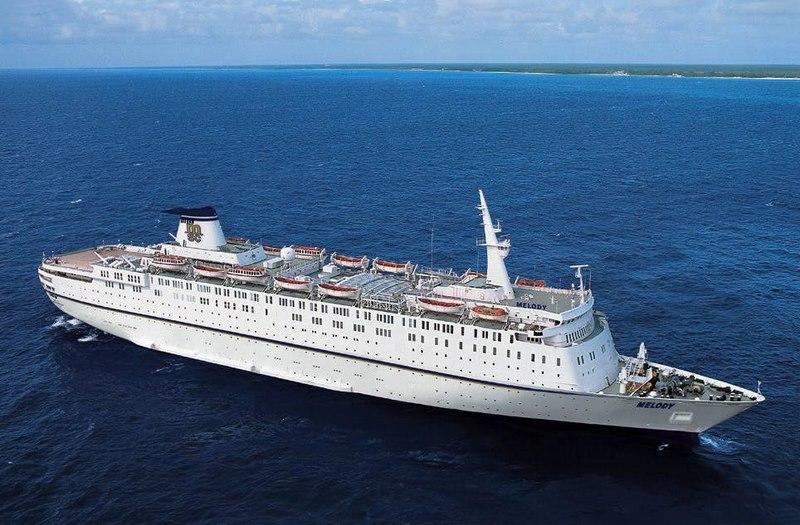
MSC Cruises retires its smallest ship, the Melody


MSC Cruises retires its smallest ship, the Melody

By Tom Stieghorst
MSC Cruises said it has withdrawn the 1,000-passenger MSC Melody from its fleet.

Melody has sailed for MSC since 1995, when it was acquired as the Starship Atlantic. It is the smallest ship in the MSC fleet.

In a statement, MSC said the move affirms its decision to focus on cutting-edge service and reflects a continued commitment to comfort, elegance and technology across the fleet.

Passengers booked on the Melody for 2013 will get a variety of cruise options, including upgrades on newer ships, and will be contacted over the next few days, either directly or through agents, MSC said.

Cruise lines become targets in latest Falklands face-off


Cruise lines become targets in latest Falklands face-off

By Tom Stieghorst
InsightThirty years ago they triggered a war between Great Britain and Argentina. Today the Falkland Islands are again causing friction, and this time cruise ships are getting caught in the middle.

Argentine activists have been targeting cruise ships that call on the South Atlantic islands and then visit Argentine ports. Passengers have been harassed and ships delayed from leaving port.

Some rancor stems from last year’s 30th anniversary of the war, a 74-day conflict over sovereignty won by Great Britain, and from a recent letter sent by Argentine President Cristina Kirchner to British Prime Minister David Cameron calling on him to return control of the islands to Argentina.

Underlying the tensions are hopes that undersea oil discoveries could bring new wealth to the islands.

Oil resources are unevenly divided in South America, with Venezuela and Ecuador having a lot and most of the other countries relatively little. But in 2009, one of the richest oil discoveries in the Western Hemisphere was made in deep water explorations off Brazil.

Seismic surveys show some signs that an equally large field could be tapped around the Falklands, and major players have been actively drilling exploration wells in the area.

Caught in the middle of this petro-political mess are cruise lines such as Seabourn, Princess and Silversea, which offer lengthy voyages this time of year in South America.

Cruise ships are targets because many are flagged in states associated with Great Britain, such as the Star Princess (Bermuda) or the Seabourn Sojourn (Bahamas). A law valid in five of Argentina’s provinces bans British ships involved in “exploitation of national resources” around the Falklands from docking.

Some ardent nationalists say the law extends to cruise ships. Last month, the Sojourn stayed in port an extra seven hours in Buenos Aires, under pressure to skip a stop in the Falklands, according to Britain’s Express newspaper.

A company statement said the delay was due to temporary unavailability of a tug and that it would sail to the Falklands after its stop in Montevideo, Uruguay, as scheduled.

While this latest round of protests continues, passengers booked on deep South America itineraries might best be prepared for the possibility of some extra days at sea.

Card transactions banned in the Vatican


Card transactions banned in the Vatican

By Gay Nagle Myers
Vatican St Peters SquareTourists headed to the Vatican's museums and shops now need cash for tickets and souvenirs. Credit and debit cards no longer are accepted.

The Bank of Italy decided to block electronic payments, effective Jan. 1, due to concerns that the tiny city-state has not fully complied with stringent European Union safeguards against money laundering. This means that Italian banks no longer are authorized to operate within the Vatican.

All ATM machines are being removed, and cash is needed at the ticket booths for admission to the Vatican's museums and guided tours. Souvenir shops will accept euros, dollars but no cards.

The ability to buy tours online using credit or debit cards will end on Jan. 15.

Fireworks a standard on Norwegian Breakaway


Fireworks a standard on Norwegian Breakaway

By Tom Stieghorst
Norwegian Breakaway will offer a fireworks display on every cruise, distinguishing it from most other cruise ships.

The 4,000-passenger Breakaway, set to debut in May, plans a fireworks show on the second-to-last night at sea each week, after the ship departs Bermuda on its return to New York.

The fireworks will be coordinated with a production show set to a playlist of classic 1980s hits including "Come on Feel the Noise" by Quiet Riot; "Whip It," by Devo; "Cherish," by Madonna; "Final Countdown," by Europe; and "Purple Rain," by Prince.

Disney Cruise Line ships also do a fireworks show with every cruise. 

Wednesday, 9 January 2013

Disney introduces ID bracelets for park entry and more


Disney introduces ID bracelets for park entry and more

By Michelle Baran
Disney MagicBandWithin the next few months, guests to Walt Disney World will be able to enter the parks, purchase food and merchandise, enter their hotel room and access certain rides using MagicBand bracelet, which will serve as an optional payment account.

The MagicBand bracelet is part of a larger, technological initiative called MyMagic+ that Walt Disney Parks and Resorts is rolling out over the next several months in an attempt to improve the guest experience.

“Imagine booking guaranteed ride times for your favorite shows and attractions even before setting foot in the park,” Tom Staggs, chairman of Walt Disney Parks and Resorts, wrote on theDisney Parks Blog. “With MyMagic+, guests will be able to do that and more, enabling them to spend more time together and creating an experience that’s better for everyone.”\

Staggs wrote that MyMagic+ will be rolled out over the next several months at the Walt Disney World Resort in Florida.

They will include the MagicBand as well as a new website and mobile app called My Disney Experience.

Through an enhanced FastPass system (FastPass is the current system that allows guests to skip attraction lines) called FastPass+, guests will be able to book dining and other activities, and reserve times for certain attractions and shows. They will also be able to use their smartphones to change their plans while at the park.

They will also be able to reserve viewing areas for fireworks and parades, as well as Disney character meetings.

The MagicBand will provide access to all the FastPass+ experiences selected and will serve as a connection to Disney’s PhotoPass program (PhotoPass is a photo taking, storing and sharing service).

The MagicBand will initially be made available to select Walt Disney World Resort hotel guests and guests who purchase other products, though Disney didn’t elaborate on which products those are.

Other guests will be able to use their standard ticket to access the benefits of MyMagic+, such as making FastPass+ selections on My Disney Experience.

“The MagicBand does not store any personal information — it contains a code that securely links to an encrypted database that associates the MagicBand with the benefits a guest has purchased,” Disney said in a statement. “Extensive measures are in place to protect the privacy of guests and the security of the personal information they choose to share.”

Guests are not required to participate in the MyMagic+ program or use the MagicBands, which can be disabled if lost. There is no additional charge for the MyMagic+ program.

“We’ll be testing, adjusting and adding features to MyMagic+ and My Disney Experience over time and will continue to make improvements based on our guests’ feedback,” wrote Staggs. 

Norwegian sets IPO price


Norwegian sets IPO price

By Tom Stieghorst
Norwegian Cruise Line Holdings Ltd., the company planning to take Norwegian Cruise Lines public, set a price range of $16 to $18 a share for the stock.

The offering would raise about $370 million, which would be used mainly to pay off debt, the company said in a disclosure statement issued on Jan. 2.

In a statement Tuesday, Norwegian said it plans to sell 23.5 million shares, which it will seek to list on the NASDAQ exchange under the symbol NCLH. 

Monday, 7 January 2013

MSC Cruises revises 2013 commission levels


MSC Cruises revises 2013 commission levels

MSC Cruises revises 2013 commission levels
MSC Cruises has decided not to follow its competitors by introducing a flat rate of commission for agents.
The cruiseline announced it would opt for a variable commission rate of 10%-14% and is also scrapping its 5% online discount.
It said in a statement that the new commission levels have been set "according to season and product".
MSC said the new rates “will remain competitive within the market”, adding that it will offer more marketing support, together with a “lucrative” overrides scheme.
The cruise line said it is setting up the new commission levels after completing commercial agreements with travel agents.
It also told agents that as part of the 2013 commercial agreements, they must stop discounting “as this is confusing customers and causing frustration among the trade”.
Giulio Libutti, MSC Cruises UK and Ireland managing director, said: “MSC Cruises will take appropriate action if agents continue to discount MSC Cruises product. I hope this move will bring more clarity and a level playing field to the market.”

Royal Caribbean files trademark applications for ship names


Royal Caribbean files trademark applications for ship names

By Jerry Limone
Royal Caribbean has filed federal trademark registrations for six potential ship names, as first reported by Royal Caribbean Blog, a blog unaffiliated with the cruise line.
Applications for Anthem of the Seas, Ovation of the Seas, Passion of the Seas, Pulse of the Seas, Quantum of the Seas and Vantage of the Seas were filed on Nov. 2 with the U.S. Patent and Trademark Office.
Royal Caribbean will have at least three new ships to name, having recently ordered a third Oasis-class ship.
Royal Caribbean also has committed to two Sunshine-class ships, about which Royal Caribbean has not divulged any design information. The first of the Sunshine ships is scheduled to launch in late 2014.  

Tui and Thomas Cook press ahead with £120m Nats sell-off


Tui and Thomas Cook press ahead with £120m Nats sell-off

Tui and Thomas Cook press ahead with £120m Nats sell-off
Tui and Thomas Cook could share £120 million through the sale of their stakes in National Air Traffic Services (Nats).
The two travel groups are reported to have started the process of selling the 12% they own in the UK’s air traffic control service.
The travel companies are part of the seven-strong Airline Group consortium which includes British Airways, Virgin Atlantic and easyJet, owning 42% of Nats.
The government is the biggest shareholder with 49% while the 5,000 staff own 5% of the business.
Tui and Cook view their slice of the air traffic organisation as non-core and have instructed investment bank Rothschild, which advises the Airline Group, to find a buyer, the Sunday Timesreported.

Cruise operator Norwegian prepares to float


Cruise operator Norwegian prepares to float

Cruise operator Norwegian prepares to float
Norwegian Cruise Line is being lined up for a stock market float.
Weekend reports suggest that a raft of extra advisers have been employed by the company including Deutsche Bank, JP Morgan and HSBC.
These are in addition to UBS, Goldman Sachs and Barclays to work on the planned Nasdaq listing in the US.
The emergence of the additional advisors will fuel speculation that Norwegian is prepared to press ahead, the Sunday Times reported.
The company first registered its intention with the US financial regulator the SEC in 2010.