Showing posts with label technology. Show all posts

Monday, 14 September 2026

EU's new biometric border checks.

Some of Europe's most popular destinations have reportedly been given permission to further delay full implementation of the EU's new biometric border checks.

Passenger queue to clear border control at a European control point.

A number of countries appear to have tacitly been given permission not to fully implement EES

The Times reports France, Belgium, the Netherlands, Germany, Greece, Malta, Portugal, Italy and Switzerland have all told they will not enforce the EU Entry-Exit System (EES) until the technology and systems that underpin it are working correctly.

It comes after a set of contingency measures, which have been available to Schengen nations over the summer to alleviate EES bottlenecks, were due to be withdrawn earlier this month – six months after the full EES rollout, which itself followed a soft launch in October 2025.

EES requires arrivals into EU nations from third-countries, like the UK after Brexit, to submit to biometric checks; these include a facial scan and having their fingerprints taken.

To date, the EU has been steadfast in its insistence there will be no grace period ahead of the coming winter season and in the months to follow.

However, The Times reports that on this occasion, the EU has quietly given the likes of France, Greece, Italy and Portugal permission to pause implementation in the interest of what Eurostar chief Gwendoline Cazenave described to the paper as "maintaining border fluidity".

Despite the European Commission's insistence EES has "broadly worked well" over the summer, a spokesperson said the commission was in "close and constructive contact" with certain member states, and conceded "some adjustments" may be needed at some border crossing points.

The industry has been pushing for respite for several months. As the 6 September deadline approached, Abta's Director of Public Affairs, Luke Petherbridge, said the association would continue to push for the emergency measures and "flexibilities" to be available beyond September.

Other have been more blunt; Ryanair said the EU's handling of EES had been "a shambles from start to finish" while Holiday Extras said the decision to let the emergency measures lapse was "the clearest sign yet" that the system "had failed".

Problems identified by Ryanair include malfunctioning EES kiosks, lengthy processing times and staff shortages. Holiday Extras chief Matthew Pack, meanwhile, said the challenges would make it difficult for the EU to rollout its Esta-style visa waiver in Q4, as planned, as it is reliant on EES working correct.

Saturday, 25 July 2026

AIDAprima Guests Test Self Check-In Terminals in Hamburg

AIDAprima Guests Test Self Check-In Terminals in Hamburg


AIDA Cruises tested digital guest check-in with all guests for the first time in a pilot project at the Steinwerder Cruise Center in Hamburg.

According to a company statement, guests were able to embark independently for a cruise aboard the AIDAprima at one of the 20 digital check-in terminals on July 23, 2026.

During check-in, a photo was taken of each guest, which is stored in the ship system for the duration of the trip. The image was then compared with the photo on guests’ ID documents based on biometric data.

Digital check-in was found to speed up the embarkation process at the terminal, offering more flexibility in combination with the personal service available at a classic counter.

The new service was developed in collaboration with Lufthansa Industry Solutions over a period of two years, adapting self-service check-in terminals from aviation for use in cruises.

This included, among other things, the integration of printers for boarding passes and the connection to the ship’s systems.

The boarding pass is RFID-encoded, serving as a means of payment onboard and as a key to the cabin, among other things.

AIDA noted that it intends to use the findings from the pilot project to explore further use of this technology.

Friday, 4 December 2020

Princess Adds More Touch less Technology On Cruise Ships

Princess Adds More Touchless Technology On Cruise Ships


As part of its Medallion Class upgrades, Princess Cruises is rolling out a number of new touchless guest experiences when its fleet returns to service in 2021.

TrulyTouchless Arrival and Embarkation

Embarkation day will leverage OceanMedallion technology to reduce friction, remove a contact, and avoid crowds, streamlining arrival and check-in, as well as completely reinventing the traditional muster drill.

OceanReady

All guests will now be required to become OceanReady before leaving home, creating a touchless, expedited arrival experience and embarkation. Guests will use the MedallionClass app to upload travel documents and complete a health questionnaire in advance as well as provide important emergency information and form of payment, take a security image, personalize their Medallions and order accessories to be shipped to their home or ready for pick up upon arrival.

Simplified Safety Training

A new approach to the safety assembly on embarkation day lets guests watch an important safety video on their mobile device anytime on embarkation day via their stateroom TV and verify their designated muster station with a quick, contactless check-in at their convenience anytime between boarding and sail away. The OceanMedallion system provides the verification needed by the ship’s captain to confirm muster drill check-in while strengthening safety and security operations onboard, safeguarding guest and crew health, and increasing operational efficiency.

Stateroom Entry

Access to staterooms is now said to be a seamless experience where each guest is securely validated as their cabin door automatically unlocks as they approach. The do-not-disturb sign also becomes a thing of the past as the feature is integrated with the personalized portal outside each cabin, allowing guests to request privacy or designate their room for service by touching the display or using the MedallionClass app.

TrulyTouchless Commerce

MedallionPay is now and eliminates the need to carry cash and credit cards onboard and in Princess Cays, the line's private island.

The system allows for "effortless" payment when purchasing anything on the ship – food, beverages, merchandise, excursions, even laundry tokens. 

OceanNow Service On-Demand

Food, beverage, retail orders and service are delivered directly to a guest’s location. 

Guests can place orders using their smart device, their stateroom TV or with a crew member, as the Medallion continuously ensures great service wherever a guest may go onboard.


Wednesday, 23 September 2020

BVI Reopens to Visitors on Dec. 1

BVI Reopens to Visitors on Dec. 1


The British Virgin Islands has announced its borders will be opened to visitors on December 1, according to Premier and Minister of Finance, Honourable Andrew A. Fahie.

He said that the government is optimistic and is vigorously preparing for the re-opening of the territory to welcome back tourists among others.

Premier Fahie said: “The territory has two full months to prepare and we as a people must get it right and we must get it done by all working together, both the Government and private sector.”

The Premier said that the government intends to reopen the territory in the safest way possible using science and technology as a guide.

“This next phase also comes with a risk factor, where if a case of COVID-19 gets into our Territory, then it can go through the whole community very quickly. That is why we must use technology,” he said. “The concentration must be to use the technology through a simulation prior, to demonstrate that the technology will complement the science to greatly assist us in re-opening in the safest way, humanly possible.

"Please note that we who are in the Virgin Islands must also play our part and play it well to ensure that we adhere to all approved social distancing measures. This will also reduce or eliminate any possible spread of the virus.”


Monday, 16 April 2018

Royal Caribbean: 'Very Aggressive' on Tech Infrastructure

Royal Caribbean: 'Very Aggressive' on Tech Infrastructure

Ovation of the Seas in Hong Kong
At Royal Caribbean Cruises, the idea is to anticipate the future of technology and get ready for it now.
“I believe that the largest challenges for us are the things that we don’t even know will be coming in the next five to 10 years. There are revolutions coming, things like virtual reality and other things that we don’t even imagine. We need to look at the historical growth of those technologies in the past, focusing on the future,” said Guillermo Muniz, director of satellite and network engineering, Royal Caribbean Cruises.
While cruise lines may plan into the 2020s on the technology front, challenges still remain when it comes to internet aboard today’s fleet.
“Royal Caribbean is being very aggressive regarding infrastructure within the ship. We are investing to make sure we have the infrastructure on our ships to have the correct Wi-Fi and the latest technologies to be able to not worry about connectivity over the next decade,” Muniz said.
The newer Royal Caribbean ships are using a new technology, marketed as Voom, that has significantly improved internet access aboard, helped in part by SES Networks.
“On those ships, the connection is comparable to our home experience. You can stream and watch videos on your devices easily. The amount of bandwidth that we provide to a single user today is the same amount of bandwidth that we provided for our entire fleet in 2000,” Muniz noted.
Royal Caribbean is working on a new boarding process that uses facial recognition to speed up the embarkation. Muniz explained that guests will be able to take a selfie at home, upload it via an app, and then be recognized at the cruise terminal by special facial recognition cameras. The cruise line plans to launch the system over the next few years.

Sunday, 19 November 2017

Carnival Corp. to proceed cautiously with Ocean Medallion

Carnival Corp. to proceed cautiously with Ocean Medallion

Arnold Donald, left, with Travel Weekly's Arnie Weissmann at CruiseWorld. Photo Credit: Creative Focus
FORT LAUDERDALE -- Carnival Corp. is taking a slow approach to introducing Ocean Medallion technology, making sure it works right and is delivering the services that customers really want, CEO Arnold Donald said Friday at Travel Weekly's CruiseWorld.
Speaking to travel agents at the conference, Donald said the technology is so transformational that Carnival Corp. doesn't want to create a future shock for past passengers.
The Ocean Medallion is a wearable disc that can be worn as a pendant, wristband or clip. Besides functioning as a stateroom key and streamlining the boarding process, the device is billed as a "personal concierge." When used in tandem with the Ocean Compass app, the Ocean Medallion will enable passengers to make dinner reservations, order drinks to be delivered where they are located, receive excursion invitations based on interests, and play casino games anywhere on the ship.
"We've got to be really intelligent about how we introduce this because it's different," Donald said.
Carnival Corp. did a multimillion-dollar upgrade of the Regal Princess' terminal at Port Everglades to create a new embarkation experience. "When guests walk through that terminal, it doesn't feel like what they're used to, so we want to manage all the unintended reactions," Donald said.The first ship to have the Ocean Medallion, Princess Cruises' Regal Princess, was to offer it on the entire 3,560-passenger ship starting Nov. 13, but the rollout has been scaled back to select guests and groups.
The MedallionNet rapid Internet service, which is in use on the whole ship, is drawing rave reviews, Donald said.
Carnival Corp. is targeting the 2018 first quarter for a wider introduction of the Ocean Medallion. "The guests will decide what they want, how they want it when they want it. That's why we're introducing it slowly to make sure we get it right because it's truly transformational," Donald said.
Carnival is also moving deliberately on developing a new $200 million beach destination in Grand Bahama. Donald said Carnival signed a deal to build the destination just before a change in government in the Bahamas.
"We're working closely with the new government to make sure we've got the right location, the right development concepts and that it will work for the locals," Donald said. "It's not just a matter of building a destination, but building a destination that's woven through the local community. We hope to have that destination completed in the next few years, but it is a process."
Donald was also asked why Carnival sells through warehouse club Costco, which uses gift cards convertible to cash as a rebate when club members buy cruises
"I don't have an easy answer for any of these big-scale folks that go low-cost," Donald responded. "You have to match up your business where it really will compete effectively."
He said agents that provide personal service and client understanding will not suffer from bottom-feeder competition, but he said Carnival will look at the issue. "We would prefer to see strong pricing," he said. "There's no big reason to be discounting today."

Saturday, 28 October 2017

Technology Meets Cruise Trends

Technology Meets Cruise Trends

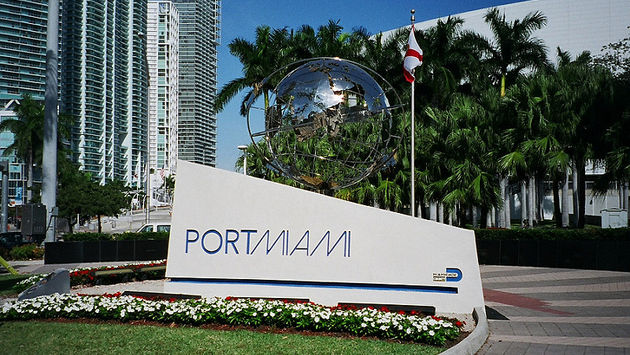
Port of Miami entrance
PHOTO: Port of Miami entrance. (photo via Flickr/Phillip Pessar)
Cruise travel is so hot right now.
In order to determine just how hot, advertising platform Sojern partnered with Google to ascertain the outlook.
The three biggest takeaways from the report pertain to mobile planning, influence and alternative forms of travel. First, there has been an uptick in mobile cruise searches during 2017—33 percent to be exact, accounting for 29 percent of such overall searches. Second, pricing (89 percent) and entertainment (47 percent) are among the factors that influence potential cruisers.
Third, those searching for other vacations may still opt for a cruise in time.
Additionally, the report cross-referenced Google’s treasure trove of search and survey data with Sojern’s own intent information from traveler profiles and purchase signals.
As much as mobile and online are important these days, offline booking is still viable. Of past cruisers, 41 percent still made their reservations either by utilizing a travel agent or calling the cruise line directly. However, trends are certainly shifting more digital, so online travel agencies are crucial. After all, 69 percent of cruisers desire to book their next trip online.
Going digital is an influence in itself. The video specifically is cited as an important tool in capturing travelers’ attention, (which is one of the very reasons I produce my own Popular Cruising YouTube channel).
As far as marketing is concerned, there is a multitude of paths a buyer may take before booking.
One of the most common, with a 37 percent share, remains a simple cruise search followed by the reservation. However, there are also bookings that follow one or more searches for other travel forms and agencies either before or after a cruise inquiry.
In other words, agents, as well as cruise lines, should have a strong online presence, especially via social media.
As one might expect, searches for key air destinations also correspond to cruise searches. In the top ten are Miami, Fort Lauderdale, Orlando, Los Angeles, Boston, Cancun, Vancouver, San Juan, Honolulu, and Tampa.
Given most of these are also cruise hubs, it makes perfect sense that a search for something land-based might transfer over to something cruise based.
The report points out that, despite the wonderful all-inclusive value proposition of cruises, it is not always what leads people first to a cruise. Rather, it's more often about a destination or experience.
Once another gets them interested, however, the value is a great way to win them over.
It’s worth noting a majority of cruise searches still occur on desktop platforms and almost all bookings are made on the desktop over mobile. During a week, most searches happen on Mondays and Tuesdays, with three-quarters via desktop. However, by the weekend, mobile searches account for one-third of the traffic.
Meanwhile, only 9 to 11 percent of reservations are actually made over mobile versus the remainder via desktop. There definitely seems to be potential to convert more mobile searches to bookings accordingly. Perhaps apps need to mature in this area to ensure better consumer confidence.
Ultimately, there remain plenty of ways in which a traveler can research and purchase a cruise vacation. Both cruise lines and travel agents need to simply be aware of the prime marketing positions and avenues to occupy.

Wednesday, 30 April 2014

Travel business leaders warned not to fall behind on technology

Travel business leaders warned not to fall behind on technology

By Travolution
By Travolution

Travel and tourism business leaders must embrace the challenge of constantly changing technology or fail, according to a leading technology consultant.
Jerry Noonan, global consumer practice leader at Spencer Stuart, told the World Travel and Tourism Council Global Summit:
"The change in strategic importance of technology to business is a challenge for business leaders.
"It is a rapidly changing dynamic and there are countless examples of businesses that have been slow to change."
He said: "It requires business leaders to remain curious and continuously learning."
Noonan insisted: "It is something everyone who leads in travel needs to think about."
"The primary purchase pattern that defined the travel industry has fundamentally changed. This is not a static moment. This is an accelerating set of forces."
Value Retail chief executive Desiree Bollier said: "Technology is disruptive but if we don't make it part of our business we will fall behind."
However, Henrik Kjellberg, president of travel website Hotwire and chairman of Chinese online travel agent eLong, argued: "The consumer is just in a much better position than 15 years ago and who would want to go back?"
He added: "I sit on the board at eLong. At the start we were saying 'This is what you should think about.' Now I just steal everything and take it back to the US. In China they are just way ahead of everyone."
Kjellberg also suggested: "The sharing economy will have a profound impact on the industry. It is a bandwagon and will grow. It is something technology does really well."
Jami Timmons, president of nSight, argued: "There needs to be ongoing investment. It is no good to invest in technology and then never look at it again."
She argued: "There is a ton of ways to use the massive amount of data in hospitality."
Kjellberg was less impressed, arguing: "Big data does not necessarily give you big insight. It can be very costly from a time perspective. It is easy to get distracted by Big Data."

Wednesday, 18 December 2013

Opinion: Technology will change the rules by which the industry is run

Opinion: Technology will change the rules by which the industry is run

Technology is going to continue to evolve at a frightening pace and the rules by which the industry has been run are about to change, warns Ken McLeod of Advantage Travel Centres
Every agent should have been in Dublin in October to listen to 600 airline and distribution chain representatives at Iata’s .
Sitting in the audience I realised the possibilities offered by Iata’s New Distribution Capability (NDC) are dwarfed by the challenges facing the industry as it undergoes a fundamental change to distribution, pricing and relationships.
The airline world has been evolving faster than ever.
Systems have been remarkably efficient, but as airlines become more complex and revenue management and yield ever more important, the process is becoming more difficult to control.
NDC was discussed in almost every session at the symposium. While we know change is on the way, the questions raised were what will it look like and how fundamental will it be?
Only in one of the final sessions did we hear GDS, agency, airline and corporate representatives agree that collaboration, transparency and value have to be at the heart of any change.
Diversity of opinion
The GDSs were well represented throughout and talked some sense, especially the fact that customers’ trips are not just only airline seats but also hotels, car rental and many other services.
The airlines are fixated on reducing the cost of distribution and raising more revenue through ancillary sales. However, you only have to consider some of the statements made over the three days to understand the diversity of opinion:
“Airlines have less control on pricing than almost any other industry.”
“NDC is a key component of change in revenue management.”
“It’s not about the price of the ticket. It’s about what passengers will pay in total for the travel experience.”
“There is a complete lack of trust between stakeholders on NDC.”
“The marketplace must determine solutions.”
“Who is paying for all this?”
NDC is only part of a creative and technological evolution that will impact an industry that has lived, until now, with margins of $2.50 per seat.
As one speaker pointed out: “Starbucks make that on every cup of coffee.”
No understanding at the top
It reminded me of something B&Q is experimenting with: trialling different pricing for the same products on different days of the week, with products more expensive at weekends and cheaper on quiet days.
This leads to a variety of pricing elements for loyal customers and allows the company to link offers such as two for one to certain clients.
Why is B&Q doing this now? The technology available makes it easy.
Technology is going to continue to evolve at a frightening pace. The rules by which the industry has been run are about to change.
On leaving Dublin, I had mixed feelings. On the one hand, a lot was achieved in understanding the challenges. But I couldn’t help thinking those at the top of the tree do not get the message.
My opinion is that travel management companies and agents are not ready for the change. It will happen soon, maybe gradually to begin with, but many will be taken by surprise.

Wednesday, 23 October 2013

Technology and the shipboard library

Technology and the shipboard library

By Tom Stieghorst

The ship’s library has always been a small but special part of the cruise experience. But for how much longer?  
The library at sea, like libraries everywhere, is under siege by changing technology. And whether ships need to set aside space for libraries in the future is very much being debated as new ships are designed.

Carnival cruise director and blogger extraordinaire John Heald said in a recent posting that the library on the recent transatlantic crossing of the Carnival Legend was full of books.  *TomStieghorst 
"One thing all those transatlantic crossings had in common was that the library, by the end of the first sea day, sat entirely empty," Heald wrote. “Here on the Carnival Legend, the bookcases are full.
"Yep, the book is dead, long live the Kindle. Every deck I walk on, I see young and old reading their Kindles."

Even on an ocean crossing with presumably few younger, tech-savvy passengers on the manifest, the library remains fully stocked, Heald said: “Wherever I am, I see older people and their parents absorbed in their Kindles.”
Perhaps that’s just Carnival. Maybe the magnificent libraries on the Cunard Line fleet have emptier shelves on their Atlantic trips. But on most ships where space is at a premium, the library is an endangered species.

At the next major drydock nothing prevents a ship’s library from being converted to some other use. Heald suggested perhaps a cigar bar (a suggestion likely made for for comic effect, but maybe not.)
The trend is on display on Carnival Sunshine, the ship Carnival renovated from stem to stern earlier this year. While the library wasn’t eliminated or converted to another use, it now shares space with a bar.
Carnival is in the process of designing the next ship to set sail under its red and blue banner, the Carnival Vista. With Kindles in the hands of passengers young and old, it may well be the first Carnival ship without a library.

In his post Heald referred to a bookstore in Miami that he said was possibly a Borders, which he liked to visit when he comes to Miami. “It would not surprise me that, when I return there in November, it’s become a Walgreens or worse, a gym,” he wrote.
If in fact it was a Borders, it closed two years ago, along with the rest of the chain’s stores.  The Borders on South Dixie Highway in Miami reopened last week as a Trader Joe’s specialty market. 
At least it’s not a gym.

Friday, 11 October 2013

Cruising Excursions out to cause waves with international expansion

Cruising Excursions out to cause waves with international expansion

By Travolution
By Travolution


Two-and-a-half years after introducing its disruptive start-up model in the world of cruise, UK-based cruisingexcursions.com is poised to expand its international reach.
The firm, which will turn over £6 million this year, has created new websites for the Germany, French and Dutch markets and expects to make a splash after seeing considerable growth in the UK.
Having agreed deals with the UK’s big two, Thomas Cook and Tui Travel, the firm has seen sales increase 400% this year, double what it had projected.
It turned a profit last year according to accounts filed last September and is now out of its start-up phase and a fully sustainable business, founder and managing director Simon Purchase told Travolution.
He was in London this week to meet with the technology firm Correl8 which built the existing website and has created its second version including its international sites in just eight weeks.
Purchase admitted at first it was a hard slog convincing agents to feature his product, but the signing of the big two was a turning point.
“We have had a very successful couple of years. It’s gone round in a circle to the point where people are asking us whether they can take product.
“With Thomas Cook and Tui Travel now offering excursions to their passengers, customer are now asking their agents if they can do their excursions.”
Purchase said agents have also been forced to seek out additional revenue opportunities since cruise lines cut commission to agents - the UK’s leading operators by as much as 10%.
With 10,000 tours in 700 ports worldwide, Cruising Excursions believes it is well ahead of any potential rivals in a sector tipped as the next battle ground for disruptive technology.
Behind the business, however, is more than just fancy technology it has contracted its own tours and organises its own transfers to give it control over the product.
The firm’s entry into the sector has seen local tour guides and operators previously frozen out by the major lines able to grab a slice of a growing and lucrative market.
At the same time a market that was sewn up by the operators has been broken open, offering customers significant savings on their on-shore activities.
Cruising Excursions now claims to have 8% of the UK cruise market of 1.7 million annual cruisers. It had originally targeted hitting 2% after two years.
Purchase said trade distribution has played a key part in the firm’s growth, rising from just 10% at the outset to 50% today.
European expansion isn’t Cruising Excursions first foray overseas; it already has a health business to consumer operation in the US and has just signed with Harvey World Travel in Australia.
But Purchase said he expects its latest expansion will cause further ripples among operators who are seeing good growth in cruise in Europe particularly in Germany, the second-biggest market.
“When I started this business I never thought there was this much money in excursions. The dramatic growth from direct and agents has been incredible in comparison to what we budgeted for.
“I’m obviously very pleased with the company’s success and am driving the business forward in the future to inhibit potential competitors.
“This sector has been a closed shop for 20 years. The cruise lines have never put their prices down they have always put them up. What do they expect?”
Cruise Excursions plans to launch an app that will allow customer to book their cruises while they are away, up to a day in advance.
It has also developed an API although this is not being used widely to date, most agents approaching shore excursions as an after sale add-on rather than inserting them into the booking flow.
The firm also hopes to add pre- and post-cruise trips, something failed rival Shorex set out offering but was unable to make work.

Friday, 7 December 2012

Thomas Cook joins Thomson in tech-driven bricks and mortar fight back


Thomas Cook joins Thomson in tech-driven bricks and mortar fight back

Thomas Cook has become the latest bricks and mortar traditional high street travel agent promising to emulate digital giant Apple with a new concept store.
The travel giant says its new store in Leeds, that will open this month ahead of the turn of year peak booking period, with exploit the latest technology to engage with customers.
The reveal about its plans came just a month after rival Thomson spoke of its intention to open a “groundbreaking” concept store of its own within 12 months.
The “shop of the future” would seek to emulate Nike, Apple and Audi, ditching brochure racks in favour of digital screens and the latest modern point of sale technology.
Other traditional operators including Kuoni and Virgin Holidays are also brand flagship stores in high street locations, the latter having incorporated Aurasma augmented reality among other technologies in its High Street Kensington location.
Cook said research has shown that 46% of customers still seek face-to-face interaction with their travel agent but providing an omni-channel retail environment is key for the future of travel.
Retail director, Joanna Wild, said: “Our new store will be more Apple than travel and uses technology and techniques championed by iconic, high-tech brands to place our customers at the heart of the experience; allowing them to choose how they access information and dictate the level of assistance they receive from us.
“We know that shopping habits are changing, with more and more customers researching their holidays online and transactions becoming quicker, but we also know that a holiday is a massive purchase for customers who want to be inspired and enjoy that purchase process, and of course they still value that human touch and having expert advice on-hand if they need it.
“This is where our concept store will stand out and we will use it as a test bed to see what elements we might want to introduce to other stores in future.”
The 1,400sq ft concept store, in Leeds’ White Rose shopping centre, will allow customers to research and book holidays however they choose, whether searching and booking on a tablet, consulting one of 25 staff, watching a video or checking in on Facebook to qualify for a special offer.
Cook said “the holiday vibe in-store will be created with ambient music and video, while social media technologies will enable customers to share personalised, holiday-related content” and it will be the first step “in truly networking Thomas Cook travel consultants across the country”.
Recently appointed head of retail for large shops Lucy Green, who is in charge of the project, said: “The aim is to build a store that allows customers to engage and interact with us in any way they want.
“Our research found customers want options, and they felt the only option at the moment was to come in and sit with a consultant for a significant amount of time. The research focused on what they would like the store to be, and how they wanted to engage with us.”
Green, who formerly worked for The White Company, added: “Up and down the high street you can see where retailers are fighting back by investing in their bricks and mortar to create showcases for their brands.
“Ultimately it’s about future-proofing them by creating a more profitable, omni-channel retail environment but it’s also in direct response to reaction from customers who are coming back to the high street for that personal service – especially for high value or significant purchases – with John Lewis being a perfect example.”