Showing posts with label health protocols. Show all posts

Friday, 9 December 2022

Vago: ‘Our Capability to Adapt Is Unmatched’

Vago: ‘Our Capability to Adapt Is Unmatched’


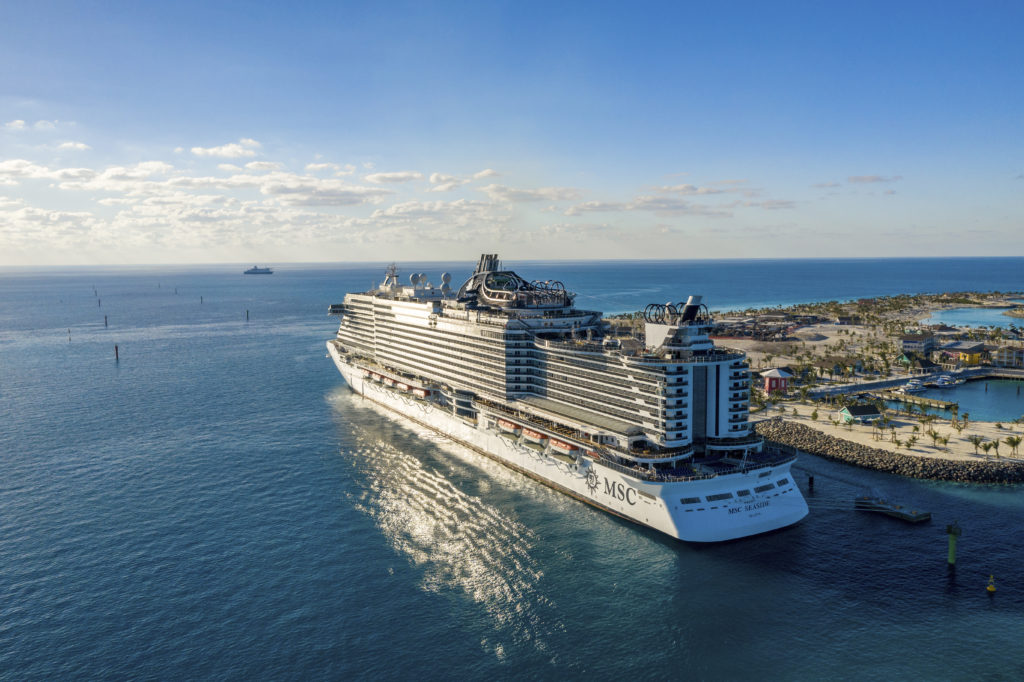
Pierfrancesco Vago, executive chairman, the Cruise Division of MSC Group, highlighted the strengths of MSC Cruises during a speech in New York at the MSC Seascape’s christening on Wednesday.

“Our industry was put in the spotlight just like New York was, but like you in the face of adversity, we came together and steered ourselves on the right course,” Vago said.

He said that cruise lines had developed stringent health protocols that set the standard. While other sectors remained closed, MSC quickly resumed operations, becoming one of the first major cruise lines to sail again when it resumed operations in the summer of 2022.

“Just like New York, we are back stronger than ever. Today, as macroeconomic conditions change, there are valuable lessons to draw from this experience. High inflation, speculation and economic uncertainty are on the rise, but consumers won’t compromise on their right to have a break,” Vago continued.

“Our capability to adapt is unmatched. We offer the best value for money. Despite the uncertainty, we continue growing.”

Despite the growth in new ships, Vago said the industry needs to remind the world that cruising is essential due to its economic impact.

Tuesday, 20 September 2022

Costa Cruises Simplifies COVID-19 Protocols

Costa Cruises Simplifies COVID-19 Protocols


Costa Cruises is updating its COVID-19-related health protocols, making its vacations even more accessible, according to a press release.

Starting Oct. 8, new simple procedures will allow guests to enjoy onboard and shoreside activities without restrictions, the company said. 

The main changes concern the Mediterranean, the Caribbean and the United Arab Emirates, where fully vaccinated guests will no longer have to undergo pre-embarkation testing. In addition, in the Mediterranean and the Caribbean, unvaccinated guests with negative pre-embarkation antigen tests will also be able to embark.

In Mediterranean (excluding Greece) and the Caribbean cruises lasting less than 14 nights, guests who have completed the COVID-19 vaccination will be able to embark on the ships without having to undergo any more pre-embarkation tests.

Guests who have not been vaccinated or cured from COVID-19 will also be able to travel with Costa to these destinations, simply showing at the embarkation an official certification of the negative result of an antigenic swab (or also RT-PCR molecular swab, at the guest's choice) performed within 48 hours of embarkation time.

All cruises calling in Greece will continue to be available only to fully vaccinated, partially vaccinated and recovered guests, and who have undergone antigen testing with a negative result within 48 hours of embarkation.

On cruises visiting Morocco, guests without full vaccination will be required to take an additional RT-PCR molecular test on board 48 hours prior to entry into the country. As for Caribbean cruises, shore leave of unvaccinated guests in Barbados, St. Vincent and St. Marteen is permitted only with a negative result of an antigen test performed 24 or 48 hours prior to the ship's arrival. These tests, as well as those scheduled prior to entering Morocco, can be done onboard Costa ships at a special price.

Cruises in the UAE, Oman and Qatar are currently available only to fully vaccinated guests, but with no pre-embarkation testing required.

Around-the-World, transatlantic cruises, and generally all cruises longer than 14 nights, require guests to be fully vaccinated and take an antigen test with a negative result within 48 hours of embarkation time. In addition, mask use onboard will be mandatory in public areas during the first seven days of the cruise, while in other destinations (Mediterranean, Caribbean, UAE) mask use is simply recommended.

Saturday, 18 December 2021

Royal Caribbean Tightens Onboard Protocols; Requiring Indoor Masks

Royal Caribbean Tightens Onboard Protocols; Requiring Indoor Masks


Guests aboard the Royal Caribbean International fleet will now be required to wear masks at all times when indoors through at least January 5, according to a letter sent to booked guests.

"With the recent uptick of COVID-19 in the world and added Omicron variant concerns, we feel it prudent to temporarily tighten our onboard health protocols to require masks indoors at all times unless actively eating or drinking. This new update also applies to vaccinated areas and venues," the company said, in the letter sent to guests and travel agents.


Saturday, 19 September 2020

VIDEO: MSC Cruises showcases health and safety protocols

VIDEO: MSC Cruises showcases health and safety protocols

MSC Cruises has produced a video to showcase new health and safety protocols introduced for its return to cruising.

The video was recorded on MSC Grandiosa, which is currently operating seven-night cruises with embarkations in the Italian ports of Genoa, Civitavecchia, Naples and Palermo, plus a calling at Valletta, Malta.

Due to Foreign Office advice against ocean cruising, British and Irish passengers are currently unable to join the sailings. However, the line said it was working closely with Clia to ensure protocols would be aligned when the guidance is lifted.


The planned return of MSC Magnifica has been delayed, with the ship now due to return to service from the October 19, operating 10-night cruises from Genoa and calling in Livorno for Florence and Pisa, Messina in Sicily, Valletta in Malta, Piraeus for Athens, Katakolon for Olympia in Greece and Civitavecchia for Rome.

Monday, 3 August 2020

MSC Readying Two Ships for Cruising; Unveils Health Plan

MSC Readying Two Ships for Cruising; Unveils Health Plan

MSC Grandiosa
MSC Grandiosa is ready to resume sailings.
Thanks to https://www.cruiseindustrynews.com/ for the article.
MSC Cruises is preparing for a potential restart this summer in the Mediterranean and is waiting on final approvals to have the Grandiosa and Magnifica start seven-day cruises.
The MSC Grandiosa will offer seven-night cruises in the Western Mediterranean and MSC Magnifica will serve the East Mediterranean, according to a press release.
Their actual departure dates will be determined in accordance with the guidelines received by the relevant authorities.
The itineraries that are being planned include Greece and Malta where the authorities have not only re-opened their ports to cruising but also have approved the health and safety protocol to support MSC Cruises’ restart of operations, according to a statement. 
Speaking today at a press conference held in Italy, MSC Cruises’ CEO Gianni Onorato revealed the full details of the company’s comprehensive health and safety protocol that has been developed to support the restart of operations in the Mediterranean, designed to protect the health and safety of guests and crew as well as the local communities, according to MSC.
A dedicated task force, with the input and support of leading external medical experts, developed a robust protocol with new MSC Cruises’ specific operating procedures that go beyond the actual regional and national guidelines and effectively set a new standard. 
MSC Magnifica in the Firth of Forth photo credit Dave Jones
For this initial phase of the restart of operations, the two ships will initially only welcome guests who are residents in Schengen countries. Additionally, their itineraries have been designed according to the accessibility of the ports, reducing — where possible — the need for guests to make use of public transport or flights, MSC announced. 
In the U.S., MSC ships will only return to service once the necessary approvals have been received from the relevant local and national authorities, including the CDC, as well as across the regions where the ships will operate.
MSC said it had set up a cross-functional task force comprised of in-house experts in the areas of Medical Services, Public Health and Sanitation, Hotel Services, HVAC and other Shipboard Engineering Systems, Information Technology and Logistics. It also hired Aspen Medical to further assist with the development of the protocol and operating procedures. In addition, MSC established a blue-ribbon COVID Expert Group.
New Health Protocols:
1. Universal health screening of guests prior to embarkation that comprises three comprehensive steps: a temperature check, a health questionnaire and a COVID-19 swab test. Depending on the screening results and according to the guest’s medical or travel history, a secondary health screening or testing will take place. Any guest who tests positive displays symptoms or temperature will be denied boarding. Following guidelines from the European Centre for Disease Prevention and Control, guests travelling from countries categorised as high risk will be required to take a molecular RT-PCR test, to be done within 72 hours prior to joining the ship. All crew members will be tested for COVID-19 prior to embarkation as well as regularly during their contract.
2. Elevated sanitation and cleaning measures supported by the introduction of new cleaning methods, the use of hospital-grade disinfectant products and the sanitation of the air on board with UV-C light technology that kills 99.97% of microbes.
3. Social distancing will be enabled through the reduction of the overall capacity of guests onboard, allowing for more space for guests, approximately 10 m² (about 108 sq. ft) per person based on 70% overall capacity. Venue capacity will be reduced, activities will be modified to allow for smaller groups and guests should pre-book services and activities to manage guest numbers. When social distancing is not possible, guests will be asked to wear a face mask, for instance in lifts. Face masks will be provided daily to guests in their cabins and will be available around the ship.
4. Enhanced medical facilities and services with highly qualified staff trained, the necessary equipment to test, evaluate and treat suspected COVID-19 patients and the availability of free treatment at the onboard Medical Centre for any guest with symptoms. Dedicated isolation cabins will be available to enable isolation of any suspected cases and close contacts.
5. Ongoing health monitoring will be conducted throughout the cruise. Guests and crew will have their temperature checked daily either when they return from ashore or at dedicated stations around the ship to monitor the health status of every guest and crew member. During this initial phase of operations, as a further enhanced measure of protection and to avoid risks to the health of guests and their fellow cruisers, guests will only go ashore as part of an organised MSC Cruises’ excursion. This means that MSC Cruises can protect their health while ashore with excursions that will be delivered with the same high standards of health and safety as on board. We will ensure that transfers are properly sanitised and that there is adequate space. Tour guides and drivers will also undergo health screening and will wear appropriate personal protective equipment (PPE).
6. A contingency response plan will be activated if a suspected case is identified, in close cooperation with the national health authorities. The suspected case and close contacts will follow isolation measures and may be disembarked according to local and national regulations.
The MSC COVID-19 Protection Plan will provide guests with additional peace of mind for the summer cruises. This will cover the guest if they become infected prior to their departure if they are not able to travel, during the cruise for medical expenses and after the cruise if the guest falls sick. The MSC COVID-19 Protection Plan is currently available only to guests from Schengen countries. 
A redesigned embarkation procedure with digital check-in processes has been implemented to make the process more seamless and contactless with arrival time slots to manage guest flow.  Guests will undergo a COVID-19 swab test, a temperature check and an in-person check of the health questionnaire to ensure that they are healthy and eligible to cruise. If further checks are needed, these will be carried out by medical staff and, if needed, a further COVID-19 test could be carried out.
For guests, onboard both ships, the MSC for Me app will support and facilitate the new health and safety measures. The app can be used to book services as well as to manage their daily activities onboard and source information.
Additionally, onboard MSC Grandiosa every guest and crew member will be provided with a complimentary MSC for Me wristband, which facilitates contactless transactions around the ship as well as providing contact and proximity tracing.

Wednesday, 8 July 2020

The industry is prepping for a comeback. Where is the CDC?

The industry is prepping for a comeback. Where is the CDC?

Cruise industry taps leading health experts for enhanced Covid-19 ...
MSC Cruise has put together a Blue ribbonCovid group to put in protocols for safety.

By Johanna Jainchill
The past week has seen major movement in the shaping of protocols around the resumption of cruising. Last week, the European Union released guidelines for the resumption of cruising. Yesterday, Royal Caribbean Group and Norwegian Cruise Line Holdings Ltd. revealed that they had assembled a panel to develop health and safety protocols for the industry to resume operations. MSC Cruises has put together a Blue Ribbon Covid Expert Group that will advise it on sanitation and health protocols.

What's missing from all of these advancements is any word from the U.S. Centers for Disease Control and Prevention (CDC), which will ultimately determine when large cruise ships can resume sailing from U.S. ports. The agency has said nothing about the cruise industry since updating its No Sail Order on April 9 to expire on July 24.

The cruise industry has not publicly said that the CDC is being uncooperative, but in a conversation with Travel Weekly last month, CLIA CEO Kelly Craighead praised Europe for enabling the industry to "participate in dialogue about thoughtful resumption protocols" but said that with the CDC it was "having some challenges with having that kind of engagement and dialogue with them."

CLIA said it had been actively engaged in the development of the guidance published last week by the EU.

UBS analyst Robin Farley said in a note to investors in June that according to her sources, the reason CLIA announced a voluntary suspension of cruises through Sept. 15 is "likely so that [the] CDC would not have to extend its No Sail Order while negotiations continue."

"It sounds like there needs to be an agreement with the CDC in place about 30 days before ships can restart," Farley said.

However, Farley also said that according to Royal Caribbean Group management, the company "is in constant communication with the CDC in a constructive dialogue, and at this point, they are going back and forth with iterations of an agreement."  And one of the co-chairs of the Royal/Norwegian panel, Mike Leavitt, a three-term governor of Utah and former secretary of the U.S. Department of Health and Human Services, said that the CDC was "very pleased to know the panel was being proposed. We described the membership and told them how we were going to work and we pledged transparency and they received it warmly."

But publicly, at least, the CDC has been quiet. And several industry stakeholders have privately said the CDC is being unresponsive and uncooperative with the industry. The CDC did not respond to outreach from a Travel Weekly reporter.

It has been suggested that the CDC has been hamstrung by the Trump administration, such as in a scathing New York Times report in June that detailed the CDC's failures overall in its response to the Covid-19 pandemic. In one example of its shortcomings, the article cited the CDC's No Sail order and reported that the CDC wanted the order to be indefinite, but that the White House intervened, and so the agency replaced it with the order the ends in July.

It's not the only article on the agency's failures: the Washington Post this week reported that the CDC's mishandling of the coronavirus is similar to the mistakes it made with the Zika outbreak in 2016.

CLIA and the cruise industry may not want to rock the boat and cause any further delay, but given the fact that so many travel advisors depend on the ability to relaunch operations in the world's No. 1 cruise market, ASTA CEO Zane Kerby might have spoken for the industry at large when he called the CDC's communications about travel "uneven at best." In a letter to its director, Robert Redfield, on June 9, he said that prioritizing of the restart of the cruise industry is one of four main goals the CDC should tackle.

"In the absence of clear communication, the entire population remains essentially in the dark, left to rely on a patchwork of regional, state and local pronouncements to inform their decision-making with respect to travel," Kerby wrote. "Airlines, hoteliers, cruise lines, tour operators, car rental companies, insurance providers and others are similarly left to their own devices as to when to restart operations in the face of an unprecedented global pandemic."

Friday, 3 July 2020

Costa Cancels Cruises Into August

Costa Cancels Cruises Into August

Costa Diadema
Costa Diadema above

Costa announced a further pause for all its cruises until August 15, 2020, and the cancellation of all cruises in Northern Europe for the remainder of the 2020 summer season, according to a statement.
"The decision is linked to the uncertainty on the gradual reopening of ports to cruise ships and the restrictions that may still be in place for the movements of people due to the COIVD-19 global pandemic. In addition, the Company is also communicating the cancellation of all future cruises of the Costa Victoria," the company said. 
In the meantime, Costa said it is working alongside all relevant authorities to define health protocols for a potential restart of cruises as soon as possible.

Wednesday, 1 July 2020

Cruise restart protocols to go ‘way beyond’ other sectors

Cruise restart protocols to go ‘way beyond’ other sectors

CLIA Announces President and CEO Transition - Cruise Industry News ...


The UK cruise sector is working closely with the government, public health bodies and maritime authorities on restart protocols that will go “way beyond” other sectors, according to Clia.

Andy Harmer, director of Clia UK & Ireland, said a focus on the resumption of air travel and safety measures at airports was being mirrored by cruise lines and ports.

In a column on Travel Weekly’s website, he said: “A lot of work is going on in the background to transform the experience of taking a cruise. The industry is working in collaboration with the government on a ‘door to door’ strategy – from the time of booking through to the passengers’ return home – that will go way beyond protocols in place or proposed for any other travel sector.”

He added: “Clia has been working closely with the Department for Transport, Port Health, Public Health England and the Maritime & Coastguard Agency to develop the roadmap to resumption – what will happen from the time of booking to embarkation at the port, onboard, ports of call, disembarkation and customer follow-up.

“We are also engaged with public health professionals as we review the customer journey, from minimising the likelihood of onboard cases by a screening of each guest before departure, through comprehensive onboard management and repatriation plans should case occur on board.”

Harmer welcomed comments made recently by the prime minister that cruise was a “great British industry” which would be supported by the government “in any way that we can”.

And he said plans for a pan-European framework should pave the way for the sector’s restart, adding: “We expect interim guidance from [joint action scheme] EU Healthy Gateways to be published this week, supporting the resumption of cruise activity in a coordinated way.”

Saturday, 6 June 2020

A crucial part of the cruise restart: Lines and ports must agree on health protocols

A crucial part of the cruise restart: Lines and ports must agree on health protocols

Carnival Cruise Line ships in Cozumel, Mexico. As it works towards a restart, the cruise industry must work with port authorities and governments to agree on health protocols.

As cruising looks to resume operations after the coronavirus-induced industry halt, it faces challenges unique to an industry in which the majority of its ships touch multiple nations on each itinerary. 
CLIA global chair Adam Goldstein said in a conversation with Travel Weekly editors that the association is aware that it will be paramount for travel advisors to have clarity about when cruising can resume and what protocols will accompany that resumption.
Among the challenges the cruise industry faces is that each country will have its own set of rules and regulations to comply with. But Goldstein said this is not new for cruising, and he said CLIA is supporting its member cruise lines to put together protocols that should "meet the test of any international national health authority."
"There's never been a perfect harmony across the 1,000 destinations that cruise ships visit, and somehow we managed to work out a fairly seamless vacation environment," Goldstein said. "This presents new challenges across every dimension. And while our aspiration is for the most harmonized global approach possible, it's a complex world. Regions are quite different from one another. It's possible we won't end up with a perfectly harmonized Covid-19 world to deal with. But I don't think there's anybody more experienced, clever or determined to succeed in a global environment than the cruise industry, and that's been well demonstrated over a half-century."
CLIA CEO Kelly Craighead said that regulatory agencies worldwide have approached the cruise industry in different ways.
"Some of the challenges in the U.S. are different from the challenges we're having [elsewhere]," she said. "In Europe in particular, the industry is welcome to participate in dialogue about thoughtful resumption protocols. In the U.S., with the CDC, we're having some challenges with having that kind of engagement and dialogue with them."
Craighead added that in Europe, "there is an interest from governments to reopen tourism, and cruising is considered an important part of that."
Given those complexities, Goldstein said it is premature to say where CLIA members might first relaunch.
"We can't comment for the authorities," he said. "They're dealing with a billion different things. Travel and tourism is one piece, and cruise is a very small piece of that piece."
He also said that it is likely there will be the sequencing of cruise resumption in different regions.
"I just can't say which will go first, second, third," he said. "We also expect [cruises may be shorter] toward the beginning, they could go to fewer ports at the beginning. It will take time, and there will be an evolution back towards what we were doing pre-pause."  
Above all, right now, Goldstein said it is important for the industry to be ready to engage with governments around the world at any time.
"What concerns us is: would we miss opportunities to engage at the time when governments are prepared to engage with us?" he said. "So the message to the member lines is, 'let's be as ready as we can be as an association.' It's an everyday challenge we work through."