Showing posts with label Abercrombie & Kent. Show all posts

Tuesday, 4 February 2020

Coronavirus already impacting travel beyond China air routes

Coronavirus already impacting travel beyond China air routes

Coronavirus already impacting travel beyond China air routes
Photo Credit: Rangizz/Shutterstock

The travel industry is bracing for a potentially serious downturn of unknown length as the coronavirus continues to spread, forcing cancellations of flights, tours and cruises in China and threatening to create a global tourism slowdown.
While most industry players said it was too early to predict the ultimate impact, investment analysts said the growing number of travel warnings and bans related to the virus, combined with election-year politics in the U.S. and geopolitical tensions, were worrisome in terms of the financial health of the industry in 2020.
“The tourism industry is already facing a number of headwinds, including ongoing uncertainty over the terms of the U.K.’s upcoming Brexit withdrawal and intensifying geopolitical tensions between a number of powerful nations,” said Ben Cordwell, travel and tourism analyst at the U.K. data and analytics company GlobalData. “These factors, combined with the coronavirus outbreak, could mean a tough year lies ahead for the international tourism industry.”
While some outbound tours and China-based cruises were cancelled, U.S. tour operators were mostly taking a wait-and-see approach, noting that this is the off-season for travel to China; group travel and cruises typically pick up in March.
Airlines felt the immediate brunt, with British Airways becoming the first carrier to halt all travel to China and others following suit.
Austin Horowitz, a senior aviation management consultant for ICF, said that even in a best-case scenario, demand for air travel to China would take a severe hit in the near term.
“The duration of how long this goes on until it is contained will have a significant impact on how fast the recovery is,” Horowitz said of travel demand.
A recent IATA analysis showed that pandemic outbreaks can have a major impact on air service demand but that demand also recovers quickly. The World Health Organization has not classified coronavirus as a pandemic, but it is likely to do so.
During the most significant pandemic of this century, the 2003 SARS outbreak in southern China that killed nearly 800 people and afflicted more than 8,000, Asia-Pacific airlines saw the number of monthly miles travelled by passengers bottom out at 35% below pre-pandemic levels. 
Over the course of 2003, revenue miles flown were down 8%, causing $6 billion in lost revenue. However, monthly passenger numbers at Asia-Pacific carriers had returned to pre-SARS levels within seven months of the start of the crisis.
Other pandemics, such as the 2015 MERS flu outbreak in South Korea, had a shorter-lived effect. The first month of the outbreak brought a 12% decline in travel to and from South Korea, IATA said. However, volume began to recover after just two months. 
“While there are risks that this outbreak could cause a sizeable disruption, history indicates that any effect on air transport would be temporary,” IATA said in a statement.
Cordwell, too, said that while it was hard to predict best- and worst-case scenarios, “I do think the market is quite resilient. People are not going to stop travelling. ... I do think the industry will definitely bounce back.”
Travel advisors, meanwhile, were scrambling to deal with the uncertainty.
“It has been a horrible experience with travel plans,” said Craig Hsu, vice president of Travel Design USA, which specializes in travel to Asia. “The mood of our travellers [is] very concerned and worried. We have cancelled multiple trips, including a large group that was supposed to travel to Wuhan in March. Luckily, the airlines and cruise lines worked with us for a full refund to our clients.”
Although acknowledging that his advisors were inundated with calls, he said the impact had been much greater in 2003. But he also pointed out that U.S. consumer demand for travel to China was much higher back then.
“SARS was huge,” he said. “People were more interested in travelling to China during that time versus now,” a shift that he attributed to trade and political tensions between the U.S. and China.
Agents said they also were starting to see apprehension about travel beyond China.
For example, Joan Novack, an independent advisor with a Travel Edge affiliate in New York, said she has two clients, women in their mid-80s, travelling to Southeast Asia with Abercrombie & Kent starting Feb. 24. One of the clients still wants to take the trip, she said, but the other is reluctant after hearing news reports about the spread of coronavirus. 
ASTA advised agents against making any recommendations to clients about whether or not to travel to affected areas, instead of encouraging them to direct clients to the Centers for Disease Control and Prevention for the most up-to-date recommendations related to coronavirus. 
“Ultimately, it is the traveller who must make that decision, ideally doing so in an informed manner and in light of his or her own individual risk tolerance,” ASTA said in a statement.
Cruise lines with China-based ships last week began cancelling departures through early February. And some lines implemented stricter preboarding health screenings. Likewise, as of last week, more than 20 U.S. airports were screening passengers arriving from China.
As far as the long-term impact of coronavirus on cruise lines, UBS financial analyst Robin Farley said that Royal Caribbean Cruises Ltd. (RCCL) is the most exposed to the China market, where it has about 6% of its deployments in 2020, followed by Carnival Corp. with 5% and Norwegian Cruise Line Holdings with less than 1%. She said that while Chinese passengers are growing rapidly as a source in other parts of the world as well, “Chinese passenger travel to other markets may not be as impacted by these concerns.”
Farley also said that early checks had indicated that the coronavirus had not impacted North American cruise bookings.
“Concerns about viruses tend to be regional to the occurrence, and it is still early to know what regions may ultimately be impacted,” Farley wrote in an investors note.
The outbreak was top of mind at the Americas Lodging Investment Summit in Los Angeles last week, as hoteliers braced for a significant drop in one of their biggest growth markets as well as the potential fallout from a decline in outbound travel from China.
STR president Amanda Hite said, “I do expect there to be a pretty big demand drop [for hotels] in China. When I look at the initial impact on the U.S., there will be some key markets that feel it, especially in gateway cities that depend on Chinese travellers, like New York, Los Angeles. Those are markets where if this is a prolonged issue, that could be very impactful.”
Hite said a look back at the impact from SARS, which began around February of 2003, showed the peak drop in room demand for China came a few months later.
“We saw room demand drop 50% in April, 75% in May and then another 50% drop in room demand in June,” she said. “And then it started to pick back up.”
___
Jamie Biesiada, Johanna Jainchill, Christina Jelski and Robert Silk contributed to this report.

Friday, 9 January 2015

Preview 2015: River Cruise

Preview 2015: River Cruise


In recent years, the river cruise market has been one of if not the hottest growth sectors in the industry, but heading into 2015, it finds itself on the cusp of a market-changing development in the form of greater diversification among river cruise players.

As they seek to better differentiate themselves, river cruise lines are gradually creating stronger brand identities. 

For example, the Uniworld Boutique River Cruise Collection is going after the uber-luxury river cruise space with its six-star brand promise and over-the-top hardware that will extend to its 2015 launch of the 155-passenger Danube cruiser S.S. Maria Theresa. 

AmaWaterways has made a name for itself among foodies and oenophiles for its extensive wine-themed cruises and impressive food-and-beverage program. In 2015, Ama will launch two sister ships in Europe, the 164-passenger AmaSerena and the 164-passenger AmaVista, which will bring the company's European fleet to 16 vessels, all featuring multiple dining venues and a well-curated wine selection.


Meanwhile, Avalon Waterways is going after the choice generation, travelers who want to customize their experience. With its Avalon Choice Cruising program, the company has worked to build multiple dining and excursion options into its river cruises. The line will introduce two newbuilds in Europe for 2015: the 128-passenger Avalon Tranquility II and the 166-passenger Avalon Tapestry II, bringing its European fleet to 15.

Tauck has made its strength as a land operator a standout trademark in its river cruise operation, which is dotted by onshore experiences designed to surprise and thrill passengers (think dinner and entertainment in a remote castle setting). And as it starts to see more success in the river cruise niche it has carved out for itself, Tauck is gradually expanding its fleet, as well. In 2015, it will launch the 118-passenger Esprit, bringing the company's European fleet size to seven. 

For travelers who like brand uniformity, it's hard to compete with the strength of the Viking Cruises brand. Viking has ordered an additional 12 river cruise ships for 2015: 10 Viking Longships and two smaller vessels for the Elbe River. The additions will bring the company's European river fleet total to a staggering 64. Of those, 40 will be Longships, which are all virtually identical vessels, creating a truly uniform experience across rivers and destinations for the passenger who craves the comfort of consistency.


Scenic Cruises, meanwhile, is looking to court boutique hotel lovers with forward-thinking amenities like a new pool concept. Its two 2015 Europe vessels will feature a relaxation pool adjacent to a jet-stream pool for lap-style swimming. And its sister company, newcomer Emerald Waterways, is having fun with public areas like a roof-deck pool that converts into a cinema at night. Emerald is doubling its fleet size to four vessels next year.

Clearly, there's no resting on their laurels for river cruise lines. With stiffer competition, they are getting increasingly innovative, and it's making things interesting. Take French river cruise company CroisiEurope, which is launching a paddlewheeler -- yes, a paddlewheeler -- though not the kind you're familiar with. This will be a smaller European version that will navigate the Loire River in April. The 96-passenger Loire Princesse, the first overnight passenger vessel on the Loire, promises to be a unique offering.

Exotic river rush

Rivers in Asia and South America will continue to see investment into 2015, with a greater emphasis being placed on luxury services and amenities.

AmaWaterways is introducing the 124-passenger AmaDara on the Mekong River in August, featuring a salon and spa services, a swimming pool and an onboard fitness center. One month later, Haimark Travel will launch its Southeast Asia spa-concept vessel. The 24-passenger Mekong Princess will place a strong emphasis on spa treatments and services. 

Avalon is also introducing two 36-passenger Suite Ships in Asia next year, one on the Mekong and another on the Irrawaddy River in Myanmar.


With any luck and a reprieve from political unrest, 2015 promises to be the year cruising returns to Egypt's Nile River, as the country begins to see some semblance of stability after years of turmoil. 

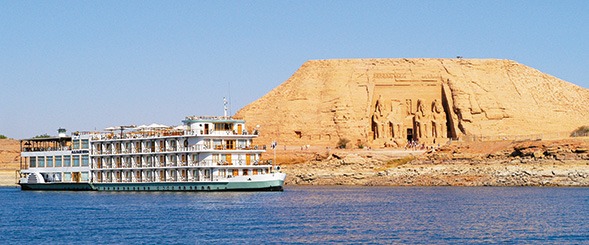
Abercrombie & Kent's Nile fleet is already up and running, while Uniworld's luxury Nile vessel, the River Tosca, is gearing up to begin sailing once again in September. 

Another paddlewheeler here at home

In March, American Cruise Lines will launch its second built-from-the-ground-up paddlewheeler on the Mississippi, the 150-passenger American Eagle. 

The vessel will feature 84 staterooms, 78 of which will have private balconies with sliding glass doors. There will be multiple drinking and dining areas and an outdoor exercise area with a putting green. Elevators will provide access to all five decks.

The American Eagle, which will sail mostly eight-day cruises along the Mississippi, will bring to three the number of paddlewheelers plying the Mississippi in 2015.

Friday, 17 October 2014

Luxury on the rise on Southeast Asia's rivers

Luxury on the rise on South east Asia's rivers

By Michelle Baran
The temples of Bagan, Myanmar.After Europe's busy ship-christening season this spring, the river cruise spotlight is shifting to Southeast Asia for the fall, where the latest lineup of river ship launches is showcasing an ever-escalating level of luxury, service and amenities. So much so that it begs the question of whether this new crop of vessels could actually surpass the standards that have been set by Europe's river vessels.

"It's a very fair question to ask if [the ships currently launching in Southeast Asia] are in fact more luxurious that what is on offer in Europe. I wouldn't say that they are more luxurious, but it's a different definition of luxury," said Tom Markwell, managing partner, sales and marketing, at Haimark Travel, which this month launched the first two vessels to set sail for the exotic river and small-ship cruise company.

In September, Haimark launched the 68-passenger Mekong Navigator in Vietnam and Cambodia, and the 16-passenger Irrawaddy Explorer in Myanmar (the country formerly known as Burma), vessels that are helping to usher in a new generation of luxury service and amenities on river cruises in this part of the world.

Others are raising the bar higher, too, such as Sanctuary Retreats' 42-passenger all-suite luxury vessel the Sanctuary Ananda, debuting next month in Myanmar, and AmaWaterways' 56-passenger AmaPura, which sets sail in Myanmar in November.

Those will be followed by more impressive river cruise launches in Southeast Asia in 2015

Vietnam vs. Vienna

What these new vessels represent is not just continued growth in demand for river cruising in Southeast Asia — where new ship launches on Myanmar's Irrawaddy River are shadowing an initial boom on the Mekong River that began several years ago — but an elevation of product in those destinations that is bringing it closer to what river cruisers have come to expect in Europe.
Life on the Mekong.Not long after introducing the Mekong in 2009, AmaWaterways created a separate business division for its non-European product called AmaVoyages. The idea was to manage expectations a bit — a subtle way to let passengers know that river cruising in destinations such as Southeast Asia and Botswana, where the company has exotic river itineraries, does not mimic the product in Europe.

It's not that the product is inferior; it's just different. In fact, river cruise operators have noted that while some things are harder to deliver in Southeast Asia, such as decent docking facilities (a challenge that is mostly out of their hands), other things can be easier, such as high service levels. And then there is the biggest difference: the destinations themselves.

"The Mekong, Tonle River and Tonle Lake are a much more important lifeline for the locals than European rivers," said Rudi Schreiner, president of AmaWaterways, about the major waterways of Vietnam and Cambodia on which the company sails.

"In Vietnam and Cambodia most of the daily life happens on the water. There are floating markets, floating villages, and fishing is a main source of local nutrition. Many sightseeing excursions are by boat, whereas in Europe, the ships are used as luxurious floating hotels to take you from city to city. On the Mekong more happens on the river than in the towns."

River cruising in Vietnam vs. Vienna is not surprisingly a vastly difference experience. And despite the economic and infrastructure disparity between Europe and Southeast Asia, river cruise passengers "should not expect anything subpar" in Southeast Asia, Schreiner said.

Bigger staterooms, better service
Angkor Wat, CambodiaIndeed, as river cruise operators such as AmaWaterways continue to improve the product in Southeast Asia, the results mark a consummate change from the region's earlier generation of ships and the sophisticated vessels being rolled out today.

Schreiner noted that the company's 124-passenger AmaDara, debuting on the Mekong next year with twin-balcony staterooms and two restaurants instead of just one, "is a testament to how AmaVoyages is able to continuously improve in exotic destinations."

Another prime example is the Sanctuary Ananda, which Sanctuary Resorts, a company owned by Abercrombie & Kent, is launching next month in Myanmar. The Ananda marks Sanctuary's first project in Myanmar, and the company is giving ample attention to the hardware.

For one, the suites will range from 291 square feet to a 721-square-foot suite, a marked increase in space compared with many European river vessels. That added spaciousness is possible in Southeast Asia because there are no locks on the waterways and thus fewer restrictions on ship dimensions.

River lines with product in Southeast Asia are also putting a much bigger emphasis on service than they have in the past, providing private butler service for some of the highest category suite guests, for instance.

The spa element is becoming an increasingly important part of the Southeast Asia river cruising experience, as well, and river cruise operators have been steadily amping up their spa service offerings.

"It's the hospitality factor that will allow us to surpass European river cruise product along the rivers of Asia," said Haimark's Markwell.

"It's the gentle, kind and most of all sincere willingness to serve the guests that blows veteran cruisers among the European waterways out of the water."

Thursday, 9 October 2014

Polar opposites

Polar opposites

By Arnie Weissmann
SPITSBERGEN, Norway -- About 40% of the 200 passengers on a recent Abercrombie & Kent trip to the Arctic had previously visited Antarctica. And when they reminisced about the southern continent, it was always in superlatives, with a side order of hyperbole.

"There is so much to see, you need two sets of eyes," one passenger told me.

"It was like walking into an IMAX movie," said another. "Thousands of penguins and seals. Towering glaciers. Enormous icebergs. It's overwhelming. Everywhere you look, it's the most dramatic scenery you've ever seen."

Without exception, passengers said that a previous trip south inspired them to book the Arctic. The majority not only had visited Antarctica with A&K but had been on the same Ponant ship, Le Boreal, piloted by the same captain, Etienne Garcia.
Some icebergs calved by Fjortende Julibreen glacier washed up to shore and began melting in temperatures well above freezing.The captain and ship notwithstanding, they soon discovered there are many more differences than similarities between Antarctica and the Arctic. That's largely a result of a simple but profound geographic fact: One is a continent surrounded by water, the other is water surrounded by continents. Tourists can get far closer to the North Pole than they can to its polar opposite. This Arctic voyage sailed north of 80 degrees, whereas most Antarctic trips seldom get beyond 65 degrees south. But one discovers that being that much closer to a pole does not necessarily mean it is colder, icier or more extreme.

Le Boreal circumnavigated Spitsbergen, a very large Norwegian island in the Svalbard archipelago above the Arctic Circle. Much of the scenery was reminiscent of Alpine or Rockies glades above the tree line (what vegetation we saw was close to the ground, with lichen and moss predominating in some locales). Most icebergs we encountered hardly looked capable of sinking a Zodiac, never mind the Titanic. With temperatures on the eight-day trip ranging from about 30 to 45 degrees Fahrenheit, it was only when we reached the pack ice, a border that stops all but icebreakers from traveling farther north, that the scenery matched preconceived notions of what the Arctic is supposed to look like.

But it is precisely the unexpected scenery and the unpredictability of what will be seen on any given day that gives a trip to the Arctic its cachet. One sees Antarctica on a cruise; one sees the Arctic on an expedition.

Plan A, B and C

"Antarctica is easy," Capt. Garcia said. "You will always see penguins. You have a rookery, it's the same place every year. And if for some reason you can't get there, there is another place you can go. But here, it is challenging. Who knows where the animals are? Every voyage is different. You sail with humility, every time, with open eyes. Nothing is clear.
Le Boreal Capt. Etienne Garcia leaves the bridge for a closer look as the ship nears pack ice."And to meet the king of the Arctic, the polar bear, to see it close, even once, is the gift of the voyage."

Garcia admitted "there's a certain pressure" to find wildlife that will satisfy passengers, and each day he conferred frequently with expedition leader Aaron Russ to revise the following day's course.

("We don't have a program for tomorrow, but we have a plan," Russ once told passengers, explaining why he couldn't give exact details about the next day's activities. "We have plan A and then B. And C, also," Garcia later told me.)

As captain, he said, "you must be very involved. We are a team. [Russ] may decide where to go, and I'll have no objection as long as it's safe, but I might say, 'I'm not comfortable with this place, let's find another.'"

Safety concerns extend beyond navigation to the very bears passengers want to see. Prior to any guest landings on excursions, staff goes ashore to secure a perimeter with rifle-bearing sentries. Visibility must be good at the site; there can be no fog that would compromise the ability of sentries to see bears approaching, either by land or sea.

200 passengers, 200 experiences

Not only are no two sailings in the Arctic alike, but passenger experience can vary greatly even on the same trip. The 200 passengers aboard Le Boreal ventured out in Zodiacs on excursions in two groupings, and the Zodiacs don't travel as a herd. The staffer aboard each of the inflatable crafts has some degree of discretion as regards pacing and route, so the cumulative experience will be different for each passenger.

In this regard, it's more similar to an extended safari than a cruise. And this trip's primary polar bear encounter was a good case in point:

Arctic animals are constantly on the hunt for food. A polar bear in the Andoyane Islands turns away from a seal carcass he had been eating.The first group that went out saw a female bear drag a seal carcass up a small promontory, feast on it, then begin a nap.

We in the second group watched the napping bear, feeling no small amount of envy of the first group. But suddenly a guide spotted a second bear swimming directly toward the napping bear, cutting a path right through the Zodiacs. (Click here or on the bear images to see more photos from Arnie's polar bear encounter.)

Potential drama ensued. The first bear spotted the second and moved away from the carcass, positioning herself behind where the newcomer, a younger male, would walk ashore. The male came out of the water, shook like a dog and headed toward the carcass, with the female following at a careful distance behind. The male climbed up to the carcass and looked down at the female, who was now standing just below him. They stared at each other.

"Watch for the charge," our guide said.

But in the end, the female, who had perhaps eaten her fill, decided not to charge, and walked a short distance away. She started to eat snow as the male tore at the carcass.

In the end, on that particular day, it was the first group that ultimately envied the second.

Two polar bears, one with a seal carcass, during an excursion with Abercrombie & Kent.The possibility of seeing polar bears is certainly the most heavily promoted feature of the trip, but seeing them was one highlight among many. We saw four blue whales, the largest animal on Earth, on the day we hit the sea ice; it was an encounter we had been told was the remotest possibility, as they had never before been seen on an A&K Arctic trip.

Likewise, the naturalists had indicated that beluga whale populations had likely migrated south of where we were sailing, but on the second morning at sea, we saw a pod of 110 of the white giants, very close to the ship.

Two Arctic foxes were seen (by one group, but not the other). Similarly, passengers had to be at the right place at the right time to get a close look at a ring seal on the day we sailed adjacent to pack ice.

I had been lucky, seeing all of these highlights. But I was disappointed that some passengers had spotted puffins flying around the ship at various points in the sailing though, try as I might, I hadn't. Patricia Silva, the onboard ornithologist, told me late in the sailing that we had by that point moved far south of their nesting grounds, and the likelihood of seeing one diminished with each nautical mile we steamed.

But on the very last excursion of the very last day, I was lucky enough to see a pair in the water, very close to our Zodiac.

Ice closing in
A ring seal on the very edge of the Arctic pack ice.The day we went along the sea ice offered a bit of drama. The captain used instruments to closely monitor the movement of the ice as we crossed the top of the island. We were at the northernmost point of the trip when the ice began to drift south surprisingly quickly, and there was a danger that our route forward would be cut off. We raced for the gap in the ice and made it through; we later found out that a ship two hours behind us had had to turn back. If we had been two hours behind, the trip would have ended profoundly differently, missing several important stops on the east side of the island.

Bob Simpson, A&K's vice president of product operations and small-ship cruising, was onboard and said that the unpredictability of the Arctic was why he loved it more than the Antarctic.

"In the Antarctic, the wildlife is far more abundant. It's very predictable, very defined. There are so many things you can guarantee that you can't here.
Bob Simpson, Abercrombie & Kent's vice president of product operations and small-ship cruising."The wildlife [in the Arctic] doesn't stay in the same place year after year after year. That's what's intriguing. And mysterious. Antarctica hits you over the head like a hammer; the Arctic steeps in."

Simpson is right about that. We made landfall several times to see scenery that was beautiful but whose features were often subtle. We walked over green, spongy tundra that my wife likened to walking on a spinach souffle. The glaciers were impressive, though something less than what is seen on the fringes of Antarctica. And whereas A&K has a unique arrangement that allows guests to visit Palmer Station, an active research facility in Antarctica, we saw only long-abandoned research outposts in the Arctic: small, uncomfortable-looking shacks, sheds and bunkhouses.

Qualifying clients

Cynthia French, director of VIP and vacation services with Gant Travel Management of McLean, Va., has been to Antarctica four times, escorting groups, but this was her first visit to the Arctic.

"We've been here not quite a week, and it takes that amount of time to appreciate the stillness here," she said. "Everything is on a smaller scale. You really have to look at the little plants and flowers, the mosses and the mushrooms. It's got a lot of beauty, but I think the Arctic is just more subtle.
Cynthia French of Gant Travel Management had been to Antarctica four times, but this was her first Arctic voyage."Climate change is much more apparent here," she added. "There's still so much ice down there [that] you think, 'How could it all be melting?' But when we were at the Monacobreen glacier three days ago, I asked where the seals were and was told they were all up north, so far north, they rarely see them anymore."

Three of her four trips south had been with A&K, she said, and she was impressed with the stability of Le Boreal, its food and the educational aspects. As for qualifying clients, she said she would not put someone on an Arctic trip if they had not already been to Antarctica.

"This is not a starter trip," she said. "It's more for someone who has been to a lot of places and knows how to travel and what to look for. And then, make sure they know it's more subtle [than Antarctica]. You really have to relax into it, be patient and look for detail."

Indeed, although there were many exciting highlights during the nine-day voyage, the Arctic is ultimately a cumulative experience. And as French pointed out, a big part of the experience is a deepening understanding of the impact that climate change is having on the planet. The onboard lectures were first-rate, delivered by scientists who not only were experts in geology, marine life, climate and natural history but were excellent communicators. We would see evidence of complex changes that are occurring and later hear about how climate change had affected the very animals and landscape we had just seen.

Simpson said he thought there was a connection between concern about climate change and a rise of interest in both the Arctic and Antarctica.
Svalbard ArchipelagoA&K has chartered Le Boreal for a trip Simpson believes will appeal to those who have already journeyed to both poles. "Our Northwest Passage trip will likely be 75% to 80% filled with past Boreal passengers," he said. "Within a week of the release of the brochure [in July], 130 of the 200 cabins had been booked."

The final word on Arctic vs. Antarctic came from Garcia (who will also be guiding the Northwest Passage trip).

He wouldn't commit to preferring either the Arctic or Antarctica. "I love both," he said.

For Antarctica, he cited the "density of wildlife that you don't have in the Arctic."

The virtues of the Arctic? "Emotion and ambience. It's like a privilege to be here, every time." 

Thursday, 26 December 2013

A look ahead at 2014 launches and christenings

A look ahead at 2014 launches and christenings

By Michelle Baran
InsightOK, I’ll be honest: This end-of-year insight in which I summarize the christenings and launches for the following year has become an invaluable tool for me in planning my year ahead, and that’s largely why I’ve maintained this tradition over the past few years.

But my hope, of course, is that it can and does serve as a useful tool for all you travel planners out there, as well. Happy 2014!

March 17: Viking Cruises will hold a christening ceremony in Avignon, France, for the 14 Viking Longships that are launching next year. Viking has not said which or how many of the Longships will be in Avignon for the ceremony, but the three 2014 Viking Longships that are slated to sail in that region are the Viking Buri, Viking Heimdal and Viking Hermod.

March 26: Uniworld Boutique River Cruise Collection will inaugurate the 159-passenger S.S. Catherine in Lyon, France, marking Uniworld's first expansion of its European fleet since 2011, when the vessel’s sister ship the S.S. Antoinette set sail.
MichelleBaran

April 5: The 223-passenger American Empress (formerly the Empress of the North) will be rechristened in Portland, Ore., and will sail on the Columbia and Snake rivers, after having been refurbished by the American Queen Steamboat Co.

April 15: Emerald Waterways, the first new river cruise line to launch since Scenic Cruises came onto the scene in 2008, will kick off with the launch of two newbuilds in Europe, the 182-passenger Emerald Star and the 182-passenger Emerald Sky. Emerald Waterways is aiming to be a more value-oriented alternative to existing river cruise lines.

July: Pandaw River Expeditions is launching two new 40-passenger vessels in Myanmar, the Kindat Pandaw and the Kalaw Pandaw.

September: Haimark Ltd. is introducing the 56-passenger Irrawaddy Explorer in Myanmar; as well as the 68-passenger Mekong Navigator that will sail in Vietnam and Cambodia.

November: AmaWaterways is introducing the all-suite AmaPura on Myanmar’s Irrawaddy River.

Late 2014: Sanctuary Retreats, a division of Abercrombie & Kent, is launching the 48-passenger, all-suite Sanctuary Ananda in Myanmar.

Also in 2014:

• Tauck is launching two newbuilds in Europe, the 130-passenger Inspire and Savor, that will each have 57% more suites than the company’s existing vessels.

• AmaWaterways will introduce two more ships in Europe in 2014, the 164-passenger AmaSonata and AmaReina. The vessels will be sister ships to the 164-passenger AmaCerto, which launched in 2012.

• Avalon Waterways is introducing three new river cruise vessels in Europe in 2014 — the 128-passenger Avalon Poetry II; the 166-passenger Avalon Illumination; and the 166-passenger Avalon Impression.