Showing posts with label Roald Amundsen. Show all posts

Thursday, 9 July 2026

HX Marks 130 Years Since First Polar Expedition


HX is celebrating the 130th anniversary of its first expedition voyage on July 8, 2026.

On that date in 1896, steamship DS Lofoten sailed from Hammerfest to Svalbard. It was a time when the Arctic North was barely mapped and guests landed on the icefields of Bjørnøya.

To mark the occasion, CEO Gebhard Rainer thanked the cruise line’s guests in an anniversary video message, wishing the company another 130 years of successful exploration.

“From those beginnings to today’s purpose-built expedition ships, one thing has remained constant: a passion for real exploration, led by those who know these places best,” the company said in a statement.

“This anniversary celebrates 130 years of changing the way people see the world. And while we’re proud of where we’ve been, our greatest discoveries still lie ahead.”

130 years later, the company is still sailing polar waters, bringing guests to the same glaciers that captivated the first explorers in a more sustainable manner – using Roald Amundsen, the world’s first hybrid battery-powered expedition ship.

In celebration of the anniversary, guests can select one of two offers: up to 25 percent off all-inclusive expeditions, with discounts varying by destination, or a free suite upgrade.

Monday, 3 August 2020

After restarting in June, some Hurtigruten crew test positive for Covid-19

After restarting in June, some Hurtigruten crew test positive for Covid-19

T1007ROALD1_HR
The Roald Amundsen, the Hurtigruten ship launched last year. The crew on the ship have tested positive for Covid-19.

Hurtigruten, one of the first cruise lines to resume service this summer, has reported a Covid-19 outbreak on one of the cruise ships that has been operating coastal Norway itineraries since June.
The line said that 36 of the 158 crew members on the ship, the Roald Amundsen, have tested positive for Covid-19 and that 120 are confirmed as negative. The ship is currently docked in Tromso, Norway, with no passengers on board.
Hurtigruten said it is in contact with all passengers that were on board the Roald Amundsen's July 17 and 24 departures and that 209 passengers from the first sailing and 178 from the second will self-quarantine in line with Norwegian health authority regulations.
The Roald Amundsen cancelled its scheduled cruise to Svalbard that was to leave on July 31. The next cruise with the ship is not planned until September.
Of the 36 confirmed cases, 32 are from the Philippines. The rest are Norwegian, French and German nationals.
The line said that four crewmembers were isolated last week because of illness symptoms that were thought to not be related to Covid-19. They were then routinely tested before being admitted to hospital in Tromso on Friday.
Hurtigruten claimed to be the first line to resume sailings this summer when the Norway-based line launched domestic Norwegian coastal itineraries in mid-June and then added one sailing from Hamburg, Germany, all with limited capacity and enhanced hygiene protocols in place. It said it would ramp up operations from four to 16 ships by the end of September because demand has been so strong.
Hurtigruten said that all crewmembers are closely monitored and screened daily and that non-Norwegian crew are quarantined before boarding the ship and non-European crew need to undergo two negative Covid-19 tests before leaving their home country.

Saturday, 11 July 2020

Hurtigruten ‘in talks with government’ over UK cruise plans

Hurtigruten ‘in talks with government’ over UK cruise plans

News and press releases: New hybrid explorer ships | Hurtigruten UK

Hurtigruten has confirmed it is in discussions with the UK government over plans to operate a series of short-break itineraries around the British Isles following the FCO’s updated advice against all cruise travel.

The line also said its plans to run the series of cruises in September were “underpinned by a flexible booking policy to reassure guests”, including a refund if sailings are cancelled.

Anthony Daniels, UK & EMEA general manager, said: “Health and safety of guests and crew is Hurtigruten’s number one priority, and we comply with all Covid-19 regulations and policies in the waters, coasts and ports we visit.

“We currently operate five ships on both domestic and international cruises, with two more re-entering services next week. By the time of our first UK departure, Hurtigruten will operate more than 10 ships across the Arctic, Norway, Germany and UK waters.”

He added: “Hurtigruten’s announcement to bring Short Break expedition cruises to UK waters has been underpinned by a flexible booking policy to reassure guests, offering a refund if sailings are cancelled; reduced capacity to 350 guests (or c65%); professional operational protocols, robustly tested and in practice now.

“In the planning of this short break series, comprehensive Outbreak Prevention Plans and Covid Response Plans were voluntarily submitted to port authorities and local destinations stakeholders for scrutiny and acceptance before launch.

“We are in discussion with the government over the return to operation of expedition cruising for UK guests.”

Monday, 6 April 2020

Hurtigruten Extends Temporary Suspension of Operations

Hurtigruten Extends Temporary Suspension of Operations

Richard With
Hurtigruten will extend the temporary suspension of operations from pole to pole through May 12, according to a press release.
"The situation is affecting virtually everyone in one way or another. Hurtigruten is no exception. This is a setback for us, for the local communities we work with and for our guests. But the setback is only temporarily," said Hurtigruten CEO Daniel Skjeldam.
Hurtigruten has not had any confirmed or suspected cases on any ships, the company said.
All Hurtigruten expedition cruises will be suspended until May 12. In addition to already cancelled cruises, this includes the Fridtjof Nansen’s departure from Hamburg, Germany on April 29 as well as the Spitsbergen’s departure from Longyearbyen on May 6. 
In addition, Hurtigruten’s Alaska expedition cruise season will be postponed to July due to new travel restrictions from Canadian authorities.
This means that the May 17, May 31, Jun 12, Jun 24 and July 1 Roald Amundsen Alaska departures will be cancelled. 
Operations on the Norwegian coast will be suspended through May 20. As of now, the first scheduled round trip departure from Bergen will be on May 21.  
In agreement with the Norwegian Ministry of Transport, Hurtigruten has deployed two ships in an amended domestic schedule. The newly upgraded Richard With and  Vesterålen are bringing critical supplies and goods to local Norwegian communities hit hard by travel restrictions. 
"Seeing our ships lying idle for a prolonged period of time instead of exploring is difficult. These are extraordinary and emotional times for the entire Hurtigruten team. But I firmly believe it is the only responsible decision in the extraordinary crisis the world is currently facing," added Skjeldam.

Saturday, 16 November 2019

MSC and Hurtigruten detail their green initiatives

MSC and Hurtigruten detail their green initiatives

T1007ROALD1_HR
Hurtigruten's Roald Amundsen is the world's first hybrid-electric cruise ship.

FORT LAUDERDALE -- Cruise lines are cutting carbon emissions, reducing single-use plastics and campaigning to restore endangered coral reefs around the world, an audience at Cruise World learned on Friday.
Two cruise lines with different solutions to environmental preservation led to a discussion of how they’re making progress.
Hurtigruten's unique solution comes in the form of batteries, which on its newest ships store energy produced by the engines and cut greenhouse gas emissions by up to 20%.
Hurtigruten president of the Americas John Downey said the 630-passenger ships can sail for several hours at slow speeds by battery power alone, and for a little less than an hour at normal cruising speed.
That could be important as soon as 2026 when Norway has mandated that ships sailing in two of its most historic fjords be 100% emission-free. Few ships in the current cruise fleet could qualify, Downey said.
"We can do it today. If we go 100% batteries, we can sail in there emissions-free," Downey said.
At MSC Cruises, executives just announced that it will become the first large cruise line to become carbon neutral by countering its engine emissions through purchased carbon offsets. By investing in companies that plant trees and purchase wetlands, the line will absorb carbon dioxide in the atmosphere equal to the greenhouse gasses it produces.
"This is super exciting for us," said Bonnie Levengood, MSC Cruises USA's senior vice president for marketing. "As we’re investing in new technology to be more eco-friendly, we’re also looking at what is our current carbon footprint and how can we reduce that now."
MSC is also developing a coral education and restoration program on the new MSC Ocean Cay Marine Reserve, its private island near Bimini scheduled to open Dec. 5.
The line is working with universities and researchers to develop a strain of super coral that will be more resistant to coral bleaching, a byproduct of warmer water temperatures. If the research is fruitful, it could help not only the Bahamas but other areas with coral reefs.
"Coral is a big attraction for tourists all over the world," Levengood said.
Both companies are reducing sulfur emissions from their exhaust as required by International Maritime Organization rules that have been phased in over the past decade, but they differ on methodology.
Hurtigruten switched to low-sulfur fuel 10 years ago for its fleet of small ships, which prevents the sulfur from getting into the exhaust, while MSC mainly uses exhaust stack "scrubbers" that use seawater to capture the sulfur before it leaves the funnel.
Downey said the captured sulfur must still be disposed of somehow. "Our approach is you start at the root cause instead of band-aiding," he said, adding that MSC prefers scrubbers because low-sulfur fuel is expensive.
Levengood responded that every environmental technology has its positives and negatives. She pointed out, for example, that Hurtigurten's batteries use metals that have to be mined, and that the mining process produces greenhouse gases, even if the end product may not.

Wednesday, 2 October 2019

Roald Amundsen Makes Unscheduled Drydock in Vancouver

Roald Amundsen Makes Unscheduled Drydock in Vancouver

Roald Amundsen
Hurtigruten's new 530-guest Roald Amundsen is currently undergoing an unscheduled drydocking in Vancouver, Canada.
A spokesperson told Cruise Industry News the drydock was for technical adjustments and maintenance.
"We do not expect this unscheduled yard stay to affect the upcoming voyage starting in Valparaiso on October 26," he said.
Of note, the ship's October 26 sailing is the christening cruise, as the hybrid vessel will be named in Antarctica. 
The reason behind the drydock is believed to be related to a gasket issue on one of the ship's propulsion units.
With no scheduled cruises until the next voyage in late October and an available drydock, the timing and location were convenient for the expedition cruise line.
The ship is due to leave the Vancouver drydock later this week.

Monday, 2 September 2019

Hurtigruten to transform vessel trio to battery-hybrid

Hurtigruten to transform vessel trio to battery-hybrid

Hurtigruten is upgrading three ships into hybrid expedition ships (MAXIMILIAN SCHWARTZ/Hurtigruten)

Three Hurtigruten coastal vessels will be transformed to hybrid-powered expedition cruise ships – which the operator says will be the largest upgrade project in its 125-year history

Hurtigruten introduced the world’s first hybrid-powered cruise ship Roald Amundsen in July this year and will add another three hybrid-powered ships to what is already considered the greenest fleet of cruise ships in the world.

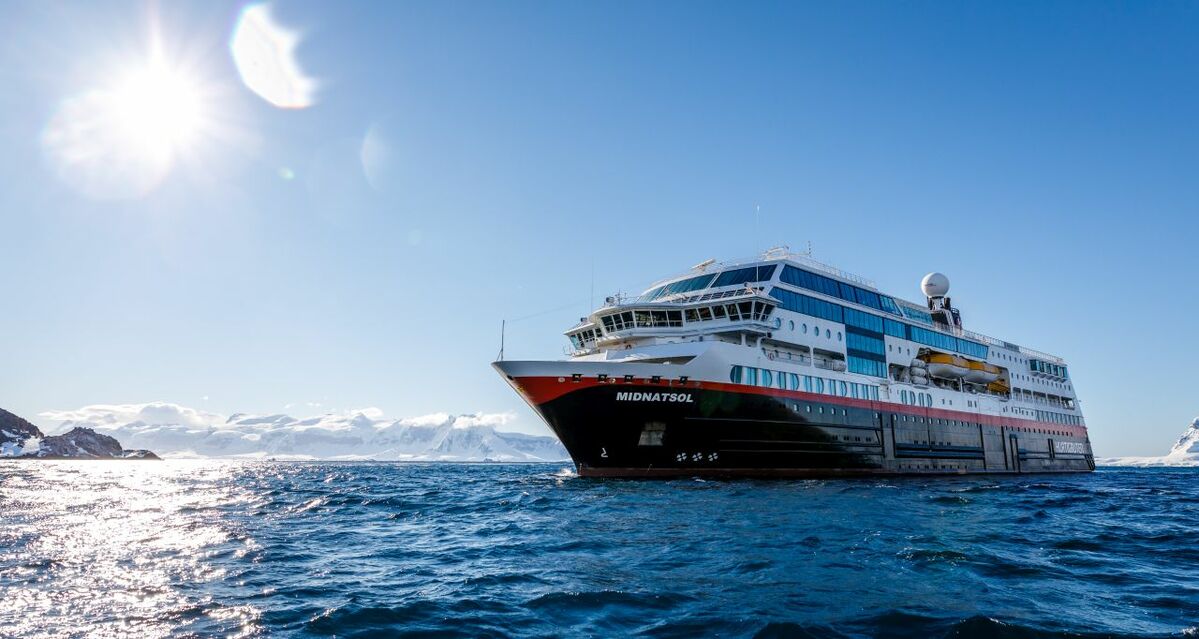
As they are transformed into “full-fledged premium expedition cruise ships”, Trollfjord, Finnmarken and Midnatsol will be renamed Maud, Otto Sverdrup and Eirik Raude.
Otto Sverdrup will have battery packs installed during a 2020 yard stay, with a letter of intent for the same battery installation on Maud and Eirik Raude in 2021.

The three ships will also be equipped for shore power, to cut emissions to zero when docked in ports with shore power facilities.

In addition, the three ships will get substantially upgraded low-emission engines, complying with all known and upcoming regulations.

“At Hurtigruten, the push for sustainable solutions and the introduction of green technology is the core of everything we do. We operate in some of the most spectacular areas of the world. This comes with a responsibility,” Hurtigruten chief executive Daniel Skjeldam said. With these upgrades, the ships will be transformed into premium expedition cruise ships, carrying a maximum of 530 guests.

The keep-to-mast upgrades will introduce several new features and venues on the ships. A specially designed Expedition Launch – the tender pit area where guests embark on their excursions and off-ship adventures – will be added to all ships, complete with tender boats and other expedition equipment.

All cabins and suites will be completely refurbished, and new suites with spectacular views added to all three ships.
Hurtigruten’s signature Science Centre will be added to the three ships.

Tuesday, 2 January 2018

What the year ahead holds for the industry

What the year ahead holds for the industry

Image result for Future cruising
Next Gen. Cruise ship for MSC.

Until recently, expedition cruising was a quiet corner of the ocean cruise business, with occasional new tonnage added to a small fleet of spartan ships sailing to wild and majestic places.
The ships are still small, but some are not so spartan anymore, and the expedition niche in 2018 is trending bigger.
By one estimate, at least 18 new expedition vessels are ready to debut over the next 24 months.
Setting the tone was the transfer in 2017 of the original Silversea Cruises ship, the Silver Cloud, to the line's expedition fleet after conversion to an ice-hardened vessel capable of visiting both polar regions.
In 2018, the parade of new expedition builds begins in June with Le Laperouse, the start of a new class for the luxury expedition brand Ponant, which will add three more of the 180-passenger vessels by mid-2019.
The French brand will be joined this year by Norway's Hurtigruten, which is expecting a new prototype, the 530-passenger Roald Amundsen, in August. Soon after, Scenic Cruises will take delivery of the 228-passenger Scenic Eclipse, another expedition-style vessel.
And by year's end, Quark Expeditions plans to take delivery of a 176-passenger ship, currently under construction in Portugal, capable of polar sailing.
The boom is underway in part because small ships for expedition cruising are easier to finance than the $1 billion behemoths now being ordered by contemporary ocean cruise brands. And there is a greater variety of shipyards able to take on the projects.
Companies like Lindblad Expeditions have gone public and are tapping into public equity to finance expansion.
Expedition cruise lines expect that many consumers who have been introduced to cruise vacations by the larger lines in recent years are now familiar with the concept and will be receptive to trying a different kind of cruising.
New technologies
In addition to a bumper crop of expedition ships, 2018 will also see the advancement of technology on larger ships designed to save time and smooth out the points of friction to make cruising more enjoyable.
The technologies go by disparate names: Royal Caribbean International calls its package Excalibur, MSC Cruises has MSC for Me and Carnival has its Ocean platform, which includes the Ocean Medallion and Ocean Compass app. Luca Pronzati, MSC's chief business innovation officer, said MSC's technology will provide wayfinding onboard the ships, a reservations function and a more convenient way to access and personalize an activities agenda.
"You can schedule your day in an easy way," Pronzati said. "It's really changing the paradigm."
Passengers can access the information through smartphones, on their in-cabin TVs or at screens in public areas of the ship. Pronzati said that the current functionality of MSC for Me, which is available on the MSC Meraviglia and the MSC Seaside, is a foundation and that the line is working on expanded capabilities, such as a digital concierge service.
Carnival's Ocean platform, although it debuted for a limited number of passengers on Princess Cruises' Regal Princess in November, will be rolled out onboard five more ships by the end of 2018.
Carnival expects its phased activation of the Ocean Medallion and Ocean Compass app onboard the Regal Princess to be finished by the first quarter of 2018, with all passengers being able to use it simultaneously thereafter. The two technologies are designed to give each cruise customer a more personalized vacation. It will, for example, provide suggestions for activities, drinks and meals based on stored preferences and proximity to venues on the ship.
Royal Caribbean's package of onboard technologies, Excalibur, is expected to be on 15% of its fleet, starting with its most-recently delivered ships, within the first few months of 2018. It will be on a majority of Royal's 25 ships by the end of the year.
One focus of Excalibur is expedited embarkation, which Royal calls "frictionless arrival." It will allow passengers who input information before arrival come aboard without stopping at a check-in counter. Other applications include using it to order room service, open cabin doors and connect with friends and family onboard.
One of the ships that will benefit from Excalibur is Celebrity's new Celebrity Edge, the first in a class of four ships ordered so far that will be a prototype for the design of Celebrity's fleet.
The innovations already announced for the ship include "infinite verandas" in which balcony space is incorporated into a cabin and the Magic Carpet, a 90-ton platform that hangs off one side of the ship and will move between four decks, including the embarkation deck, where it will serve as a shore excursion platform.
Following a December 2018 christening in Fort Lauderdale by Nobel Peace Prize laureate Malala Yousafzai, the Edge will make its first seven-day Caribbean cruise.
Celebrity plans to spend $400 million over the next six years to make the rest of its fleet look more like the Edge class.
The Cuba connection
Some of the oldest ships in the cruise industry will also be part of its newest trend in 2018: expanded cruises to Cuba. Norwegian Cruise Line has tapped the Norwegian Sun for four-day cruises to Cuba from Port Canaveral next summer. The Sun is joining Norwegian's oldest ship, the Norwegian Sky, which does the itinerary from Miami.
Royal Caribbean is also expanding its capacity to Cuba, putting the 28-year-old Empress of the Seas in Miami for five-, seven- and eight-day trips that for the first time include Cienfuegos and Santiago de Cuba, while its second-oldest ship, the Majesty of the Seas, will provide four- and five-night Cuba itineraries from Tampa.

Tuesday, 25 October 2016

Hurtigruten names new expedition ships

Hurtigruten names new expedition ships


Hurtigruten, the Norwegian coastal and expedition cruise line, said two new ships it is building for 2018 and 2019 will be called the Roald Amundsen and the Fridtjof Nansen.
While they may not exactly trip off the tongue, the names honor the two most influential Norwegian polar pioneers from the era when the company first started offering adventure travel.
The 530-passenger ships will be designed by Rolls Royce and built by Kleven Yards in Norway.
The interior will mirror the exterior waters and landscapes, Hurtigruten said. Materials will be predominantly Norwegian and be inspired by nature using granite, oak, birch and wool, among other materials.
The ships will have large observation platforms on several decks for guests to get close to nature and wildlife. Six out of ten cabins will have balconies; two out of ten will be suites.
The vessels will have three restaurants with menus reflecting local flavors and destinations. A pool deck will include infinity pools, Jacuzzis and bars.
Hurtigruten said itineraries for the new ships will be announced in November.

Friday, 19 August 2016

World’s most dangerous cruise? 1,070-Passenger Ship To Enter Northwest Passage

World’s most dangerous cruise? 1,070-Passenger Ship To Enter Northwest Passage

Crystal-Cruise-Ship
The 1,070 passenger (plus 655 crew) ship Crystal Serenity.
by Ethan Lou (Reuters) The first commercial cruise ship to sail through Canada’s Northwest Passage was set to depart on Tuesday, part of a growing Arctic tourism industry spurred by rising temperatures and receding ice.
The ship Crystal Serenity was to depart from Anchorage, Alaska, and cut through frigid northern waters before reaching New York in one month, according to a schedule from its American operator, Crystal Cruises.
The route was first navigated more than a century ago by Norwegian explorer Roald Amundsen, but has been ice-free only in recent years. The journey raises questions about further human degradation of a region disproportionably affected by climate change, where temperatures are rising twice as quickly as the world average.
The World Wildlife Foundation recognizes that Crystal Cruises has been planning this voyage for years and tried to minimize its environmental impact, but the area lacks the infrastructure to deal with potential accidents, said Andrew Dumbrille, a foundation specialist in sustainable shipping.
Crystal Serenity likely will not cause problems, but more cruises will follow, said Michael Byers, a professor at the University of British Columbia who studies Arctic sovereignty and the environment.
Byers said ships, which can traverse the waters only because of melting ice, have large carbon footprints, and an accident would be devastating for the fragile Arctic.
“They take advantage of climate change, and they cause even more climate change,” Byers said. “That is an enormous problem and also a terrible irony.”
Crystal Cruises did not respond to requests for comment.
The cruise was priced at a minimum of $19,755 per passenger, which is more than $600 per day higher than last year’s average daily cruise price of $168.43, according to the industry analytics firm Cruise Market Watch.
Crystal Cruises has said the trip is sold out and that it is planning another cruise in 2017.
The Arctic has been warming quickly because a thaw of white ice and snow exposes darker ground and water below that absorb more of the sun’s heat.
Tourism has grown in some polar areas. The number of nights spent by visitors to the Arctic archipelago of Svalbard north of Norway rose to 107,000 in 2013 from 24,000 in 1993.
While Canada claims sovereignty over the Northwest Passage that flows through parts of the country, the United States and the European Union have disputed that, calling the waters an international strait.

Monday, 7 July 2014

Frozen splendor

Frozen splendor

By Patricia Schultz
Quark Expeditions 189-passenger Ocean Diamond.Norwegian explorer Roald Amundsen, the first man to reach the in 1911, wrote, "This land looks like a fairytale." More than 100 years later, I shared his dream and visited Antarctica -- in admittedly cushier conditions -- to find its grandeur and mystery to be astonishingly intact. For those today who think there is nothing left to seek or nothing left untrammeled, the White Continent at the bottom of the world awaits. Serene, magnificent, empty, surreal and beautiful beyond words.

Although the Seventh Continent -- the size of the U.S. and Mexico combined and twice the size of Australia -- is the world's most inaccessible, it is no longer a pipe dream for adventurers who place it high on their bucket lists. And they are not all well-traveled, wealthy and retired as one might suspect. One 40-something woman who traveled with us aboard Quark Expeditions' Ocean Diamond admitted she had only one other international trip under her belt (Portugal) but had been saving up for Antarctica since she was a young girl. 

It was this longtime and sometimes unexplainable fascination that was everyone's common thread. Expectations were high, but the experience was even better. There is almost no way to adequately describe this vast wilderness of snow, ice, water and rock. And wildlife, an abundance of wildlife. 

Since Lars-Eric Lindblad took the first group of intrepid travelers to Antarctica in 1966, the number of expedition ships venturing into these remote waters has grown, including the recent arrival of mainstream lines like Celebrity, Silversea, Crystal and Seabourn, whose loyal clients want to combine high adventure with high luxury.

I chose Quark Expeditions because of its 20 years of experience in the polar regions, its top-drawer expedition team aboard a fleet of six chartered ships and the stellar past-passenger reviews. When not sailing the Southern Arctic Ocean, the company heads north to Svalbard in Norway, the North Pole, Greenland and Canada's high Arctic to fill out the year. I am ready to sign up for all of them.

The austral summer season runs from November to March, when typical afternoons range from the high 20s to the high 30s Fahrenheit, and our spring departure in mid-November was one of the season's first.

Shore excursions are made twice a day via 12-passenger Zodiacs.Three-quarters booked, the comfortable, 189-berth Ocean Diamond carried an interesting international mix: predominantly 40- to 75-year-old North Americans but with a surprising number of 30-somethings. To offset the steep single supplement, Quark helps pair up same-sex requests.

The steep gangplank and the twice-daily shore landings in 12-passenger Zodiacs were easily handled by everyone, thanks to the assistance of the ubiquitous crew.

Most Antarctic sailings embark and disembark in Ushuaia, Argentina, the gateway to Antarctica (other gateway cities are Christchurch, New Zealand; Hobart in Tasmania; and Punta Arenas in Chile). The southernmost city in the world, it is a ramshackle, edge-of-the-world town with a population of 120,000, though it feels like much fewer. It is also a convenient base for a precruise visit to the Patagonian national park of Tierra del Fuego. Time and budget will determine the itinerary. The popular 11-day (and longer) expedition crosses 600 (sometimes turbulent) miles south across the legendary Drake Passage, the important trade route in the 18th and 19th centuries that was all but abandoned with the opening of the Panama Canal in 1914.

The destination is the Antarctic Peninsula, the long sliver of the continent that is the closest point to South America. Those wanting to maximize time on the peninsula can opt for an eight-day (and longer) option to fly both ways, picking up the ship on the peninsula to explore its countless islands and bays.

South Georgia is a standout for its massive numbers of king penguins.But those heading due south will have missed what many of us who sailed east from Ushuaia on the longer 20-day itinerary held to be one of the highlights of an experience already heavy with highlights: the inclusion of the far-flung Falkland Islands (the Islas Malvinas to Argentines) and South Georgia, the historically important island so prized for its variety of wildlife that it is sometimes dubbed the Galapagos of the Atlantic.

Together with the grand finale -- the landing on the continent -- we explored three very distinct regions of the Southern Ocean where topography, climate, wildlife and history often varied greatly.

The fiercely British enclave of the Falklands is inhabited by some 2,500 friendly residents. A stroll through compact and interesting Port Stanley leads past pubs, a tea room and neatly tended flower gardens that augment the sense of Great Britain in the middle of nowhere.

Visiting a rugged outer island (population three) and its large colonies of penguins reduced us all to grade-school children. Four of the world's 18 species live in the Falklands, and they were present in abundance. The aptly named rock hopper, with its distinctive yellow feathers, was the smallest and most comical of them all (who didn't know Lovelace, from "Happy Feet," voiced by Robin Williams?). 


Mountainous South Georgia Island is a standout for its massive numbers of the flamboyant king penguins, commonly 3 feet high and 30 pounds, and rocky beaches littered with fur seals and reigned over by 16-foot-long, 4-ton elephant seals attended by their harems of "cows" a quarter their size. 

Guest lecturer Jonathan Shackleton at the gravesite of his cousin Ernest Shackleton.The subpolar island is also important for the once prosperous whaling station that flourished here in the early 20th century. But it is Ernest Shackleton who put it on the map for most history buffs: The British polar explorer managed to save his entire crew after they had been stranded in the Antarctic for almost two years when he appeared here in 1916 to find help. It is regarded by many to be one of the most astonishing rescue journeys in history. A small cemetery on the island holds his grave. He died here in 1922 during a subsequent expedition, and we toasted his remarkable bravery with a plastic cup of Jameson whiskey, led by Jonathan Shackleton, a cousin and family historian. As esteemed guest lecturer aboard the Ocean Diamond, Shackleton joined Falcon Scott, grandson of Robert Falcon Scott, the first Brit to reach the South Pole in 1912. It was like traveling with polar royalty. 

The first shore landing by Zodiac on Antarctica is an emotional moment -- and for many, the proud accomplishment of having visited all seven of the Earth's continents. 

Days at sea had been spent with a great variety of presentations by specialists and lecturers, a crash course in all things polar. We would see vast rookeries of chinstrap, Adelie and Gentoo penguins, and we would commonly spot Weddell, fur, crabeater and leopard seals. Curious whales, such as Minkes, were as interested in our Zodiacs as we were in them. 

We visited two deserted research stations. There are more than 40 such stations, belonging to 30 nations. All are seasonal. There is no permanent settlement nor indigenous people on the continent (and no, it is not a country). 

Visits to the bridge promised a chance to spot chiseled icebergs, floating sculptures of outlandish sizes and eroded shapes that we also approached up close and personal during Zodiac cruises. Bird sightings are frequent from the bridge or observation lounge. We watched in awe as the wandering albatross effortlessly accompanied our ship thanks to its 10-foot wingspan, the largest of any living bird. 

Time spent with the Ukrainian captain and his crew was a lesson in what it entails to navigate these ice floe-littered waters and manage such unpredictable weather (every day's itinerary was "weather depending," and last-minute changes were common). 

Quark Expeditions offers kayaking as an optional excursion.Many passengers opted at extra cost for the chance to kayak, and an unexpected 80% of the passengers took the polar plunge. (I passed on that one, though for a minute I considered telling everyone back home -- and reading this article -- that I did.) 

Were we ever cold? Actually, spotty WiFi kept us aware of the horrible winter conditions back home in New York City, and we were far more comfortable in the Antarctic, wearing the layers that Quark Expeditions had heavily recommended. 

Every moment spent in this pristine corner of the world was precious -- for the sheer volume of wildlife, the vast and empty size of it all, the ethereal light well into the evening, and the sustained excitement of sharing a very special destination with a very special mix of adventurers. 

"If Antarctica were music, it would be Mozart. Art, and it would be Michelangelo. Literature, and it would be Shakespeare," wrote Andrew Denton. "And yet it is something even greater; the only place on earth that is still as it should be. May we never tame it." 

Amen! 

Patricia Schultz is the author of the New York Times best-seller "1,000 Places to See Before You Die" (Workman).