Showing posts with label A380. Show all posts

Saturday, 6 June 2020

Lufthansa warns aircraft to remain grounded until 2022
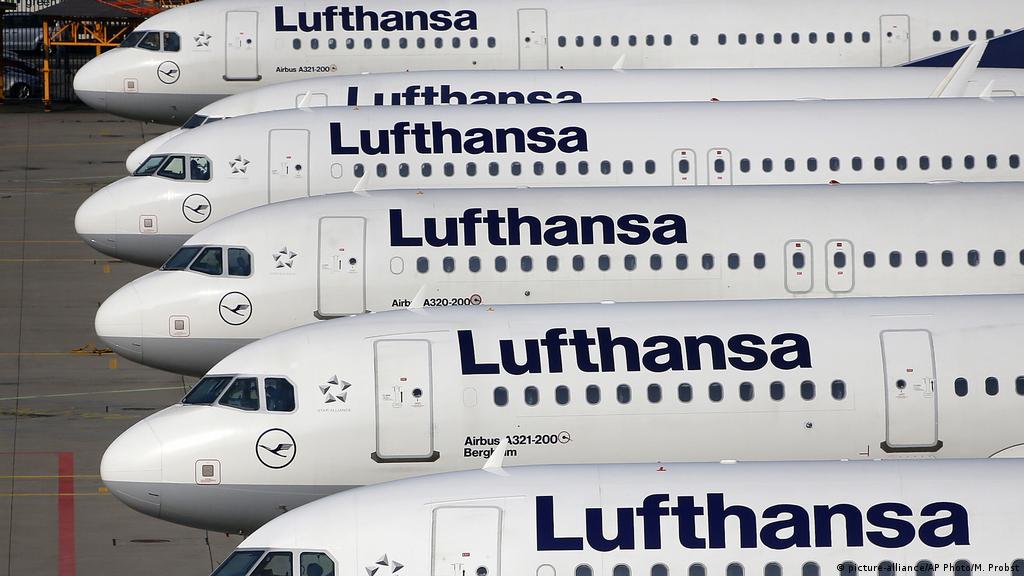
Lufthansa warns aircraft to remain grounded until 2022

Lufthansa: Cabin crew trade union calls strike | News | DW | 14.10 ...

Lufthansa expects air passenger demand to return so slowly that it plans to have 300 of the group’s aircraft still parked in 2021 and 200 in 2022.

Europe’s largest airline group, Lufthansa currently has 700 of its 763 aircraft grounded.

More: Cash refund demands ‘endangering entire travel industry’ – Lufthansa boss

‘Demand won’t return quickly’, warns Lufthansa chief

It reported: “Even after the end of the crisis, expected in 2023, the group expects its fleet to remain 100 aircraft smaller.”

Lufthansa secured €9 billion in German state aid this week after agreeing to EC demands to surrender slots at Frankfurt and Munich, but it plans to downsize sharply.

The group revealed customer demands for refunds are adding to the pressure to slash jobs, with hundreds of millions of euros per month been paid out on top of operating costs.

Thorsten Dirks, Lufthansa finance and digital chief officer reported: “Our [operating] cash burns runs at around €800 million a month. We expect cash consumption to run at a similar level for months. New bookings will remain far below normal.”

But in addition, he warned: “Cancellations mean customers can claim up to €2.5 billion in refunds.”

In the circumstances, Dirks said: “The stabilisation package we have secured in Germany marks a milestone.

“In order to repay the loans quickly, we will have to significantly increase our cash flow though global demand for flights will remain below pre-crisis levels for years.”
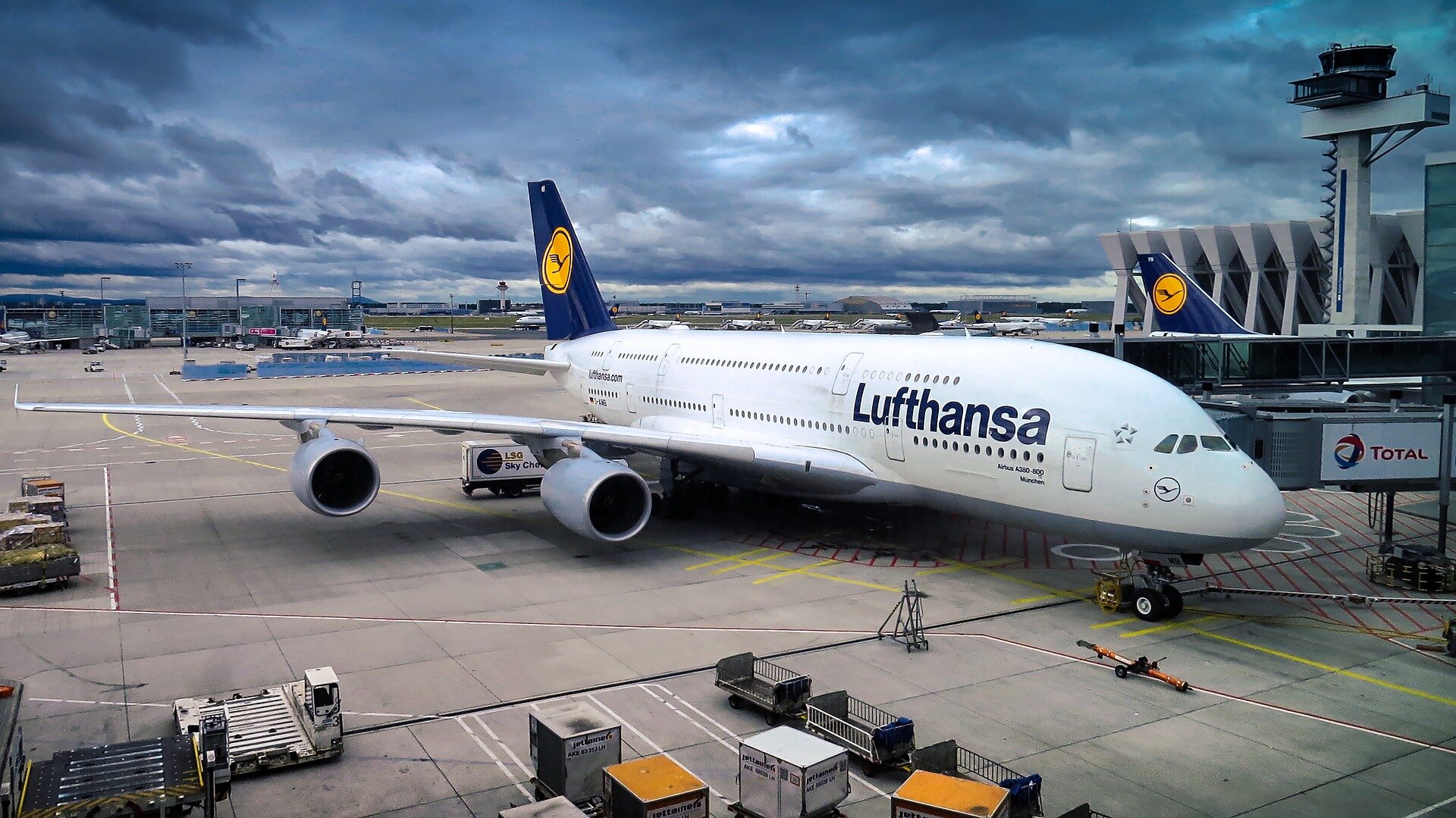
Lufthansa to cancel up to 25% of flights due to virus

Group chief executive Carsten Spohr warned: “We have to make cash flow our focus and this has to be tough. We will carry an annual additional burden of €1 billion in interest and repayments. We will have to go through significant restructuring.”

Spohr insisted: “We want to avoid lay-offs as much as we can. But the business will become much smaller, [and] we have to share by everybody working less and making less money. The more we can do this, the fewer jobs will have to go.”

He insisted Lufthansa would “not give any concessions” to one group over another.

Restructuring is already underway at group carriers Brussels Airlines, which plans to cut its workforce by 25%, and Austrian Airlines which will reduce wage costs by 20%.

Spohr added: “The impact of the crisis on aviation will stay for some time, but at least the complete grounding of our fleet is behind us. Countries have begun to relax travel restrictions and travel bans. Demand continues to be far below normal standards.

“Our aim is to serve many destinations, using smaller aircraft and fewer frequencies.”

Lufthansa increased its schedule for June and July this week and plans to operate up to 40% of its original schedule by September, with services to 90% of its previous short-haul destinations and 70% of long haul.

The German state-aid package will see the German government take a 20% equity stake in Lufthansa and two places on the supervisory board.

Spohr said: “Before the coronavirus, a 20% government stake was nowhere in our plans. But we still have a smaller government stake than any of our three [main] competitors – Air France-KLM, IAG and Turkish Airlines.”

The governments of France and the Netherlands hold more than 28% of Air France-KLM, Qatar Airways – which is wholly state-owned – holds a 25% stake in British Airways and Iberia parent IAG, and the Turkish government owns 49% of Turkish Airlines.

Lufthansa Group reported an adjusted operating loss of €1.2 billion for the first quarter to the end of March and a net loss of €2.1 billion.

Monday, 18 February 2013

Airbus opts for 'Plan B' for A350 after 787 battery problem


Airbus opts for 'Plan B' for A350 after 787 battery problem

Airbus opts for 'Plan B' for A350 after 787 battery problem
Airbus will not use lithium-ion batteries in its forthcoming A350 aircraft because of problems that have grounded rival Boeing's 787 Dreamliner.
The European manufacturer is to use traditional nickel-cadmium batteries instead, as already used in the A380 superjumbo and other models.
Investigations are continuing after battery problems came to light on 787s operated by Japan Airlines and All Nippon Airways which left 50 Dreamliners grounded around the world.
Airbus said it was "confident" that the lithium-ion battery it had been developing with French battery-maker Saft was "robust and safe".
It added that A350 test flights would continue with the lithium batteries.
"However, to date, the root causes of the two recent industry Li-ion main batteries incidents remain unexplained to the best of our knowledge," Airbus said.
"In this context, and with a view to ensuring the highest level of programme certainty, Airbus has decided to activate its Plan B and therefore to revert back to the proven and mastered nickel-cadmium main batteries for its A350 XWB programme at entry into service.
"Airbus considers this to be the most appropriate way forward in the interest of programme execution and A350 XWB reliability."
The firm said it did not expect any further delays to the launch of the A350, intended as a rival to the 787. The maiden flight is due to take place later this year, with the first passenger flight expected in the second half of 2014, the BBC reported.

Saturday, 12 November 2011

Heathrow remains top despite fall in transfer traffic


Heathrow remains top despite fall in transfer traffic

Heathrow’s position as the UK’s major hub airport has been confirmed by a new UK airports study – although the proportion of connecting passengers dropped last year.
Research by the Civil Aviation Authority found that Heathrow had the highest proportion of connecting passengers of all airports in England last year with 36% changing aircraft, down from 38% in 2009 but up from 2008’s figure of 35% and 34% in 2007.
The majority of passengers using Heathrow and London City airports in 2010 were foreign residents who represented respectively 58% and 51% of their total passengers.  Heathrow’s percentage of foreign passengers has risen from 55% since 2007.
London City was the most “business-centric” airport in the study, with 63% of its passengers travelling for business, returning almost to the airport’s pre-recession 2006 level and representing a seven percentage point improvement on 2009. The next highest was Humberside with 32% and Heathrow with 30%.
The airports with the highest proportion of leisure passengers were Doncaster with 97% and East Midlands with 92%. Passenger income in general continued to grow when measured against airports surveyed in 2008, 2009 and 2010.
At Heathrow, the average leisure passenger’s household income increased by £2,000 to £60,000 and at Manchester the average business traveller’s income rose from £65,000 to £68,000.
Average leisure passenger household income dropped slightly at both Gatwick and Luton airports.
Travellers from Heathrow took a higher proportion of trips over two weeks in length than anywhere else, at 23%. London City had the lowest proportion at only 2%.
Outside of London, the highest percentage of trips over two weeks was recorded at Humberside, with 18%. The lowest was at East Midlands at 6%.
The survey was based on interviews with 200,000 departing passengers about their travel patterns at five London-area airports - Heathrow, Gatwick, Stansted, Luton and London City - and seven regional airports - Birmingham, Doncaster, Humberside, Leeds Bradford, Liverpool, Manchester and East Midlands.
CAA regulatory policy director Iain Osborne said: “The CAA surveys people using the UK’s airports to make sure that we understand how and why people travel by air to make sure that our regulation is tailored to their needs.
“This year’s results will inform our response to the Government’s work to develop an Aviation Policy Framework – with information about how passengers use the country’s major airports particularly relevant to government.”

Sunday, 6 November 2011

Qantas A380 forced to divert after engine problem


Qantas A380 forced to divert after engine problem

Qantas A380 forced to divert after engine problem
A Qantas Airbus A380 'superjumbo' flying from Singapore to London was forced to divert to Dubai due to engine problems.
The airline said the aircraft landed safely in the Emirate “following an issue” with one of its four engines. The A380 was carrying 258 passengers and 25 crew when the aircraft suffered a problem with oil pressure, forcing one of the engines to be shut down for more than two hours.
One of the passengers on board was actor, writer and comedian Stephen Fry. He tweeted: “Bugger. Forced to land in Dubai. An engine has decided not to play.”
The incident came a year to the day since the engine of another Qantas A380 developed problems over Singapore, forcing a two week grounding of the fleet. But Qantas described the latest incident as a “one-off” and said it was working to arrange alternative flights to take passengers on to London.